Welcome to the ultimate guide to mastering a true Roman classic: the Cacio e Pepe recipe. With just three simple ingredients, this dish proves that less is truly more. It’s a testament to Italian cooking philosophy, where quality ingredients and proper technique create something magical. Forget clumpy, greasy sauces; this foolproof method guarantees a luxuriously creamy and perfectly peppery pasta every single time. Prepare to bring the heart of Rome into your kitchen.
What is Cacio e Pepe?
In Italian, “cacio e pepe” literally means “cheese and pepper.” This minimalist pasta dish has humble origins, believed to have been created by Roman shepherds who needed a simple, sustaining meal using long-lasting ingredients. At its core, the dish is just pasta, Pecorino Romano cheese, and freshly cracked black pepper. The magic lies in using the starchy pasta water to melt the cheese into an emulsified, creamy sauce that clings to every strand of pasta.
The Three Essential Ingredients
The beauty of this Cacio e Pepe recipe is its simplicity, which means the quality of your ingredients is paramount. There’s nowhere for subpar flavors to hide.
Pasta: The Foundation
Traditionally, tonnarelli or spaghetti are the go-to choices. A good quality bronze-die pasta is excellent here because its rough, porous texture helps the sauce adhere beautifully. We’ll be using spaghetti for this recipe, but feel free to use what you have.
Pecorino Romano: The Soul of the Dish
This is non-negotiable. For an authentic Cacio e Pepe, you must use Pecorino Romano, a hard, salty cheese made from sheep’s milk. Its sharp, tangy flavor is the heart of the dish. Do not substitute with Parmesan, which has a nuttier, less salty profile and a different melting point that can lead to clumps. Always grate your cheese fresh from a block for the smoothest melt.
Black Pepper: The Signature Spice
Use whole black peppercorns and toast them lightly in a dry pan before coarsely grinding them. This step takes only a minute but awakens the pepper’s aromatic oils, releasing a pungent, floral spice that elevates the entire dish from good to unforgettable.
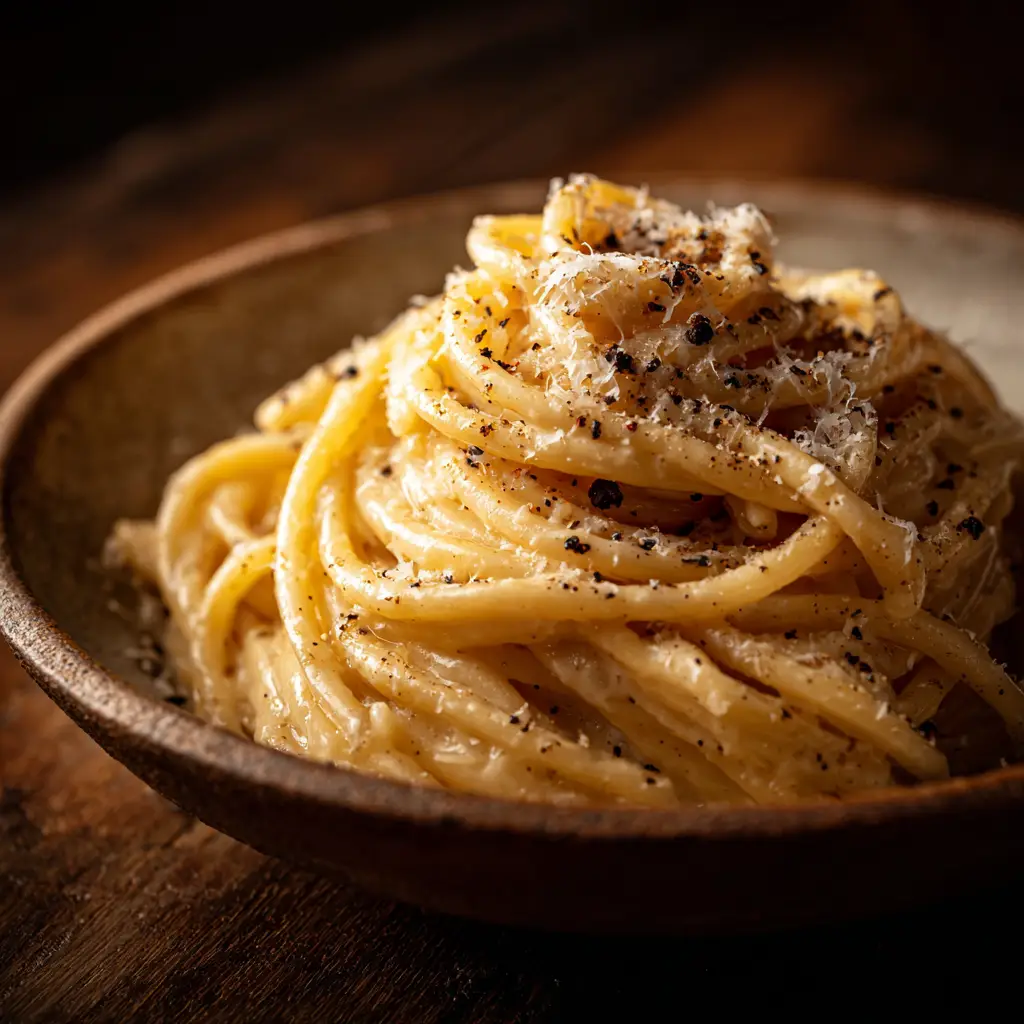
How to Make the Perfect Cacio e Pepe Recipe
The secret to a perfect Cacio e Pepe lies in creating a stable emulsion. This happens when the starch from the pasta water, the fat from the cheese, and vigorous mixing come together at the right temperature. It sounds scientific, but our step-by-step guide makes it simple to achieve.
Step-by-Step Instructions
- Toast the Pepper: Place the whole black peppercorns in a large, dry skillet over medium heat. Toast for 1-2 minutes, stirring frequently, until fragrant. Transfer the peppercorns to a mortar and pestle or spice grinder and crush them coarsely.
- Cook the Pasta: Bring a large pot of water to a boil and salt it generously. Add the spaghetti and cook according to package directions until al dente. Importantly, use less water than you normally would to ensure it becomes extra starchy.
- Prepare the Cheese Paste: While the pasta cooks, add the freshly grated Pecorino Romano and about two-thirds of the crushed black pepper to a large mixing bowl. A few minutes before the pasta is done, ladle about 1/2 cup of the hot, starchy pasta water into the bowl with the cheese. Whisk vigorously to create a thick, creamy paste. This is the key to a clump-free sauce.
- Combine: Using tongs, transfer the al dente pasta directly from the pot to the skillet you used for the pepper. Add a splash of pasta water. Now, pour the cheese paste over the pasta. Toss and stir everything together vigorously and continuously off the heat. The residual heat from the pasta will melt the cheese paste into a glossy sauce. If it seems too thick, add another tablespoon of pasta water at a time until you reach the desired consistency.
- Serve Immediately: Divide the pasta among warm bowls. Garnish with the remaining crushed black pepper and an extra sprinkle of Pecorino Romano. Enjoy immediately, as the sauce will thicken as it cools. For a delicious weeknight dinner, consider pairing this with our Italian Grinder Salad.
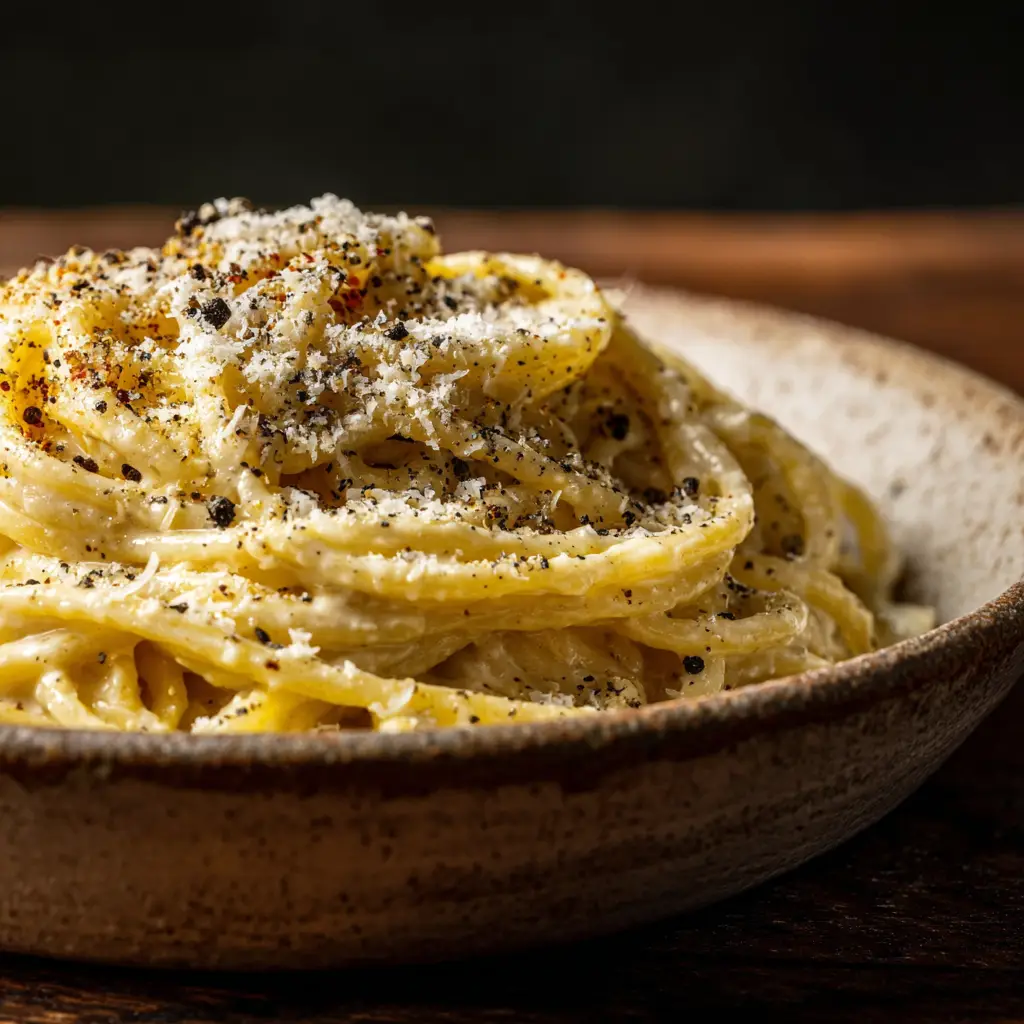
Pro Tips for a Flawlessly Creamy Sauce
Achieving that iconic creamy texture is the biggest challenge of this Cacio e Pepe recipe. Here are the secrets to success:
- Use Finely Grated Cheese: Use a microplane or the smallest holes on your box grater. Finely grated cheese melts faster and more evenly, preventing clumps.
- Control the Temperature: Never combine the cheese and pasta over direct heat. The high temperature will cause the proteins in the cheese to seize up and turn into clumps. The residual heat of the pasta and water is all you need.
- Starchy Water is Gold: The starch in the pasta water is the emulsifier that brings the cheese and fat together. Don’t use too much water to boil your pasta, and never, ever discard it until your sauce is perfect.
- Work Quickly: Have all your ingredients ready. Once the pasta is cooked, the process of making the sauce and serving takes only a minute or two. For another quick and satisfying meal, check out our creamy stovetop mac and cheese.
What to Serve with Cacio e Pepe
Cacio e Pepe is a rich and satisfying dish that stands beautifully on its own. However, if you’d like to round out the meal, a simple green salad with a light vinaigrette or some sautéed greens like spinach or asparagus would be perfect. Looking for other easy dinner ideas? Our Lemon Garlic Shrimp Pasta is a guaranteed crowd-pleaser.
Frequently Asked Questions
For a truly authentic Cacio e Pepe, you must use Pecorino Romano. Its sharp, salty flavor is characteristic of the dish. Parmesan has a different flavor profile and melting point, which can result in a clumpy or greasy sauce.
Cacio e Pepe is best enjoyed immediately. Reheating can cause the delicate sauce to break or become oily. If you must reheat, do so gently in a pan over low heat with a small splash of water, stirring constantly until just warmed through.
In Italian, ‘cacio e pepe’ translates directly to ‘cheese and pepper.’ It’s named for its two star ingredients, showcasing the elegant simplicity of Roman cuisine.
Traditionally, tonnarelli or spaghetti are used. A high-quality, bronze-die pasta is ideal because its rough surface helps the creamy sauce adhere perfectly to every strand.
The most common reason for clumpy sauce is heat. If the cheese is added over direct heat or the pan is too hot, its proteins will tighten and clump. Always mix the pasta and cheese sauce off the heat, using only the residual warmth to melt it.
Share Your Creations!
We hope you love this authentic Cacio e Pepe recipe! It’s a dish that proves how a few quality ingredients can create something truly special. If you make it, we’d love to see it! Share your photos and tag us on Pinterest. Happy cooking!
Cacio e Pepe Recipe
Cacio e Pepe Recipe (The Authentic Roman Method)
Ingredients
Equipment
Instructions
- Place the whole black peppercorns in a large, dry skillet over medium heat. Toast for 1-2 minutes, stirring frequently, until fragrant. Transfer the peppercorns to a mortar and pestle or spice grinder and crush them coarsely.
- Bring a large pot of water to a boil and salt it generously. Add the spaghetti and cook according to package directions until al dente. Use less water than you normally would to ensure it becomes extra starchy.
- While the pasta cooks, add the freshly grated Pecorino Romano and about two-thirds of the crushed black pepper to a large mixing bowl. A few minutes before the pasta is done, ladle about 1/2 cup of the hot, starchy pasta water into the bowl. Whisk vigorously to create a thick, creamy paste.
- Using tongs, transfer the al dente pasta directly to the skillet. Add a splash of pasta water. Pour the cheese paste over the pasta and toss vigorously off the heat until a glossy sauce forms. Add more pasta water as needed to reach desired consistency.
- Divide the pasta among warm bowls. Garnish with the remaining crushed black pepper and an extra sprinkle of Pecorino Romano. Serve immediately.
Notes
Control the Heat: The most common mistake is adding the cheese over direct heat, which causes it to clump. Let the residual heat of the pasta do the work.
Starchy Water is Key: The cloudy, starchy water from cooking the pasta is the magic ingredient that creates the creamy emulsion.