Welcome to the ultimate German Goulash Recipe, a hearty, savory stew that warms you from the inside out. If you’re searching for a dish that’s rich in flavor and steeped in tradition, you’ve found it. This authentic Rindergulasch is slow-simmered to perfection, resulting in incredibly tender beef bathed in a luscious, paprika-infused gravy. It’s the perfect comfort food for a chilly evening, a family gathering, or whenever you crave a taste of classic German cuisine.
Unlike its Hungarian cousin, German goulash is typically less spicy and often thicker, focusing on the deep, savory flavors of beef, onions, and a touch of marjoram. It’s a culinary hug in a bowl, and this recipe makes it simple enough for any enthusiastic home cook to master. Get ready to fill your kitchen with the most incredible aroma.
What Makes This German Goulash Recipe Special?
There are many goulash recipes out there, but this one focuses on the traditional German methods that create the deepest flavor. We take the time to properly brown the beef and caramelize the onions, building a rich foundation that cheap shortcuts just can’t replicate. The secret lies in the slow simmering process, which allows the beef to become melt-in-your-mouth tender while the gravy develops its signature velvety texture. This isn’t just a stew; it’s a taste of German heritage.
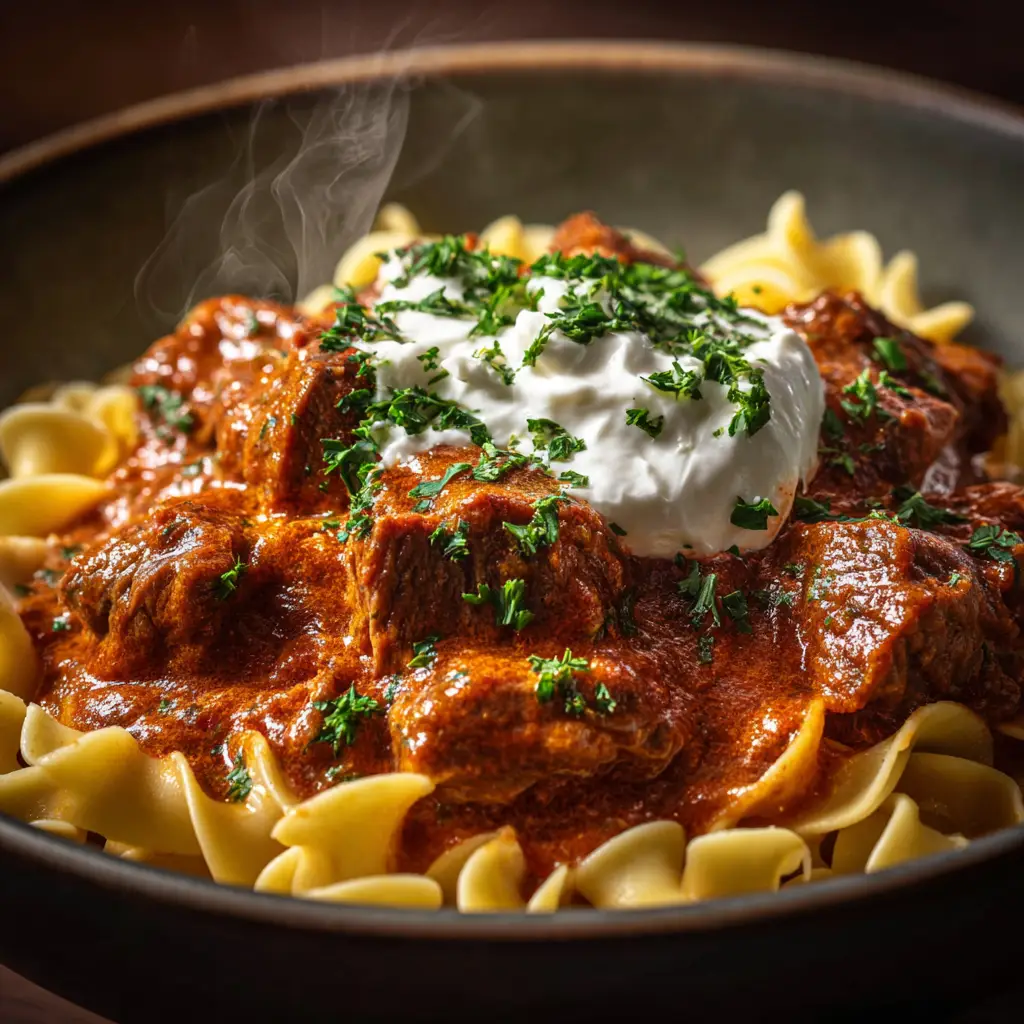
Ingredients for Authentic German Goulash
This recipe uses simple, wholesome ingredients to create its extraordinary flavor. Here’s what you’ll need:
- Beef Chuck Roast: Look for a well-marbled cut. The fat will render down during cooking, adding immense flavor and tenderness.
- Onions: Yellow or white onions work best. They break down completely, adding sweetness and body to the gravy.
- Olive Oil & Butter: A combination for browning the beef. Butter adds flavor, and oil prevents the butter from burning.
- Tomato Paste: Provides a deep, concentrated tomato flavor and a beautiful color.
- Sweet Paprika: The heart and soul of goulash. Use a high-quality sweet Hungarian or German paprika for the best results.
- All-Purpose Flour: To thicken the gravy slightly.
- Dry Red Wine: A dry red like Merlot or Cabernet Sauvignon adds acidity and depth. You can substitute with more beef broth if you prefer.
- Beef Broth: Use a low-sodium, high-quality broth as it forms the base of our gravy.
- Spices: Caraway seeds, dried marjoram, bay leaves, salt, and black pepper are essential for that classic German flavor profile.
- Garlic: Freshly minced garlic adds a pungent, aromatic kick.
For a delicious side dish that perfectly complements this goulash, consider making a batch of our Cottage Cheese Cloud Bread to soak up every last drop of the rich gravy.
How to Make The Best German Goulash Recipe
Follow these steps carefully to build layers of flavor for a truly unforgettable Rindergulasch.
Step 1: Prepare the Beef
First, pat your beef chuck roast dry with paper towels. This is a crucial step to ensure a good sear. Cut the beef into 1.5 to 2-inch cubes, trimming any large, tough pieces of gristle, but leaving the marbling. Season the beef generously with salt and pepper.
Step 2: Brown the Beef
In a large Dutch oven or heavy-bottomed pot, heat the olive oil and butter over medium-high heat. Add the beef cubes in a single layer, being careful not to overcrowd the pan. Work in batches if necessary. Brown the beef on all sides until a deep, dark crust forms. This process, known as the Maillard reaction, is essential for developing flavor. Remove the browned beef from the pot and set it aside.
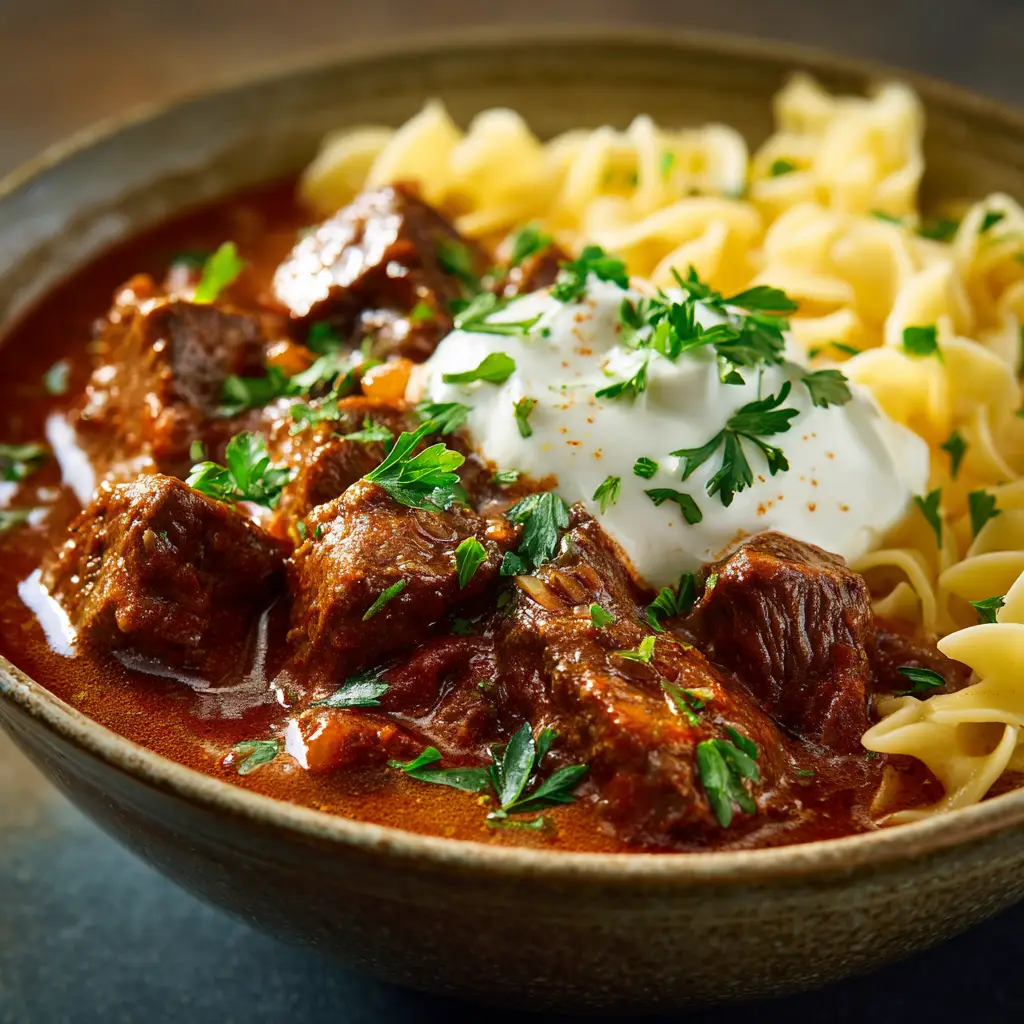
Step 3: Sauté Aromatics
Reduce the heat to medium and add the sliced onions to the same pot. Sauté for 8-10 minutes, stirring occasionally, until they are soft, translucent, and starting to caramelize. Add the minced garlic and cook for another minute until fragrant. Stir in the tomato paste and cook for 2-3 minutes, allowing it to darken slightly. This deepens its flavor.
Step 4: Build the Gravy
Sprinkle the flour over the onions and stir to combine, cooking for one minute to remove any raw flour taste. Pour in the red wine to deglaze the pot, scraping up all the browned bits (fond) from the bottom—this is pure flavor! Let the wine simmer and reduce by about half. Stir in the beef broth, sweet paprika, caraway seeds, and marjoram.
Step 5: Slow Simmer to Perfection
Return the browned beef and any accumulated juices to the pot. Add the bay leaves. Bring the mixture to a gentle simmer, then reduce the heat to low, cover the pot, and let it cook for at least 2.5 to 3 hours. Stir occasionally to prevent sticking. The goulash is ready when the beef is fork-tender and the gravy has thickened and darkened beautifully. Remove the bay leaves before serving.
Tips for Success
- Don’t Rush the Browning: The deep brown crust on the beef is the foundation of the goulash’s flavor. Give it the time it needs.
- Use Quality Paprika: Since paprika is a star ingredient, using a fresh, high-quality sweet paprika will make a noticeable difference in the final taste.
- Low and Slow is Key: The magic happens during the long, slow simmer. This is when the tough connective tissues in the chuck roast break down, making the meat incredibly tender.
- Make it Ahead: Like many stews, this German Goulash recipe tastes even better the next day! The flavors have more time to meld together. For a different but equally comforting meal, try our French Onion Beef Short Rib Soup.
What to Serve with German Goulash
Traditionally, German goulash is served with accompaniments that can soak up its delicious gravy. Classic choices include:
- Spätzle: Small German egg noodles or dumplings are the quintessential pairing.
- Potatoes: Mashed, boiled, or roasted potatoes are all excellent choices.
- Crusty Bread: A thick slice of rye or sourdough bread is perfect for dipping.
- Noodles: Wide egg noodles are also a very popular and delicious option.
A simple green salad with a vinaigrette can add a nice, fresh contrast to the richness of the stew. If you’re looking for another amazing beef recipe, our Low-Carb Mongolian Ground Beef is a quick and flavorful option for a weeknight meal.
Storage and Reheating Instructions
Store leftover goulash in an airtight container in the refrigerator for up to 4 days. You can also freeze it for up to 3 months. To reheat, gently warm it on the stovetop over low heat, adding a splash of beef broth if the gravy has become too thick. Avoid microwaving, as it can make the beef tough.
FAQs About This German Goulash Recipe
Yes. While red wine adds a wonderful depth of flavor, you can substitute it with an equal amount of additional beef broth. You may want to add a teaspoon of red wine vinegar at the end to mimic the acidity.
Yes, absolutely. Brown the beef and sauté the aromatics on the stovetop as directed, then transfer everything to the slow cooker. Cook on low for 6-8 hours or on high for 4-5 hours until the beef is tender.
This recipe uses flour to create a thick gravy. If you find yours is still too thin, you can let it simmer with the lid off for the last 20-30 minutes of cooking to allow it to reduce and thicken further.
Beef chuck roast is the best choice for goulash. It has a good amount of fat marbling and connective tissue that breaks down during the long, slow cooking process, resulting in incredibly tender and flavorful meat.
German Goulash (Rindergulasch) is typically a thicker beef stew with a gravy-like consistency, often flavored with marjoram and caraway. Hungarian Goulash is usually soupier, spicier, and uses a more generous amount of paprika.
Enjoy Your Authentic German Goulash!
We hope you love this authentic German Goulash Recipe as much as we do. It’s a true labor of love that rewards you with a deeply flavorful and comforting meal. If you make it, please leave a comment below and let us know how it turned out! For more recipe inspiration, be sure to follow us on Pinterest.
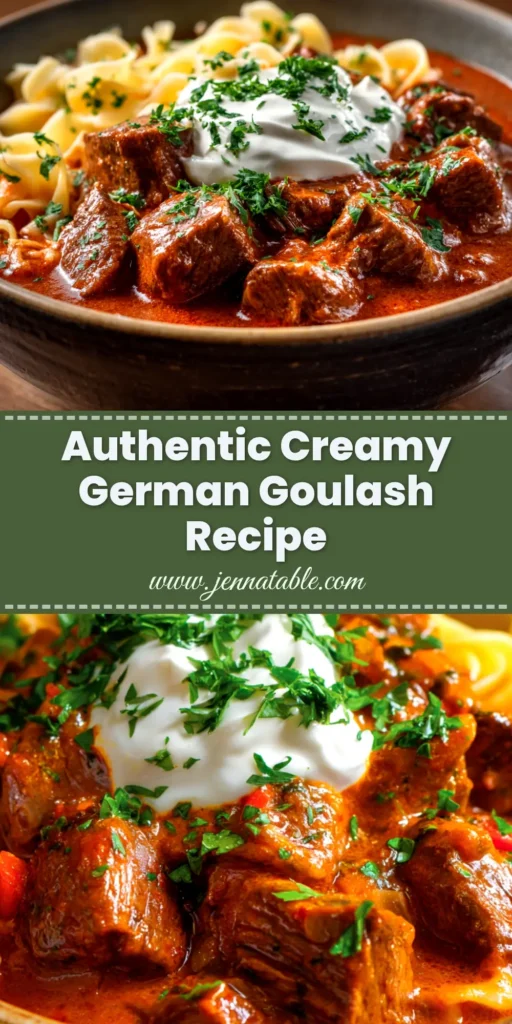
German Goulash Recipe
German Goulash Recipe: The Ultimate Guide to Authentic Rindergulasch
Ingredients
Equipment
Instructions
- Pat the beef chuck roast dry with paper towels. Cut into 1.5 to 2-inch cubes. Season generously with salt and pepper.
- In a large Dutch oven, heat olive oil and butter over medium-high heat. Working in batches, add the beef in a single layer and brown on all sides until a deep crust forms. Remove the beef from the pot and set aside.
- Reduce heat to medium. Add the sliced onions to the pot and sauté for 8-10 minutes until soft and caramelized. Add minced garlic and cook for 1 more minute. Stir in the tomato paste and cook for 2-3 minutes.
- Sprinkle flour over the onions, stir, and cook for one minute. Pour in the red wine to deglaze the pot, scraping up any browned bits. Simmer until the wine has reduced by half. Stir in beef broth, sweet paprika, caraway seeds, and marjoram.
- Return the beef and any juices to the pot. Add the bay leaves. Bring to a simmer, then reduce heat to low, cover, and cook for 2.5 to 3 hours, or until the beef is fork-tender. Remove bay leaves before serving.
Notes
Ensure you use a high-quality, fresh sweet paprika for the most authentic taste.
Store leftovers in an airtight container in the fridge for up to 4 days.