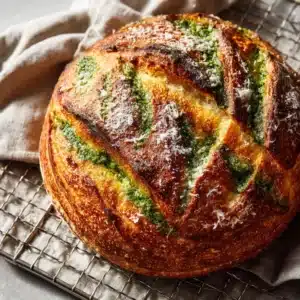
Welcome to the ultimate recipe for Pesto Parmesan Sourdough, a loaf that perfectly marries tangy sourdough with savory pesto and sharp, nutty Parmesan. If you’ve been searching for a way to elevate your home baking, this is it. This recipe creates a stunning, flavorful loaf with a gorgeous green swirl and a deliciously cheesy crust that crackles with every slice. It’s not just bread; it’s an experience, filling your kitchen with an aroma that’s simply irresistible. Get ready to bake your new favorite artisan bread that looks as incredible as it tastes.
Why You’ll Love This Pesto Parmesan Sourdough Recipe
This isn’t just another sourdough recipe; it’s a game-changer for any home baker. Here’s why you’ll find yourself making it again and again.
- Incredible Flavor Fusion: The classic tang of sourdough is the perfect backdrop for the rich, herby notes of basil pesto and the salty kick of Parmesan cheese.
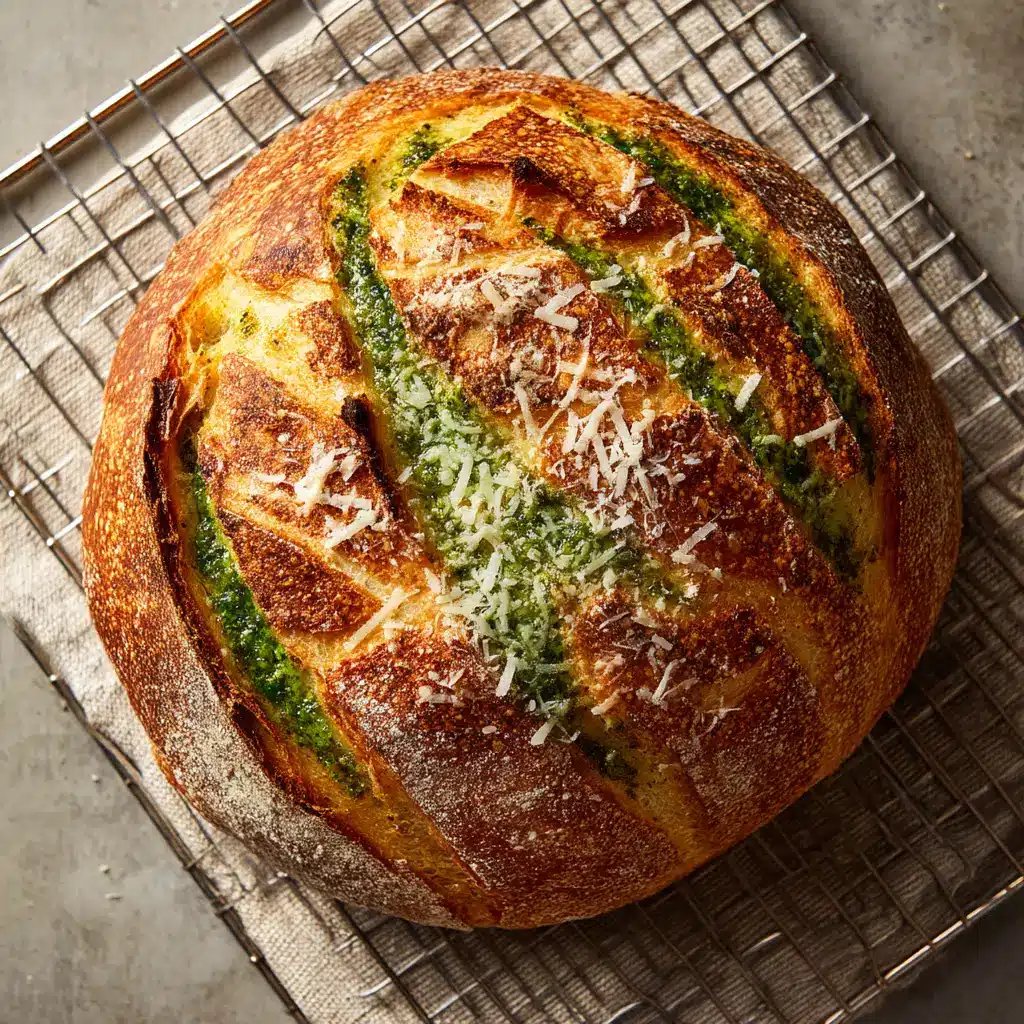
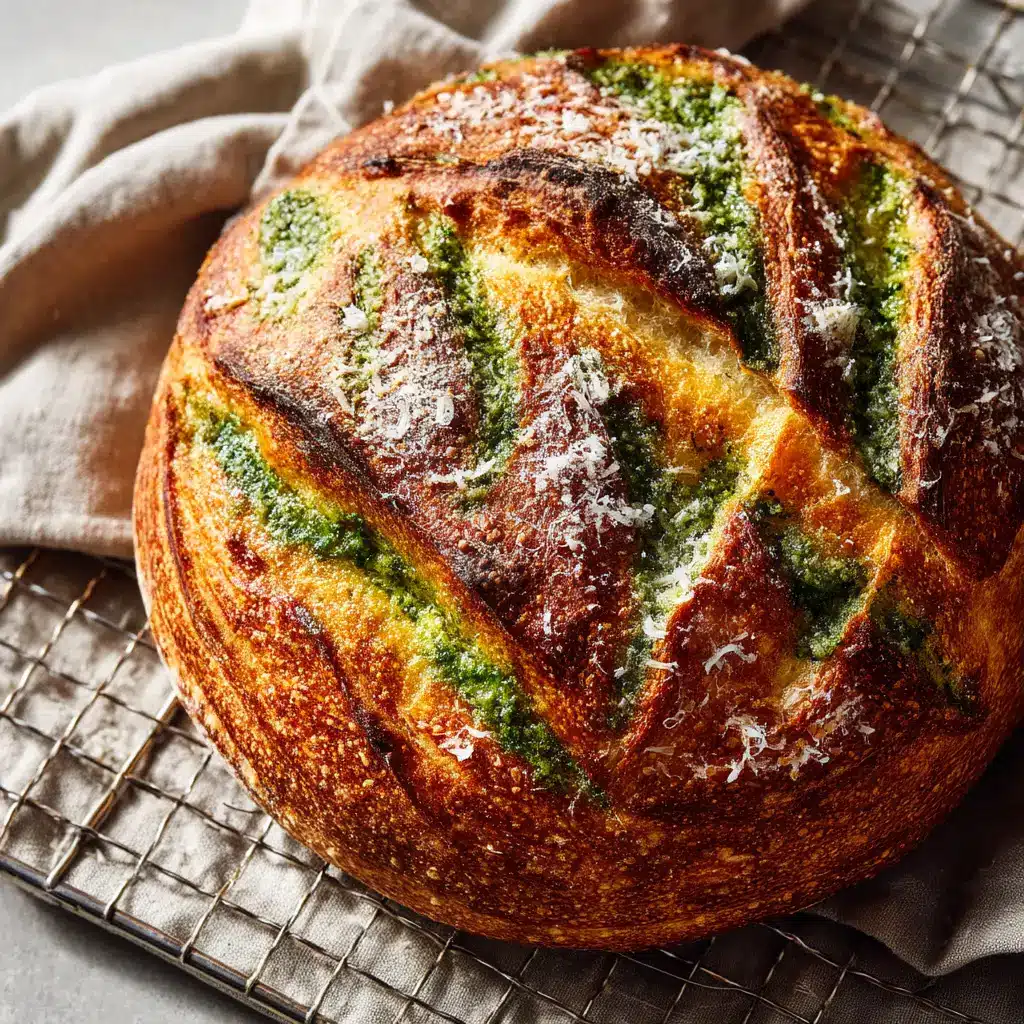
- Stunning Visual Appeal: The vibrant green swirl of pesto makes every slice a work of art. It’s a showstopper loaf that’s perfect for impressing guests or simply brightening up your dinner table.
- Amazingly Crisp Crust: We’re not just putting Parmesan inside; we’re coating the outside too, creating a crunchy, cheesy crust that’s utterly addictive.
- Surprisingly Simple Process: While it looks like it came from a high-end bakery, the steps are straightforward and manageable, even if you’re new to including add-ins in your sourdough.
The Key to Irresistible Pesto Parmesan Sourdough: Quality Ingredients
Great bread starts with great ingredients. For this Pesto Parmesan Sourdough, we’re focusing on quality basics to ensure the best possible flavor and texture.
For the Sourdough Dough
- Active Sourdough Starter: Your starter should be bubbly, active, and at its peak. This is the powerhouse that gives the bread its lift and signature tangy flavor.
- Bread Flour: High-protein bread flour provides the strength and structure needed for a chewy, open crumb that holds up to the pesto filling.
- Water: Use filtered or lukewarm water to keep your yeast happy.
- Salt: Fine sea salt is crucial for controlling fermentation and enhancing all the flavors in the loaf.
For the Savory Filling
- Pesto: A high-quality, thick pesto works best. A thinner pesto can make the dough too wet and difficult to handle. You can use your favorite store-bought brand or a homemade version.
- Shredded Parmesan Cheese: Use freshly shredded Parmesan for the best melt and flavor. It will be mixed into the dough and used to coat the crust.
Step-by-Step Instructions for Perfect Pesto Parmesan Sourdough
Follow these steps closely to create your own beautiful artisan loaf. We’ll walk through everything from mixing the dough to that final, satisfying bake.
Step 1: Mix the Dough (Autolyse and Initial Mix)
In a large bowl, mix together the bread flour and water until no dry bits remain. Cover and let it rest for 30-60 minutes (this is the autolyse). After the autolyse, add your active sourdough starter and salt. Use your hands to squish and mix until everything is well incorporated.
Step 2: Bulk Fermentation (Strength Building)
Cover the dough and let it begin its bulk fermentation in a warm spot for 4-6 hours. During the first 2 hours, perform a series of 3-4 “stretch and folds” every 30 minutes. This builds strength in the dough without kneading. The dough is ready when it has risen by about 30-50% and you see a few bubbles on the surface.
Step 3: Lamination and Filling
Turn the dough out onto a lightly floured surface. Gently stretch it out into a large, thin rectangle. Spread the pesto evenly over the surface of the dough, leaving a small border around the edges. Sprinkle half of the shredded Parmesan cheese on top of the pesto. Fold the dough up like a letter, then roll it into a tight log to create the signature swirl.
Step 4: Shaping and Cold Proof
Gently shape the log into a “boule” (round) or “batard” (oval). Place it seam-side up in a well-floured banneton or a bowl lined with a kitchen towel. Cover and place in the refrigerator for a cold proof for 12-24 hours. This slow fermentation develops that amazing sourdough flavor.
Step 5: Baking Your Pesto Parmesan Sourdough
Preheat your oven to 500°F (260°C) with a Dutch oven inside for at least 45 minutes. Carefully remove the dough from the banneton and place it on parchment paper. Score the top with a sharp blade or razor. Sprinkle the remaining Parmesan cheese over the top. Lower the dough into the hot Dutch oven, cover, and bake for 20 minutes. Then, remove the lid, reduce the oven temperature to 450°F (230°C), and bake for another 20-25 minutes, or until the crust is deeply golden brown and crisp. Let it cool completely on a wire rack before slicing.
Expert Tips for a Perfect Loaf
- Use Thick Pesto: To avoid a soggy mess, use a thick pesto. If yours is a bit oily, drain off some of the excess oil before spreading it on the dough.
- Don’t Over-proof: Keep an eye on your dough during bulk fermentation. An over-proofed dough will be difficult to shape and may result in a flatter loaf.
- Get a Good Sear: A screaming hot Dutch oven is key to getting that perfect oven spring and a crispy, crackly crust.
- Cool Completely: The hardest part! Waiting for the loaf to cool completely (at least 2 hours) before slicing is essential. The internal structure needs this time to set.
Creative Serving Suggestions
This Pesto Parmesan Sourdough is fantastic on its own, but it also serves as a brilliant base for other dishes. Try it toasted and topped with fresh tomatoes and balsamic glaze for a quick bruschetta. It makes an incredible sandwich bread, especially for something like a Swiss Mushroom Melt. It’s also the perfect companion for a hearty bowl of Crockpot Beef Stew or a light and refreshing Mediterranean Salmon and Rice dish.
Storing Your Artisan Bread
To keep your sourdough fresh, store it cut-side down on a cutting board at room temperature for up to 3 days. You can also store it in a bread box or a paper bag. Avoid plastic bags, as they can trap moisture and soften the crust. For longer storage, slice the loaf and freeze it in a freezer-safe bag for up to 3 months.
Frequently Asked Questions
This specific recipe is formulated for an active, bubbly sourdough starter to provide the leavening. While you can find many great recipes specifically for ‘sourdough discard,’ this recipe would not work as written by substituting discard for active starter.
For an extra crispy crust, make sure your Dutch oven is fully preheated. The initial high-heat steam environment is crucial. We also add the second half of the Parmesan to the top of the loaf right before baking, which toasts directly on the crust for maximum crispiness and flavor.
The key is to use a thick pesto and to create a tight shape. During the lamination step, ensure you fold and roll the dough tightly to fully encase the pesto filling. A good, long cold proof also helps the structure set, minimizing leaks.
A thick, high-quality store-bought or homemade pesto works best. Avoid pestos that are very oily or thin, as the excess liquid can make the dough soggy and difficult to work with. If your pesto is oily, try draining some of the excess oil before spreading it.
This bread is incredibly versatile! Serve it alongside a bowl of tomato soup, use it as a base for sandwiches, toast it for a savory breakfast, or simply enjoy it warm with a drizzle of olive oil. It also makes a fantastic side for pasta dishes or salads.
Join The Baking Community!
We hope you love this Pesto Parmesan Sourdough recipe as much as we do! Baking is all about sharing, so if you make this loaf, let us know how it turned out in the comments below. For more visual inspiration and recipes, be sure to follow us on Pinterest. Happy baking!
Pesto Parmesan Sourdough Recipe
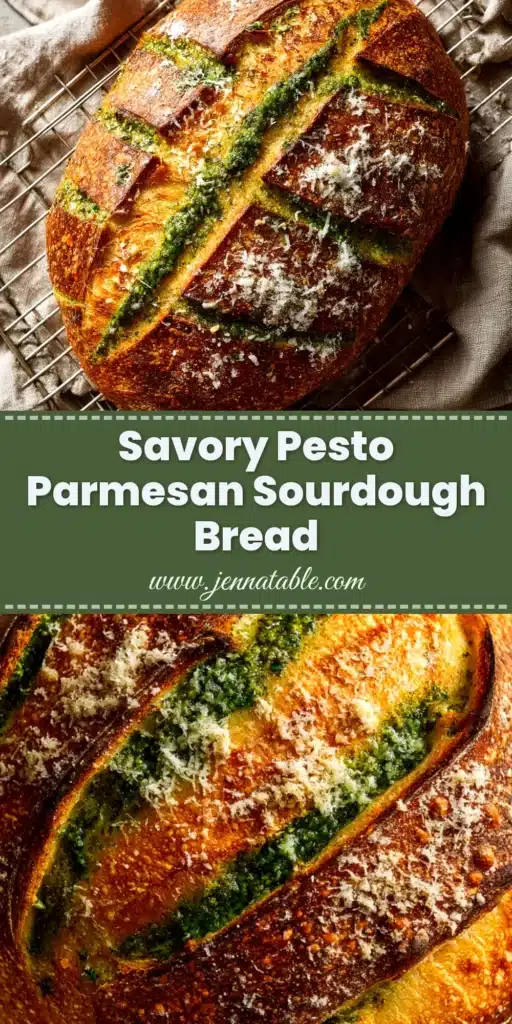
Pesto Parmesan Sourdough: The Ultimate Artisan Loaf
Ingredients
Equipment
Instructions
- In a large bowl, mix bread flour and water until combined. Cover and rest for 30-60 minutes. Add active sourdough starter and salt, mixing with your hands until fully incorporated.
- Cover and let the dough rest in a warm place for 4-6 hours. Perform 3-4 sets of stretch and folds every 30 minutes during the first 2 hours. The dough is ready when it has risen by about 30-50%.
- Gently stretch the dough into a large rectangle on a lightly floured surface. Spread the pesto evenly, leaving a small border. Sprinkle with half of the Parmesan cheese. Fold the dough like a letter, then roll it into a tight log.
- Shape the dough into a boule or batard and place it seam-side up in a floured banneton. Cover and refrigerate for 12-24 hours.
- Preheat oven and Dutch oven to 500°F (260°C). Place dough on parchment paper, score the top, and sprinkle with the remaining Parmesan. Bake in the Dutch oven, covered, for 20 minutes. Remove the lid, reduce heat to 450°F (230°C), and bake for another 20-25 minutes until deeply golden.
- Remove the bread from the Dutch oven and let it cool completely on a wire rack for at least 2 hours before slicing.
Notes
Ensure your pesto is not too oily to prevent the dough from becoming too wet.
Letting the loaf cool completely is crucial for the internal crumb to set properly.