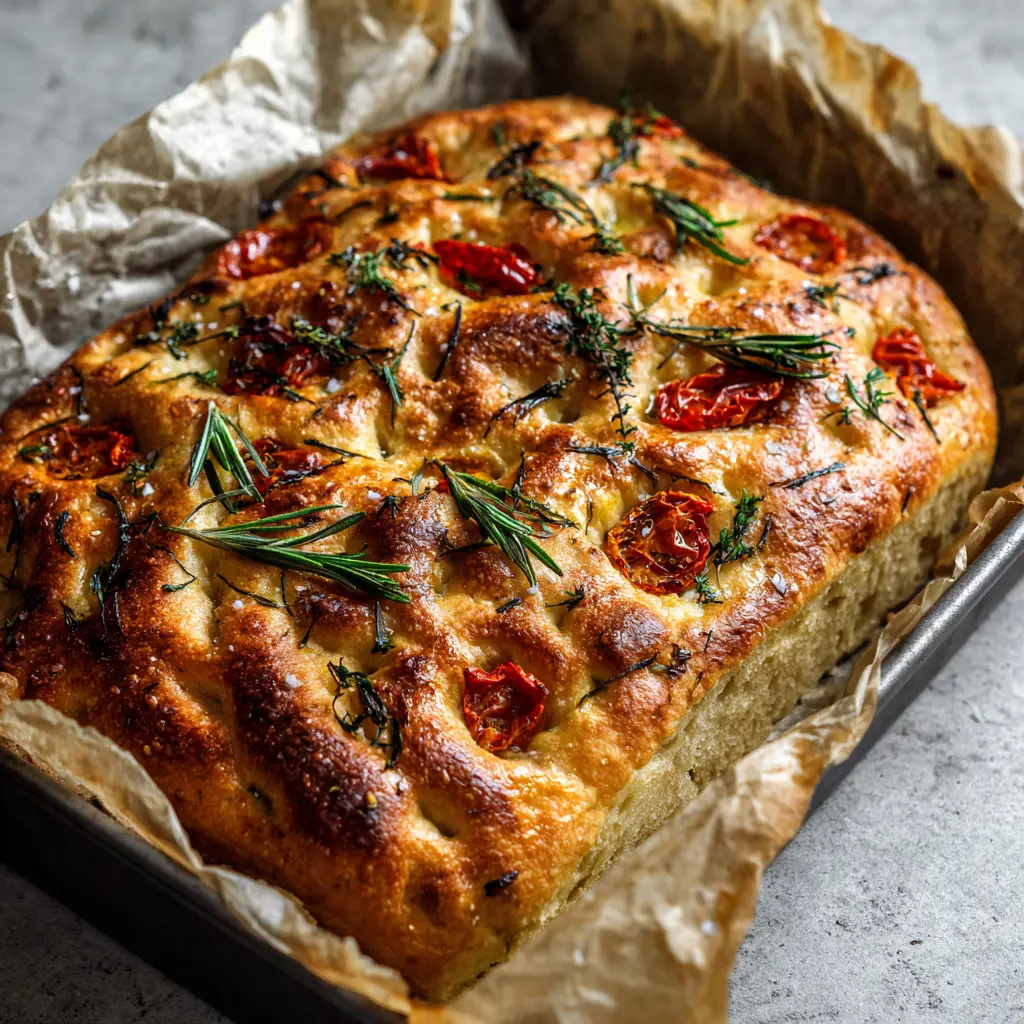
There is nothing quite like pulling a freshly baked Sourdough Discard Focaccia out of the oven, listening to the olive oil sizzle against the edges of a dark metallic baking pan. This recipe transforms unfed starter into a deeply golden, bubbly, and dimpled crust that rivals any artisanal bakery. By utilizing a high-hydration dough, you achieve that coveted pillowy interior with slightly charred, crispy edges.
Every bite of this Sourdough Discard Focaccia offers a perfect balance of textures and flavors. We bake it on crinkled parchment paper to ensure an effortless release while capturing a heavy glossy olive oil drizzle. Embedded into the dough are pockets of soft roasted garlic cloves, vibrant red sun-dried tomato halves, and fragrant fresh herbs that make this flatbread completely irresistible.
Why This Sourdough Discard Focaccia Recipe Outperforms the Rest
- Unmatched Textural Contrast: The heavy scattering of coarse flaky sea salt perfectly cuts through the rich, glossy olive oil finish.
- Zero Waste Perfection: It utilizes unfed sourdough starter, giving your discard a delicious, tangy second life.
- Visual Masterpiece: The vibrant red sun-dried tomato halves blister beautifully under the high heat, creating a stunning rustic appearance.
- Aromatic Heaven: Sprigs of fresh green rosemary and fresh thyme leaves infuse the dough with earthy, savory notes as it bakes.
Essential Components for a Perfectly Pillowy & Glossy Dough
Sourdough Discard: You will need 1/2 cup (120g) of unfed sourdough discard. This adds a complex, tangy flavor profile and tenderizes the crumb.
Bread Flour: Use 4 cups (480g) of high-protein bread flour. This is critical for developing the gluten network needed to trap air and create massive bubbles.
Warm Water: Exactly 2 cups (475ml) of warm water provides the high hydration required for a light, airy, and pillowy texture.
Instant Yeast: Adding 1 tsp (3g) of instant yeast ensures a reliable, lofty rise. This guarantees your dough becomes incredibly bubbly even if your discard is inactive.
Extra Virgin Olive Oil: You need 1/2 cup (120ml) divided for the dough, the pan, and the final glossy drizzle. Use a high-quality oil for the best crust.
Soft Roasted Garlic Cloves: Prepare 1/2 cup (70g) of whole roasted garlic cloves. These become sweet, jammy pockets embedded directly into the dimpled surface.
Sun-Dried Tomato Halves: Measure 1/3 cup (50g) of oil-packed sun-dried tomato halves. They will slightly char and blister during the high-heat bake.
Fresh Herbs & Flaky Salt: Gather 2 sprigs of fresh green rosemary, 1 tbsp (4g) fresh thyme leaves, and 1 tbsp (15g) coarse flaky sea salt for the ultimate finishing touch.
Must-Have Tools for the Crispiest Charred Edges
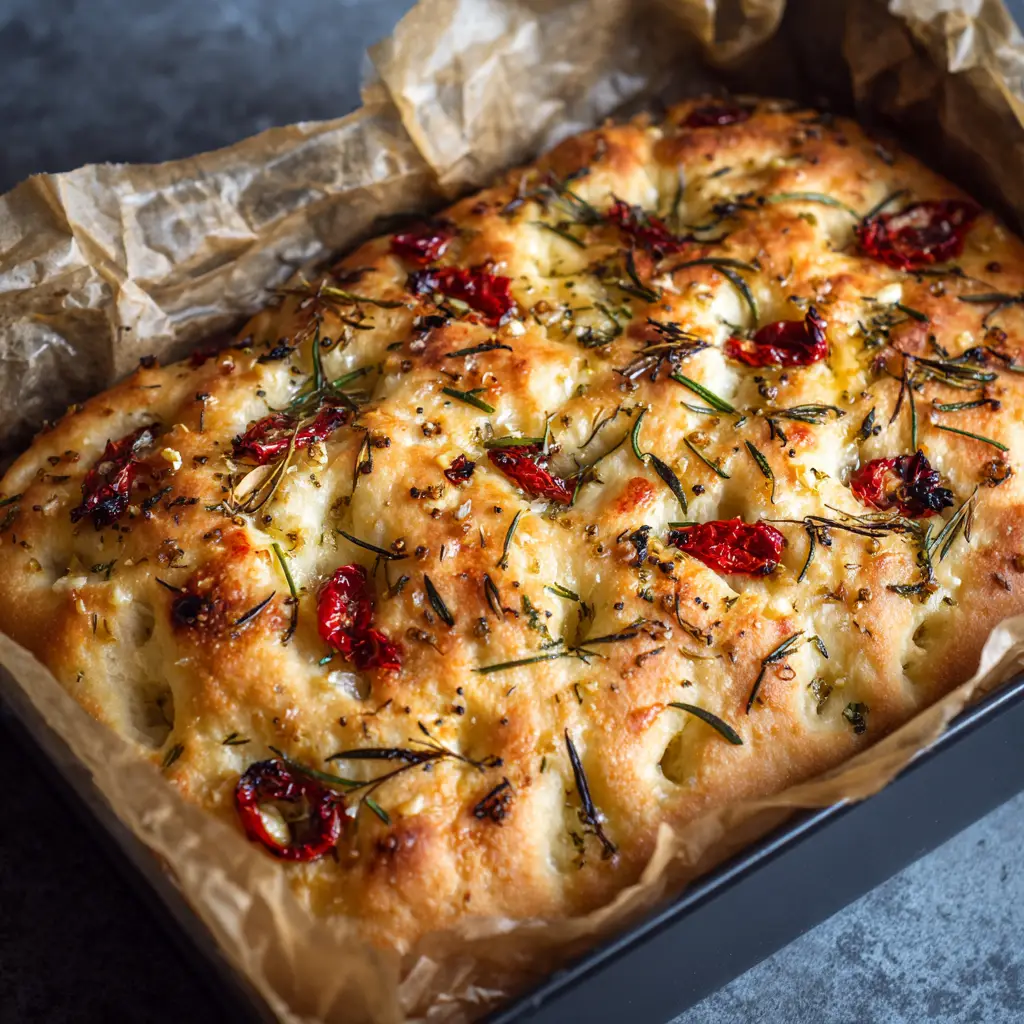
To achieve the exact bakery-style results, a 9×13-inch dark metallic baking pan is highly recommended. Dark metal conducts heat aggressively, ensuring the bottom and sides develop a deeply golden, fried texture.
You will also need a sheet of crinkled parchment paper. Crumpling the paper before lining the pan helps it fit snugly into the corners and prevents the wet dough from sticking to the metal.
How to Achieve a Deeply Golden, Bubbly Focaccia Crust
Mixing and Hydrating the Dough
In a large mixing bowl, whisk together the warm water, instant yeast, and sourdough discard until completely dissolved. The mixture should look milky and slightly frothy.
Add the bread flour and 1 tsp (5g) of fine table salt, mixing with a wooden spoon or your hands until a shaggy, sticky dough forms. Do not overmix; simply ensure there are no dry spots of flour left.
The Crucial Stretch and Fold Process
Cover the bowl with a damp towel and let it rest for 30 minutes. Wet your hands with cold water, grab one side of the dough, stretch it upwards, and fold it over itself.
Repeat this stretching and folding motion on all four sides of the dough. Cover and let it rest for another 30 minutes, repeating the stretch and fold process three times total to build a strong gluten structure.
Proofing in the Dark Metallic Baking Pan
Line your dark metallic baking pan with the crinkled parchment paper. Pour 2 tbsp (30ml) of olive oil directly onto the parchment, spreading it evenly across the bottom and sides.
Transfer the dough into the pan, flipping it once so it is completely coated in the oil. Cover tightly and let it proof in the refrigerator for 12 to 24 hours to develop that signature sourdough tang.
Dimpling and Embedding the Aromatic Toppings
Remove the pan from the fridge and let it sit at room temperature for 2 hours until it is noticeably puffy and fills the pan. Preheat your oven to 425°F (220°C).
Drizzle another 2 tbsp (30ml) of olive oil over the top of the dough. Oil your fingers and press them deeply into the dough, creating signature dimples and feeling the air bubbles gently pop.
Gently press the soft roasted garlic cloves and vibrant red sun-dried tomato halves into the deep dimples. Scatter the fresh green rosemary sprigs and fresh thyme leaves evenly across the surface.
Baking to a Glossy, Charred Perfection
Generously scatter the coarse flaky sea salt over the entire surface. Bake on the middle rack for 25 to 30 minutes.
Watch for visual cues: the crust should be deeply golden and bubbly, with the tomatoes blistered and the edges slightly charred. Remove from the oven and immediately drizzle with the remaining olive oil for a glossy finish, letting it cool in the pan for 15 minutes before slicing.
Troubleshooting Tips for a Flawless Fermented Flatbread
- Dough won’t stretch to the pan edges: Let the dough rest for an additional 20 minutes to relax the gluten before attempting to stretch it again.
- Lack of bubbles during dimpling: Ensure your resting environment is warm enough. If your kitchen is cold, proof the dough in an oven with just the light turned on.
- Garlic burning instead of roasting: Make sure you are using pre-roasted, soft garlic cloves and pressing them deep into the dough so they are insulated from direct overhead heat.
- Pale crust on the bottom: Always use a dark metallic pan. Glass or ceramic baking dishes insulate too much and prevent the bottom from frying in the olive oil.
Keeping Your Garlic and Herb Flatbread Fresh
This bread is best enjoyed on the day it is baked, while the edges remain perfectly crisp and charred. However, you can store leftover slices in an airtight container at room temperature for up to 2 days.
To reheat, place the slices in a 350°F (175°C) oven for 5-7 minutes to revive the crispy exterior. For longer storage, tightly wrap individual slices in plastic wrap and freeze for up to 3 months, thawing at room temperature before reheating.
What to Serve Alongside Your Blistered Tomato Focaccia
This Sourdough Discard Focaccia is incredibly versatile and makes the ultimate side dish for dunking. It pairs magnificently with a hearty bowl of Tuscan sausage and potato soup, soaking up the rich, savory broth.
For a lighter lunch option, serve it alongside a fresh and vibrant cucumber mozzarella salad. The rich, glossy olive oil crust beautifully complements the crisp acidity of the vegetables.
If you prefer a comforting, velvety main course, dipping this pillowy dough into a warm creamy potato carrot soup is an absolute must.
Commonly Asked Questions About Sourdough Discard Breads
Absolutely. While the overnight fridge rest develops a stronger sourdough tang, you can let the dough rise at room temperature for 2 to 3 hours until doubled, then proceed straight to dimpling and baking.
Yes! You can easily substitute active, bubbly sourdough starter in place of the discard. If using an active starter, the instant yeast becomes optional, though keeping it ensures a rapid and extremely lofty rise.
Make sure you push the roasted garlic cloves and fresh herbs deep into the oiled dimples of the dough. The surrounding wet dough insulates them from the direct heat of the oven, preventing them from turning bitter.
A lack of bubbles usually stems from under-proofing or an environment that is too cold. Ensure your dough has doubled in size and feels light and jiggly before dimpling. Adding instant yeast alongside the discard guarantees bubbles.
Dark metallic pans absorb and conduct heat much faster than glass or light-colored pans. This intense bottom heat essentially ‘fries’ the dough in the olive oil, creating those highly sought-after crispy, golden edges.
Print and Save This Sourdough Discard Focaccia Recipe
Sourdough Discard Focaccia: Roasted Garlic & Blistered Tomato Bread
Ingredients
Equipment
Instructions
- In a large mixing bowl, whisk together the warm water, instant yeast, and sourdough discard until completely dissolved and frothy.
- Add the bread flour and fine table salt. Mix until a shaggy, sticky dough forms, ensuring no dry spots remain.
- Cover the bowl with a damp towel and let rest for 30 minutes. Perform a series of stretches and folds. Repeat this resting and folding process three times total.
- Line a dark metallic baking pan with crinkled parchment paper. Pour 2 tbsp olive oil into the pan. Transfer dough, coat in oil, cover, and refrigerate for 12 to 24 hours.
- Remove dough from fridge and let it sit at room temperature for 2 hours until puffy. Preheat oven to 425°F (220°C).
- Drizzle with 2 tbsp olive oil. Use oiled fingers to deeply dimple the dough. Press soft roasted garlic cloves and sun-dried tomato halves into the dimples. Scatter fresh rosemary, thyme, and flaky sea salt over the top.
- Bake for 25 to 30 minutes until deeply golden, bubbly, and slightly charred at the edges. Drizzle with remaining olive oil immediately upon removing from the oven.
Notes
Tip 2: If the dough resists stretching, let it rest for 15-20 minutes before trying again.
Share Your Golden Baked Creations!
If you achieved the perfect bubbly crust and blistered tomatoes with this Sourdough Discard Focaccia, we want to see it! Leaving a five-star rating and a comment below helps our community grow and inspires others to bake.
Don’t forget to subscribe to our newsletter for more incredible zero-waste recipes. Pin this recipe to your favorite baking boards on Pinterest and tag us in your handheld smartphone photos!