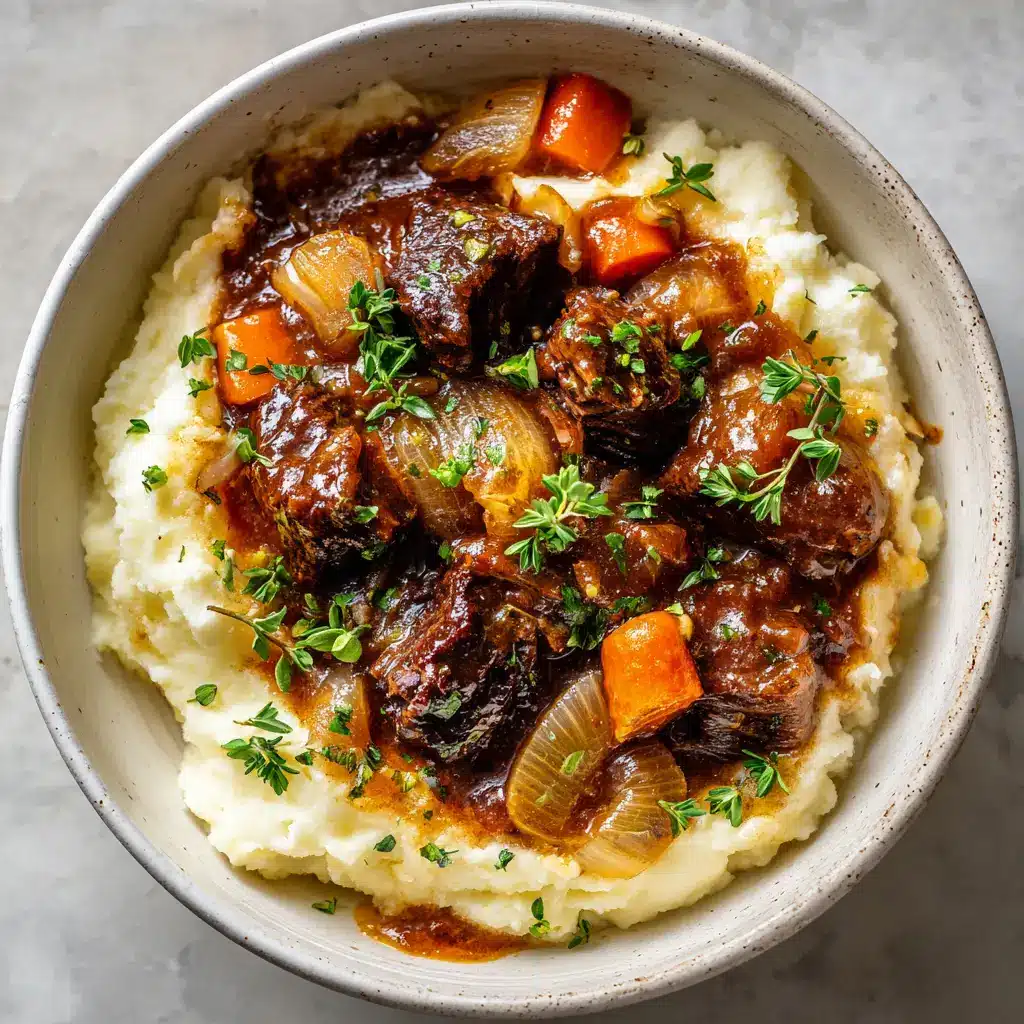
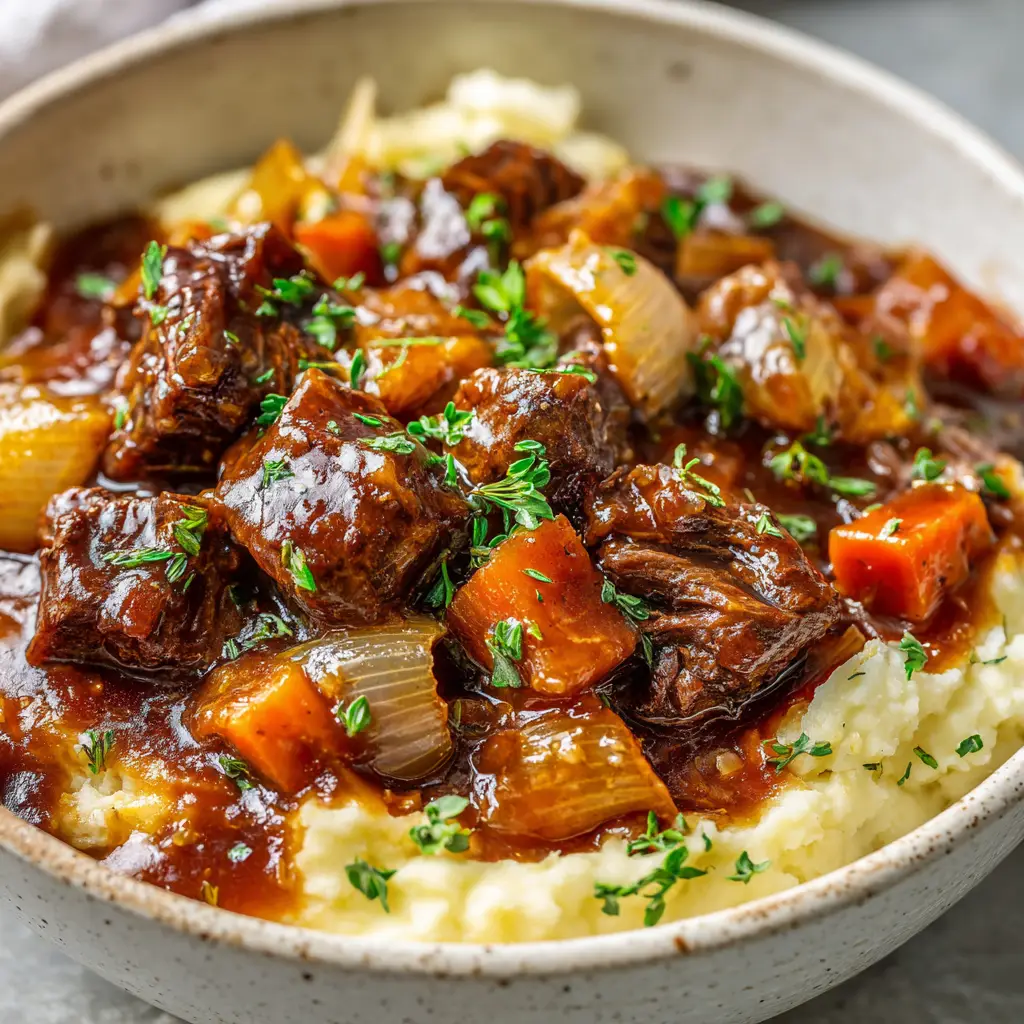
There’s a special kind of magic that happens when you combine fork-tender beef, sweet caramelized onions, and a rich, savory gravy. This Apple cider beef stew is the embodiment of that magic, a true masterpiece of comfort food that looks just as incredible as it tastes. Imagine a rustic white bowl, filled with a generous base of thick, creamy mashed potatoes, cradling a hearty stew with a glossy, dark amber gravy that clings to every single ingredient. This isn’t just a recipe; it’s a sensory experience waiting to happen.
From the moment the beef hits the hot Dutch oven, releasing that unmistakable sizzle, to the final garnish of fresh parsley and thyme, every step is designed to build layers of deep, complex flavor. The apple cider isn’t just an ingredient; it’s the secret weapon, lending a subtle sweetness and acidity that cuts through the richness of the beef, creating a perfectly balanced, unforgettable meal. This is the dish you’ll want to make on a chilly evening, the one that will fill your home with an aroma that is nothing short of intoxicating.
Why This Recipe Is an Absolute Must-Try
This isn’t your average beef stew. It’s a dish meticulously crafted to match that perfect picture in your mind’s eye. Here’s what makes this Apple Cider Beef Stew stand apart:
- Visually Stunning Gravy: We achieve a thick, glossy, dark amber apple cider gravy through a careful process of searing, deglazing, and slow simmering, creating a sauce that’s both beautiful and deeply flavorful.
- Fork-Tender Beef Guaranteed: By using beef chuck and a low-and-slow braising method, the beef becomes incredibly tender, easily falling apart with the touch of a fork, just as promised.
- Perfectly Balanced Flavors: The sweetness of the apple cider and caramelized pearl onions perfectly complements the savory depth of the seared beef and rich broth.
- Complete, Rustic Meal: Served over a bed of creamy mashed potatoes and garnished with fresh herbs, it’s a complete, visually appealing meal in a single bowl.
The Building Blocks of a Perfect Stew
Each ingredient plays a crucial role in building the final flavor and texture profile. Here’s what you’ll need to create this culinary masterpiece.
For the Heart of the Stew
Beef Chuck: We use 3 lbs (1.36kg) of beef chuck, cut into generous 2-inch (5cm) chunks. This cut is rich in connective tissue, which melts down during the long cooking time into gelatin, creating that fork-tender texture and adding immense body to the gravy.
Apple Cider: You’ll need 2 cups (480ml) of unfiltered apple cider (not apple juice). Its robust, slightly tangy flavor is essential for creating the signature dark amber gravy and balancing the richness of the beef.
Beef Broth: 3 cups (720ml) of low-sodium beef broth forms the savory liquid base of our stew. Using a quality broth is key to a rich-tasting final product.
Pearl Onions & Carrots: 1 cup (150g) of pearl onions and 2 large carrots, diced, are the foundational vegetables. The pearl onions become deeply caramelized and sweet, while the carrots add a soft texture and earthy sweetness.
For Flavor, Texture, and Garnish
All-Purpose Flour: A 1/4 cup (30g) of all-purpose flour is used to dredge the beef. This simple step helps create a beautiful brown crust when searing and is the primary thickener for our glossy gravy.
Fresh Herbs: We use 4 sprigs of fresh thyme for the braise and 1/4 cup (15g) of freshly chopped green parsley for the garnish. The thyme infuses the stew with a woody, earthy aroma, while the parsley adds a burst of fresh, green color and flavor at the end.
Avocado Oil: 2 tbsp (30ml) of a neutral, high-heat oil like avocado oil is necessary for searing the beef perfectly without smoking. Olive oil is not recommended for this step.
Unsalted Butter: 2 tbsp (28g) of unsalted butter is used to help caramelize the pearl onions, adding a layer of rich, nutty flavor.
Essential Tools for Stew Mastery
To achieve the specific textures and deep flavors in this recipe, having the right equipment is key. You don’t need a professional kitchen, just a few trusty items that will do the heavy lifting.
- Large Dutch Oven: A 6-quart (or larger) heavy-bottomed Dutch oven is non-negotiable. It provides even heat distribution, which is critical for both searing the beef and maintaining a gentle simmer for hours.
- Sharp Chef’s Knife: For cubing the beef and dicing the carrots into uniform pieces.
- Wooden Spoon or Spatula: Essential for scraping up all the browned bits (the “fond”) from the bottom of the pot after searing—this is where a massive amount of flavor lives.
- Potato Masher or Ricer: For achieving those perfectly thick and creamy mashed potatoes that form the base of our dish.
Crafting the Apple Cider Beef Stew, Step by Step
Follow these phases closely, paying attention to the sensory cues. The process is as rewarding as the final dish.
Phase 1: Searing the Beef for a Flavorful Foundation
Pat the beef chunks completely dry with paper towels; this is crucial for getting a good sear. Season them generously with salt and pepper, then toss in the all-purpose flour until lightly coated. Heat the avocado oil in your Dutch oven over medium-high heat until it shimmers. Working in batches, place the beef in a single layer, ensuring not to crowd the pot. Sear for 3-4 minutes per side. You’re listening for a confident sizzle and looking for a deep, dark brown crust to form. This step is not for cooking the beef through, but for building the foundational layer of flavor. Transfer the seared beef to a separate plate.
Phase 2: Building the Aromatic Gravy Base
Reduce the heat to medium. Add the butter to the pot, letting it melt into the beef drippings. Add the pearl onions and cook, stirring occasionally, until they begin to soften and take on a beautiful caramelized brown color, about 5-7 minutes. Add the diced carrots and cook for another 3 minutes. Now, pour in the apple cider to deglaze the pot. As it bubbles, use a wooden spoon to scrape up every last browned bit from the bottom of the pot. Let the cider reduce by about half; you’ll notice the aroma becoming intensely fragrant.
Phase 3: The Slow Simmer to Fork-Tender Perfection
Return the seared beef and any accumulated juices to the Dutch oven. Pour in the beef broth and add the sprigs of fresh thyme. Stir everything together until the beef is submerged. Bring the stew to a gentle simmer, then reduce the heat to low, cover the pot, and let it cook for at least 2 to 2.5 hours. The key here is a bare simmer, with a bubble breaking the surface only every few seconds. Your entire kitchen will fill with an incredible aroma. The stew is ready when the beef is exceptionally tender and the gravy has thickened and turned a deep, glossy dark amber.
Phase 4: Crafting the Creamy Potato Base & Final Garnish
While the stew is in its final 30 minutes of simmering, prepare your mashed potatoes. Boil peeled and quartered potatoes until they are very tender. Drain them well and mash with butter, warm cream, salt, and pepper until thick and creamy. To serve, spoon a generous amount of the creamy mashed potatoes into a rustic bowl, creating a well in the center. Ladle the hot apple cider beef stew over the top. Garnish liberally with freshly chopped green parsley and a few fresh thyme leaves. Serve immediately.
Expert Tips for Unforgettable Stew
- Don’t Rush the Sear: The deep brown crust on the beef is where the flavor begins. Give each batch of beef enough space and time to brown properly. A crowded pan will steam the meat instead of searing it.
- Choose the Right Cider: Use a good quality, unfiltered apple cider, sometimes labeled as “sweet cider” in the fall. Avoid using sparkling hard cider or clear apple juice, as they lack the flavor complexity needed.
- Low and Slow is the Way to Go: The temptation to crank up the heat to cook the stew faster will only result in tough, chewy beef. A low, slow simmer is the only way to break down the connective tissues and achieve that signature fork-tender result.
- Taste and Adjust at the End: After the long simmer, taste the gravy. It may need a final pinch of salt or a fresh crack of black pepper to make the flavors pop.
Storing, Reheating, and Freezing Your Stew
This Apple Cider Beef Stew is one of those magical dishes that often tastes even better the next day as the flavors continue to meld and deepen.
To store, allow the stew to cool completely before transferring it to an airtight container. It will keep beautifully in the refrigerator for up to 4 days. For reheating, gently warm the stew in a saucepan over low heat, adding a splash of beef broth or water if the gravy has become too thick. Avoid microwaving, as it can make the beef tough.
This stew also freezes exceptionally well. Let it cool completely, then place it in a freezer-safe container or zip-top bag, leaving a little room for expansion. It can be frozen for up to 3 months. Thaw it overnight in the refrigerator before reheating gently on the stovetop.
What to Serve With This Hearty Stew
While this dish is designed to be a complete meal served over a luscious bed of potatoes, a few simple additions can round it out perfectly. The stew is served over Our favorite recipe for creamy mashed potatoes (coming soon), which is the classic and intended pairing. For a different but equally delicious potato base, you could try it with decadent homemade scalloped potatoes or even a hearty scoop of our traditional Irish colcannon recipe (coming soon). A simple side of crusty bread is also highly recommended for soaking up every last drop of that incredible dark amber gravy.
Frequently Asked Questions About Apple Cider Beef Stew
Yes. First, complete the searing and deglazing steps on the stovetop as written. Then, transfer everything to your slow cooker. Cook on low for 6-8 hours or on high for 3-4 hours, until the beef is fork-tender.
It’s highly recommended to use unfiltered apple cider for its complex, tangy, and robust flavor. Apple juice is filtered and much sweeter, which can alter the final taste of the gravy and make it less balanced. If you must substitute, use an unsweetened, high-quality apple juice.
The thickness comes from dredging the beef in flour before searing, which creates a roux base. The glossy texture is a result of the collagen from the beef chuck melting during the long, slow simmer. This combination creates a rich, clinging gravy without needing a cornstarch slurry.
The deep color is developed in layers. It starts with getting a hard sear on the beef to create a dark brown crust. Then, caramelizing the onions adds more color, and finally, deglazing with apple cider and simmering with beef broth concentrates these colors into a rich, dark amber gravy.
Beef chuck is the ideal choice. It’s a tougher cut rich in collagen and connective tissue, which breaks down during the slow cooking process into gelatin, resulting in incredibly tender, flavorful meat and a naturally thickened gravy.
Your Printable Guide to Rustic Apple Cider Beef Stew
Here is the consolidated recipe, ready for your kitchen. Every step is designed to help you recreate the exact look and feel of that perfect, comforting bowl.
Apple Cider Beef Stew: A Rustic Bowl of Pure Comfort
Ingredients
Equipment
Instructions
- Pat the beef chunks completely dry with paper towels. Season generously with salt and pepper, then toss in the 1/4 cup (30g) of all-purpose flour until lightly coated.
- Heat 2 tbsp (30ml) of avocado oil in a large Dutch oven over medium-high heat. Once shimmering, add the beef in a single layer, working in batches to avoid crowding. Sear for 3-4 minutes per side until a deep, dark brown crust forms. Transfer the seared beef to a plate and set aside.
- Reduce heat to medium. Add 2 tbsp (28g) of unsalted butter to the pot. Add the 1 cup (150g) of pearl onions and cook until softened and caramelized, about 5-7 minutes. Add the diced carrots and cook for 3 more minutes.
- Pour in 2 cups (480ml) of apple cider to deglaze, scraping up all the browned bits from the bottom. Allow the cider to simmer and reduce by about half.
- Return the seared beef and any juices to the pot. Add 3 cups (720ml) of beef broth and the 4 sprigs of fresh thyme. Stir to combine.
- Bring the stew to a gentle simmer, then reduce heat to low, cover, and cook for 2 to 2.5 hours, or until the beef is fork-tender and the gravy is thick and glossy.
- Remove the thyme sprigs. Taste the gravy and adjust seasoning with salt and pepper if needed.
- Serve hot by spooning a generous amount of prepared creamy mashed potatoes into a bowl and ladling the apple cider beef stew over top. Garnish with freshly chopped green parsley and thyme leaves.
Notes
Choose the Right Cider: Use a good quality, unfiltered apple cider. Avoid using sparkling hard cider or clear apple juice.
Low and Slow is the Way to Go: A low, slow simmer is the only way to break down the connective tissues and achieve that signature fork-tender result.
Taste and Adjust at the End: After the long simmer, taste the gravy and adjust seasoning to make the flavors pop.
Join the Conversation!
This Apple cider beef stew is more than a meal; it’s an experience meant to be shared. If you make this recipe, I’d love to see it! Tag me on Pinterest or leave a comment below with your thoughts and any creative twists you added. Your feedback helps our community of home cooks grow.
For more comforting dinner ideas and seasonal recipes, be sure to follow us on Pinterest. Happy cooking!