Craving the rich, aromatic flavors of a restaurant-quality Thai curry right in your own kitchen? This authentic Thai Red Curry recipe delivers that perfect balance of spicy, sweet, savory, and creamy in under 40 minutes. We’re breaking down the simple steps to create a deeply flavorful dish that will transport you straight to the streets of Bangkok. Forget takeout; this is your new go-to for a stunning and satisfying meal.
Whether you’re cooking for family or impressing friends, this recipe is designed for the enthusiastic home cook. It’s straightforward, versatile, and packed with authentic flavor.
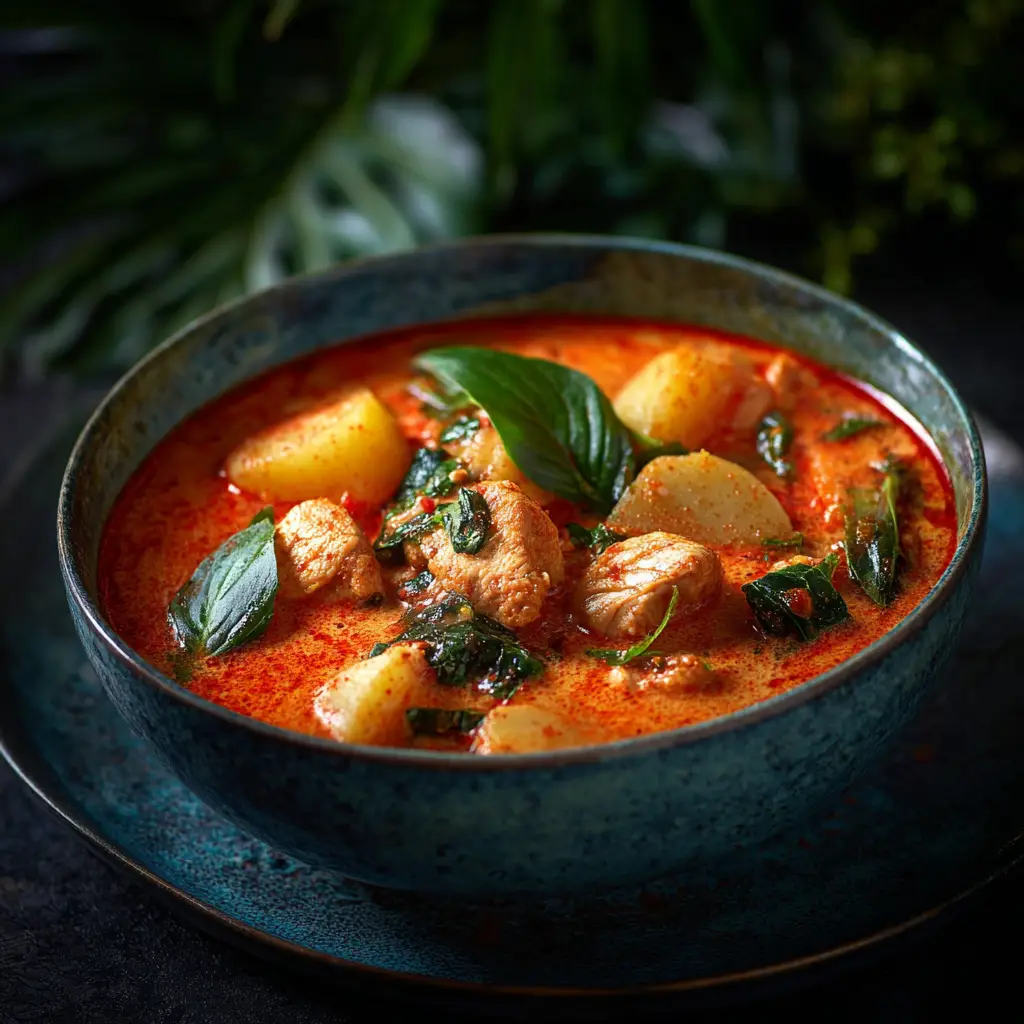
What Makes This Thai Red Curry Recipe Special?
Unlike other recipes that can be overly complicated, this one focuses on the essentials. We achieve incredible depth of flavor by “blooming” the curry paste in coconut cream—a simple yet crucial technique that unlocks the aromatics. This method ensures every spoonful is infused with the fragrant notes of lemongrass, galangal, and red chilies. It’s the secret to a curry that tastes like it has been simmering for hours.
Essential Ingredients for Authentic Flavor
The quality of your ingredients is key to a spectacular Thai red curry. Here’s what you’ll need and why it matters.
The Heart of the Curry: Red Curry Paste
The single most important component is the red curry paste. While a homemade paste is a labor of love, a quality store-bought brand is a fantastic and convenient option. Look for brands from Thailand for the most authentic flavor profile. The paste is a complex blend of red chili peppers, galangal, lemongrass, makrut lime zest, and spices.
Creamy Coconut Milk: Full-Fat is a Must
For a rich and creamy curry, you must use full-fat, unsweetened coconut milk. When you open the can, don’t shake it! You’ll scoop the thick cream from the top to fry the curry paste, which creates an incredibly fragrant base and can even cause the oil to split, a sign of a truly authentic curry.
Protein Options: Chicken, Shrimp, or Tofu
This Thai Red Curry recipe is incredibly versatile. I’m using boneless, skinless chicken thighs for their flavor and tenderness, but you can easily substitute them with peeled shrimp, firm tofu, or even beef. The cooking time will vary slightly depending on your choice.
Vegetables & Aromatics
We’re using bamboo shoots and red bell pepper for a classic combination of texture and sweetness. Fresh Thai basil and a few makrut (kaffir) lime leaves added at the end provide an unmistakable, fresh aroma that elevates the entire dish.
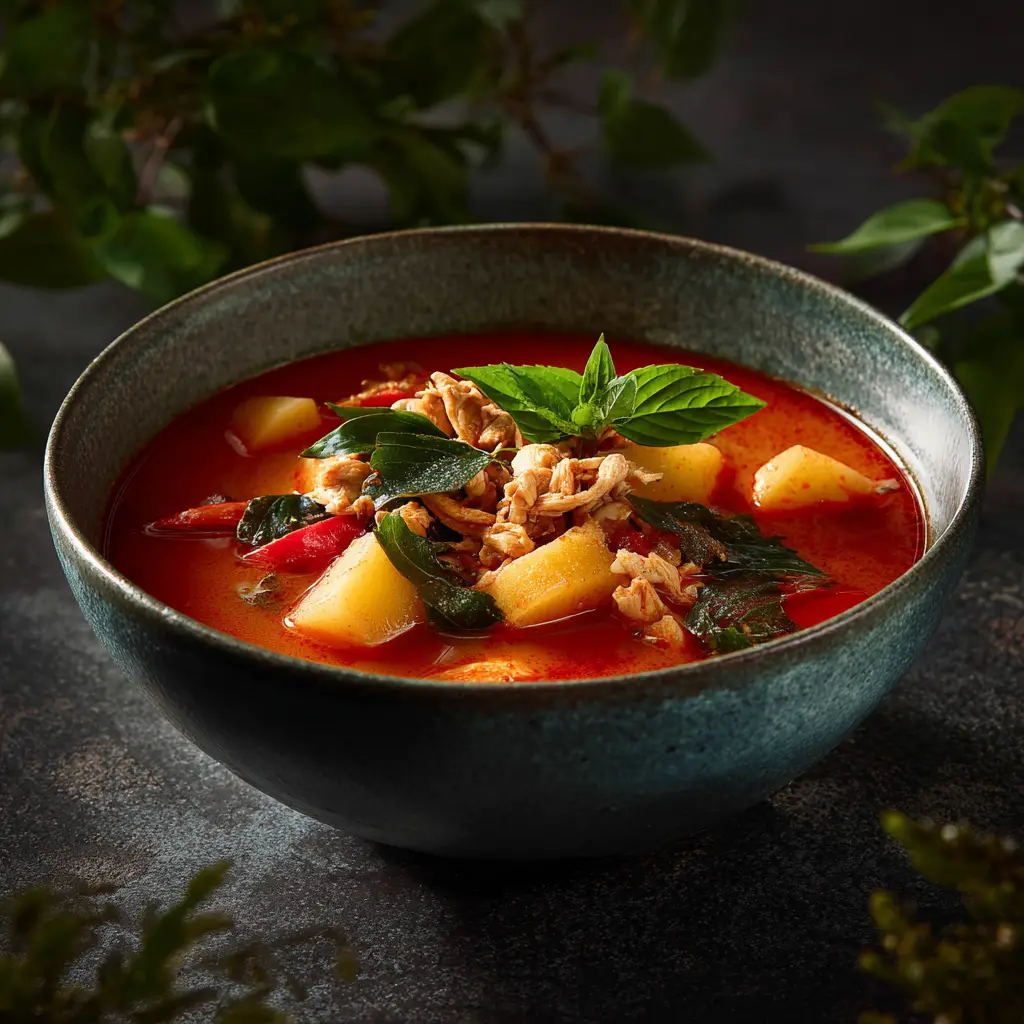
Step-by-Step Guide to the Perfect Thai Red Curry
Follow these simple steps for a flawless curry every time. The key is in the technique, not the complexity.
- Prepare Your Ingredients: Cut your chicken into bite-sized pieces and slice the bell pepper. Have your garlic, ginger, curry paste, and coconut milk ready to go.
- Bloom the Curry Paste: Heat a large skillet or wok over medium-high heat. Add the thick coconut cream from the top of the can and bring it to a simmer. Add the red curry paste and fry it for 2-3 minutes, stirring constantly until it’s deeply fragrant and the oil starts to separate.
- Cook the Aromatics and Protein: Add the minced garlic and ginger, cooking for another minute. Add the chicken pieces and cook until they are opaque on all sides.
- Simmer the Curry: Pour in the remaining coconut milk and the chicken broth. Add the fish sauce, coconut sugar, and makrut lime leaves. Bring to a simmer, then reduce the heat to medium-low and cook for 10-15 minutes, or until the chicken is cooked through and tender.
- Add Vegetables: Stir in the bamboo shoots and sliced red bell pepper. Cook for another 5 minutes, until the peppers are tender-crisp.
- Finish and Serve: Remove the curry from the heat. Stir in the fresh Thai basil leaves and a squeeze of fresh lime juice. Serve immediately over hot jasmine rice. For a comforting meal, consider pairing it with a side of Lemon Herb Rice.
Pro Tips for Restaurant-Quality Results
- Don’t Scorch the Paste: Keep a close eye on the curry paste as it fries. You want it to become aromatic, not burnt, which can make the dish bitter.
- Balance Your Flavors: Taste the curry before serving. Thai cooking is all about balancing sweet, sour, salty, and spicy. If it needs more saltiness, add a splash more fish sauce. More sweetness? A pinch more coconut sugar. More tang? A bit more lime juice.
- Use Fresh Thai Basil: While you can substitute Italian basil in a pinch, holy or Thai basil has a unique, slightly peppery, anise-like flavor that is signature to this dish. It makes a huge difference. If you’re looking for another comforting soup, our lasagna soup recipe is always a winner.
Serving and Storing Your Curry
Thai red curry is best served piping hot over a bed of fluffy jasmine rice. Garnish with extra Thai basil leaves, sliced red chili, or a lime wedge on the side. For a complete meal, pair it with a refreshing salad like this Italian Grinder Salad for a surprising and delicious fusion.
Store any leftovers in an airtight container in the refrigerator for up to 4 days. The flavors often deepen and become even more delicious the next day! Reheat gently on the stovetop or in the microwave.
Frequently Asked Questions
Absolutely. Simply substitute the chicken with firm tofu or chickpeas, use vegetable broth instead of chicken broth, and replace the fish sauce with soy sauce or a vegan fish sauce substitute.
The spice level is determined by your red curry paste. Most store-bought brands are medium-hot. For a milder curry, start with 2 tablespoons of paste and add more to taste. For more heat, you can add fresh sliced chilies.
For a vegetarian or vegan version, you can substitute fish sauce with an equal amount of soy sauce, tamari, or a vegan fish sauce alternative. You may need to adjust the salt level slightly.
This recipe is very flexible! Besides bell peppers and bamboo shoots, you can add broccoli florets, snow peas, carrots, baby corn, or cubed sweet potatoes. Adjust cooking time as needed for denser vegetables.
The primary difference is the type of chili used. Red curry is made with dried red chilies for a bold, savory heat. Green curry uses fresh green chilies and is often the spiciest and most aromatic. Yellow curry is milder and gets its color and flavor from turmeric and other dried spices.
We Hope You Love This Thai Red Curry Recipe!
We are confident this will become your go-to Thai Red Curry recipe. It’s fast enough for a weeknight but special enough for a weekend dinner. If you make it, please leave a comment below and let us know how it turned out! Don’t forget to save it to your favorite board on Pinterest.

Thai Red Curry Recipe
Authentic Thai Red Curry Recipe (Easy & Aromatic)
Ingredients
Equipment
Instructions
- Heat a large skillet over medium-high heat. Scoop the thick cream from the top of the unshaken can of coconut milk into the skillet. Bring to a simmer.
- Add the red curry paste and fry for 2-3 minutes, stirring constantly until fragrant and the oil begins to separate from the cream.
- Add the minced garlic and grated ginger, cooking for one more minute until aromatic.
- Add the chicken pieces and stir-fry until they are opaque on all sides.
- Pour in the remaining liquid coconut milk and the chicken broth. Stir in the fish sauce, coconut sugar, and makrut lime leaves (if using). Bring the mixture to a steady simmer.
- Reduce heat to medium-low, cover, and let it gently simmer for 10-15 minutes, allowing the chicken to cook through and the flavors to meld.
- Stir in the sliced red bell pepper and drained bamboo shoots. Cook for another 5 minutes, until the bell peppers are tender but still have a slight crunch.
- Remove the skillet from the heat. Stir in the fresh Thai basil leaves and the fresh lime juice. Serve immediately over hot jasmine rice.
Notes
Spice Level: The heat comes from the curry paste. If you prefer a milder curry, start with 2 tablespoons of paste and add more to taste.
Storage: Leftovers can be stored in an airtight container in the refrigerator for up to 4 days.