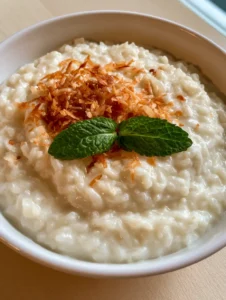
Coconut Rice Pudding is the ultimate intersection of comfort and tropical luxury. Imagine a bowl where every grain of rice is suspended in a thick, velvety ivory-colored coconut cream that coats the spoon like silk. This recipe isn’t just about cooking rice; it is about a slow-tempered infusion that results in a decadent, dairy-free masterpiece that rivals any high-end bistro dessert.
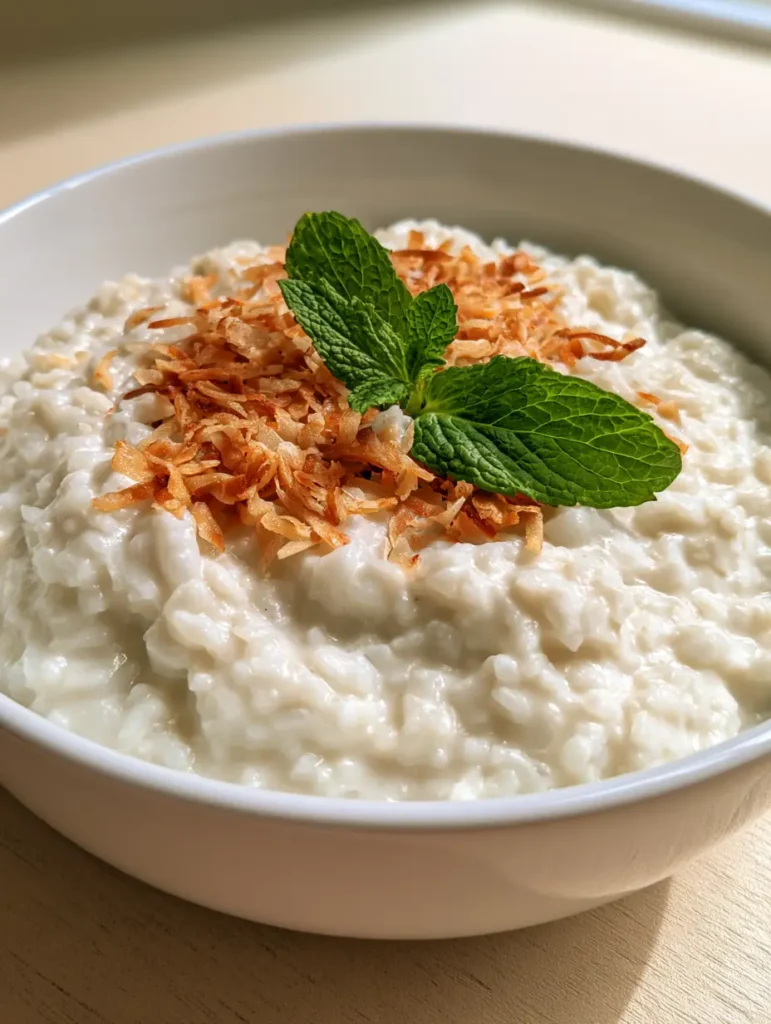
When you look at a bowl of this pudding, the first thing you notice is the striking contrast of textures. The soft, tender grains of white rice provide a gentle bite, while the cluster of golden-brown toasted coconut flakes adds a rhythmic crunch. A final garnish of vibrant green mint leaves provides a refreshing aromatic finish that cuts through the richness of the coconut milk perfectly.
Whether you are looking for a cozy weeknight treat or a sophisticated finale to a dinner party, this Coconut Rice Pudding delivers a multi-sensory experience. It captures the essence of soft natural daylight in a bowl, reflecting a clean and bright aesthetic that makes it as beautiful as it is delicious. Let’s dive into the culinary science of achieving that perfect ivory sheen and velvety mouthfeel.
Why This Velvety Coconut Rice Pudding Works
- Visual Elegance: The ivory-colored coconut cream base provides a stunning, clean backdrop for the golden-brown toasted flakes and bright green mint.
- Texture Contrast: We balance soft-cooked white rice with a concentrated coconut reduction to ensure a thick, velvety consistency that never feels mushy.
- Aromatic Depth: By using high-quality jasmine rice, we introduce natural floral notes that complement the nutty essence of the toasted coconut.
- Naturally Dairy-Free: This recipe relies entirely on plant-based fats, making it an inclusive dessert that doesn’t compromise on the traditional “creaminess” of classic pudding.
The Essential Ingredients for Tropical Rice Perfection
Long-Grain Jasmine Rice: 1 cup (185g) of jasmine rice provides the perfect starch profile for this pudding. While the grains soften significantly, they retain enough structure to remain visible and distinct within the coconut cream.
Full-Fat Canned Coconut Milk: 2 cans (800ml) of high-quality coconut milk are non-negotiable for achieving that signature thick texture. The high fat content ensures the pudding sets with a velvety finish rather than becoming watery.
Granulated White Sugar: 1/2 cup (100g) of sugar adds sweetness without altering the beautiful ivory color of the dish. Using liquid sweeteners like maple syrup would darken the cream, losing that bright visual appeal.
Unsweetened Coconut Flakes: 1/2 cup (45g) of flakes are dry-toasted until golden-brown to provide the primary textural contrast. This step activates the oils in the coconut, intensifying the flavor profile significantly.
Fine Sea Salt: 1/4 tsp (1.5g) of salt is the “invisible” hero that balances the natural sweetness of the coconut. It sharpens the flavors and prevents the pudding from tasting one-dimensional.
Pure Vanilla Extract: 1 tsp (5ml) adds a layer of floral warmth that bridges the gap between the rice and the coconut. It should be stirred in at the end to preserve its delicate volatile compounds.
Fresh Mint Leaves: A small handful of vibrant green mint leaves serves as the final visual and aromatic garnish. The cooling sensation of the mint is a professional-level pairing for the rich, warm coconut base.
Tools Required for the Perfect Pudding Consistency
To achieve the results seen in our visual guide, you will need a heavy-bottomed saucepan. This ensures even heat distribution, which is critical for preventing the coconut sugars from scorching at the bottom of the pot. A thick-walled pot helps maintain a steady simmer, which is the secret to even starch release from the rice.
You will also need a silicone spatula for constant stirring during the final stages of cooking. As the mixture thickens into a velvety cream, the rice tends to settle; frequent stirring ensures every grain is “saturated in a rich ivory-colored coconut cream” as described in our blueprint. Finally, a small non-stick skillet is essential for precisely toasting the coconut flakes to that specific golden-brown hue.
Mastering the Steps: How to Make Coconut Rice Pudding
1. Preparing the Rice Base
Begin by rinsing 1 cup (185g) of jasmine rice under cold water until the water runs clear. This removes excess surface starch that could make the pudding “gummy” rather than “velvety.” Place the rinsed rice in your heavy-bottomed saucepan with 1.5 cups (360ml) of filtered water and a pinch of salt.
Bring the water to a boil, then immediately reduce the heat to the lowest setting. Cover the pot and simmer for 12-15 minutes until the water is absorbed and the rice is tender. This initial water-cook ensures the rice is fully hydrated before it meets the heavy fats of the coconut milk.
2. The Coconut Infusion and Reduction
Once the rice is soft, pour in 2 cans (800ml) of full-fat coconut milk and 1/2 cup (100g) of sugar. Increase the heat to medium-high just until the mixture begins to bubble, then drop it back to a gentle simmer. Do not use a lid for this stage, as we want the steam to escape so the liquid can reduce and thicken.
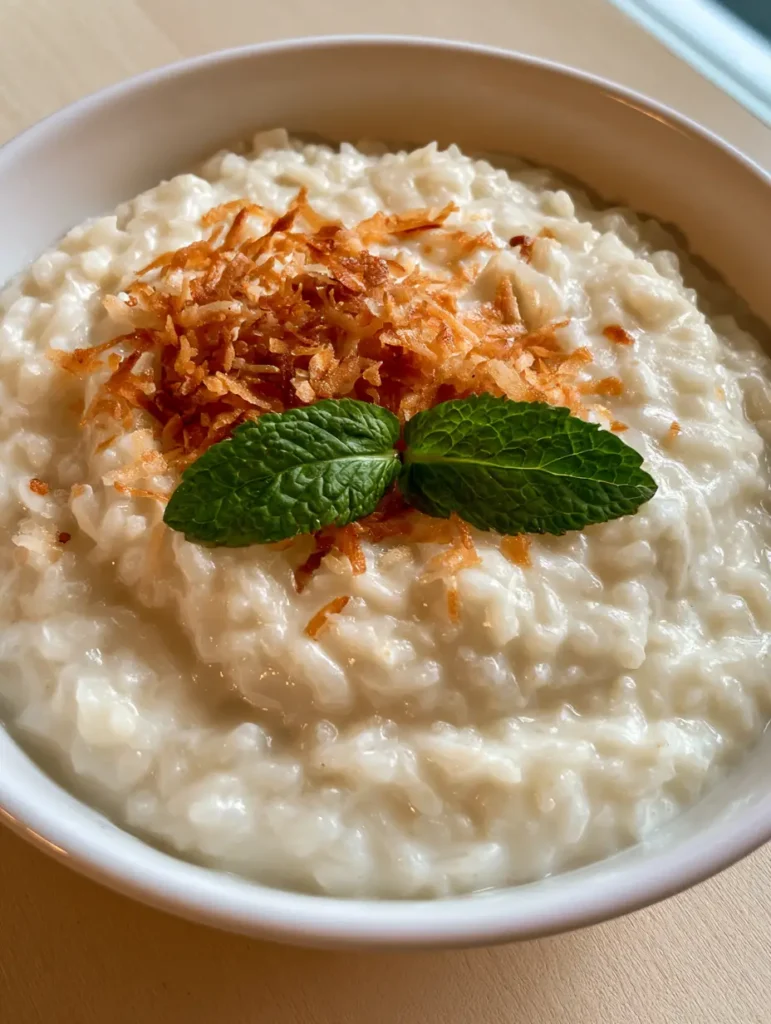
Stir every few minutes, paying close attention to the sensory cues. You are looking for the liquid to transform from a thin milk into a thick, ivory-colored cream that coats the back of a spoon. This process usually takes 20-25 minutes. The grains of rice should appear plump and saturated, looking almost translucent within the cream.
3. Achieving the Golden Toast
While the pudding simmers, place 1/2 cup (45g) of unsweetened coconut flakes in a small skillet over medium heat. Do not walk away from the stove during this process. Stir constantly as the flakes transition from white to a pale tan, then finally to a rich golden-brown.
Remove the flakes from the pan immediately once they reach the desired color, as the residual heat of the skillet can quickly lead to burning. The smell should be toasted and nutty, providing a sharp contrast to the sweet aroma of the simmering pudding.
4. The Final Flavor Balance
Once the Coconut Rice Pudding has reached a thick, velvety consistency, remove it from the heat. Stir in 1 tsp (5ml) of vanilla extract. At this stage, the pudding may still look slightly loose, but it will thicken significantly as it cools toward room temperature.
Let the pudding rest for at least 10 minutes before serving. This rest period allows the rice to finish absorbing the flavored cream, ensuring that every bite is “thick and velvety” just like the professional handheld smartphone photo shows.
Pro Secrets for a Glossy Ivory Texture
- The Fat Ratio: Always use canned coconut milk, not the carton version used for cereal. Canned milk contains the high fat content necessary for a velvety mouthfeel.
- Temperature Control: Never let the coconut milk reach a rolling boil once added to the rice. High heat can cause the coconut oil to separate, leading to a greasy rather than creamy texture.
- Visual Cue: Look for the “lazy bubble.” When the pudding is ready, the bubbles breaking the surface should look heavy and slow, indicating the liquid has reduced to a thick cream.
- The Salt Balance: If the pudding tastes “flat,” add a tiny pinch more sea salt. Salt is essential for making the coconut flavor “pop” against the starch of the rice.
Creative Pairings and Serving Suggestions
This Coconut Rice Pudding is a versatile base that pairs beautifully with other tropical flavors. For a full island-themed dessert spread, consider serving this alongside a dish of tropical coconut pineapple rice (coming soon) to showcase the ingredient’s versatility in both sweet and savory applications.
If you are hosting a brunch, this pudding acts as a wonderful creamy component. It provides a similar textural satisfaction to creme brulee french toast (coming soon), but with a distinct coconut flare. For those who love the combination of coconut and fruit, you might also enjoy exploring the flavors of raspberry coconut magic bars as a portable treat option.
To keep the meal light before this rich dessert, a main course like garlic herb chicken breast or a refreshing shrimp bisque provides a clean palate that readies your guests for the indulgence of the coconut cream.
How to Store and Reheat Your Pudding
Coconut Rice Pudding can be served warm, at room temperature, or chilled. If you prefer it cold, place a piece of plastic wrap directly on the surface of the pudding before refrigerating. This prevents a “skin” from forming and maintains that perfectly smooth ivory surface.
Store leftovers in an airtight container in the refrigerator for up to 4 days. Note that the rice will continue to absorb liquid as it sits. When reheating, the pudding may appear quite stiff. To restore the velvety texture, stir in a splash of coconut milk or water (about 1-2 tablespoons) before warming it gently on the stovetop or in the microwave.
Frequently Asked Questions
While you can use brown rice, it will significantly change the texture and appearance. Brown rice takes longer to cook and has a nuttier, chewier texture that won’t achieve the signature ‘ivory velvety’ look of this white rice version.
I do not recommend light coconut milk. It has a much higher water content, which will result in a thin, watery pudding rather than the thick, velvety ivory cream described in the recipe.
To prevent a skin, place a piece of plastic wrap directly onto the surface of the hot pudding while it cools. This keeps the top layer moist and prevents it from drying out.
Yes, this recipe is naturally gluten-free as it uses rice and coconut milk. Always check your vanilla extract and coconut flake labels to ensure they are processed in a gluten-free facility.
Pudding thickens as the coconut milk reduces and the rice releases starch. Ensure you are simmering uncovered and using full-fat canned coconut milk. It will also thicken considerably as it cools.
The Ultimate Creamy Coconut Rice Pudding Recipe
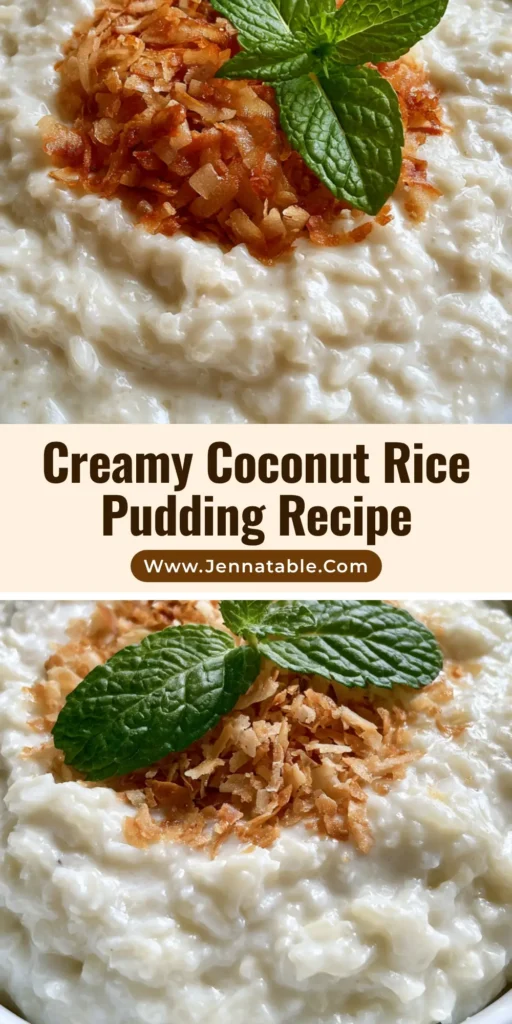
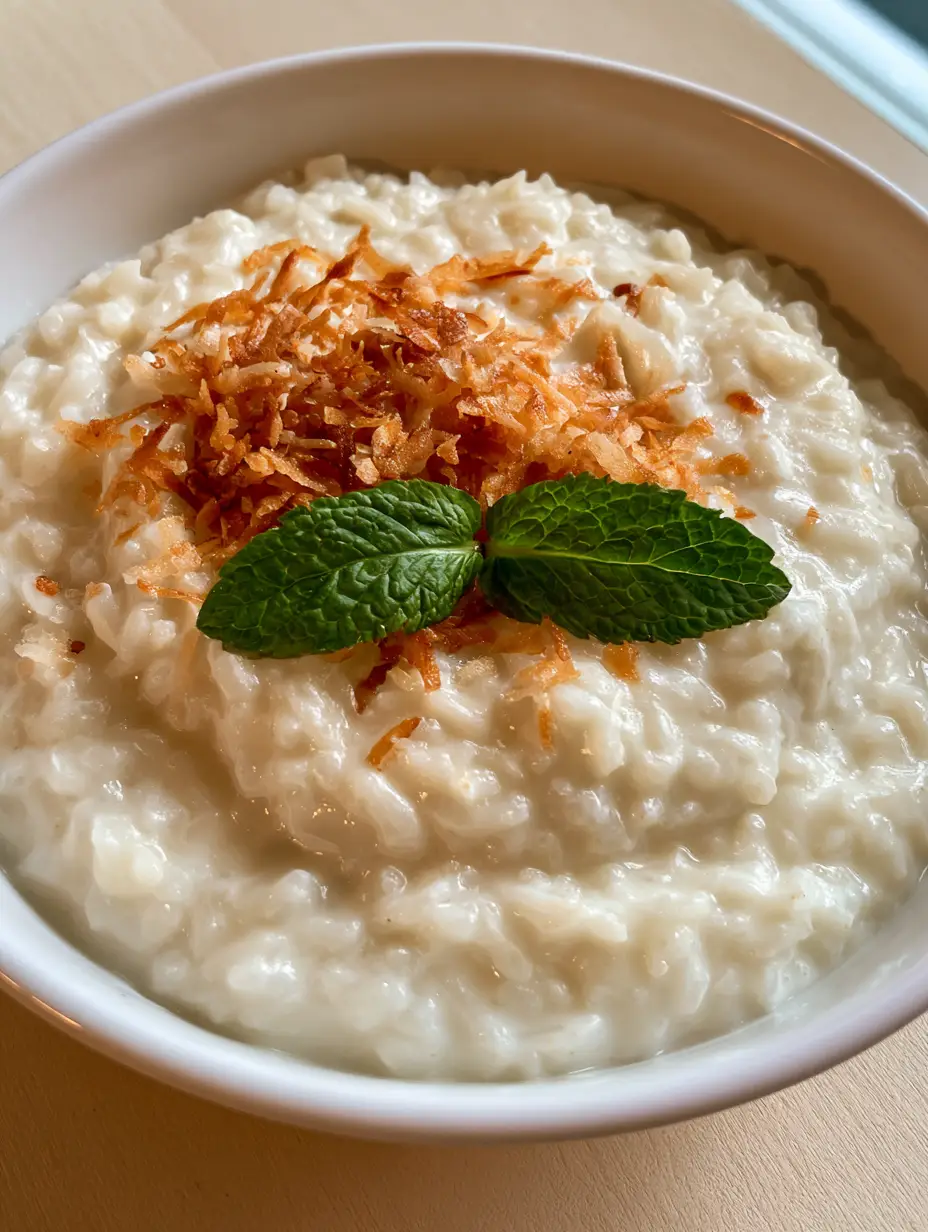
Coconut Rice Pudding with Toasted Coconut and Fresh Mint
Ingredients
Equipment
Instructions
- Combine rinsed rice, 1.5 cups (360ml) water, and salt in a saucepan. Simmer covered for 15 minutes until tender.
- Stir in coconut milk and sugar. Simmer uncovered for 20-25 minutes, stirring frequently until the mixture is a thick, velvety ivory cream.
- Remove from heat and stir in vanilla extract. Let rest for 10 minutes to thicken.
- Toast coconut flakes in a dry skillet over medium heat until golden-brown. Watch closely to prevent burning.
- Spoon pudding into bowls, top with a cluster of toasted flakes, and add two fresh mint leaves.
Notes
Don't skip rinsing the rice; it ensures the pudding is velvety rather than sticky.
Closing & Call to Action
Mastering this Coconut Rice Pudding brings a piece of tropical paradise directly into your kitchen. With its ivory-colored cream and perfect balance of soft rice and crunchy toasted flakes, it is a recipe that looks as professional as it tastes. The addition of fresh mint is the “chef’s kiss” that elevates this from a simple snack to a gourmet dessert.
If you enjoyed making this velvety treat, please leave a comment below and let me know how your toasted coconut turned out! Don’t forget to share your creations on social media and follow Jenna_Table on Pinterest for more visually stunning recipe inspiration. Happy cooking!