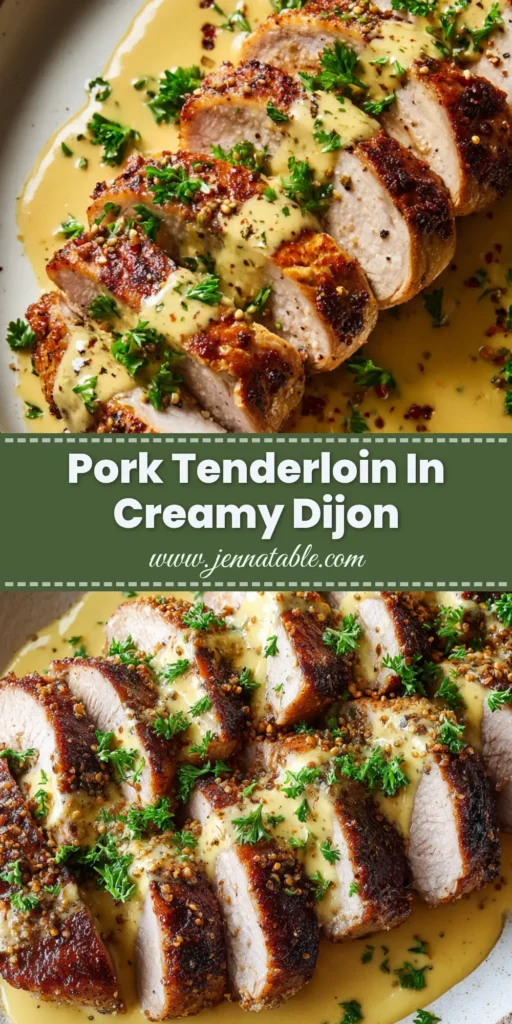
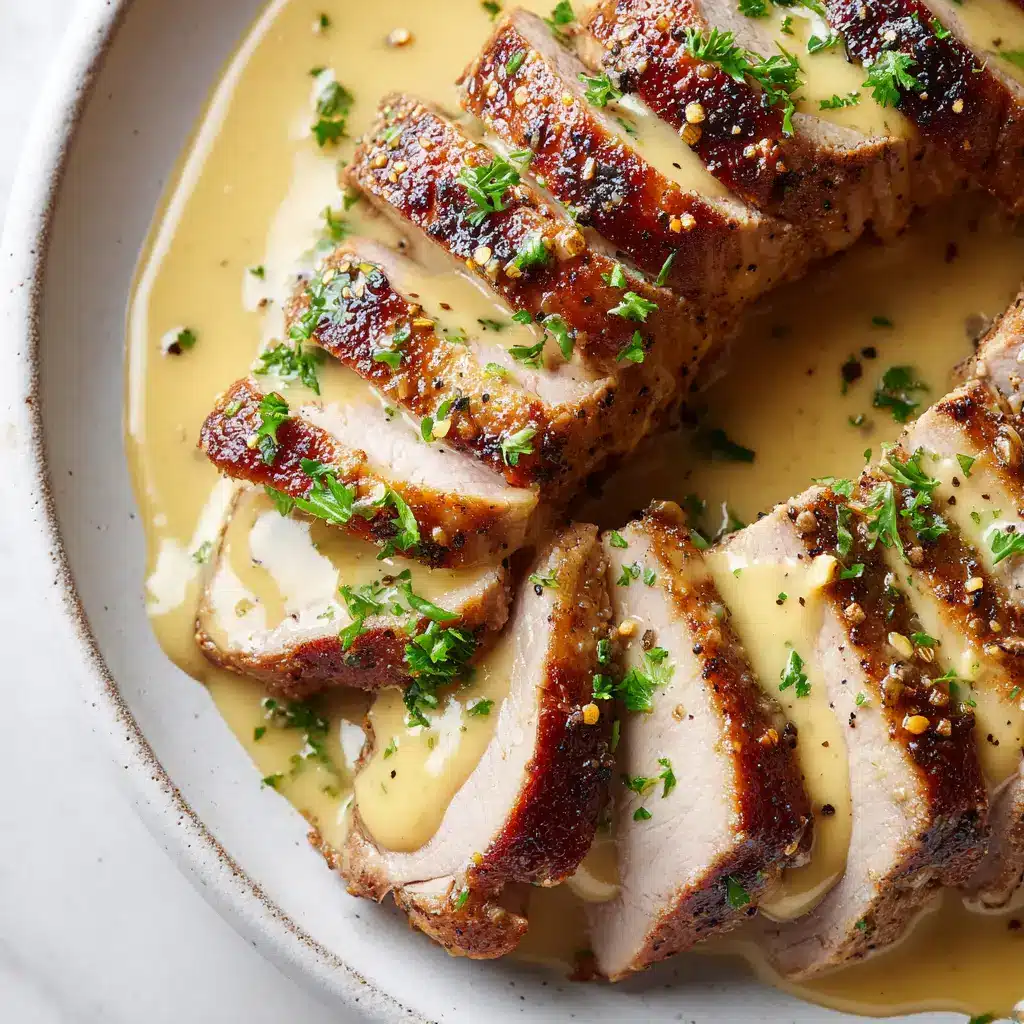
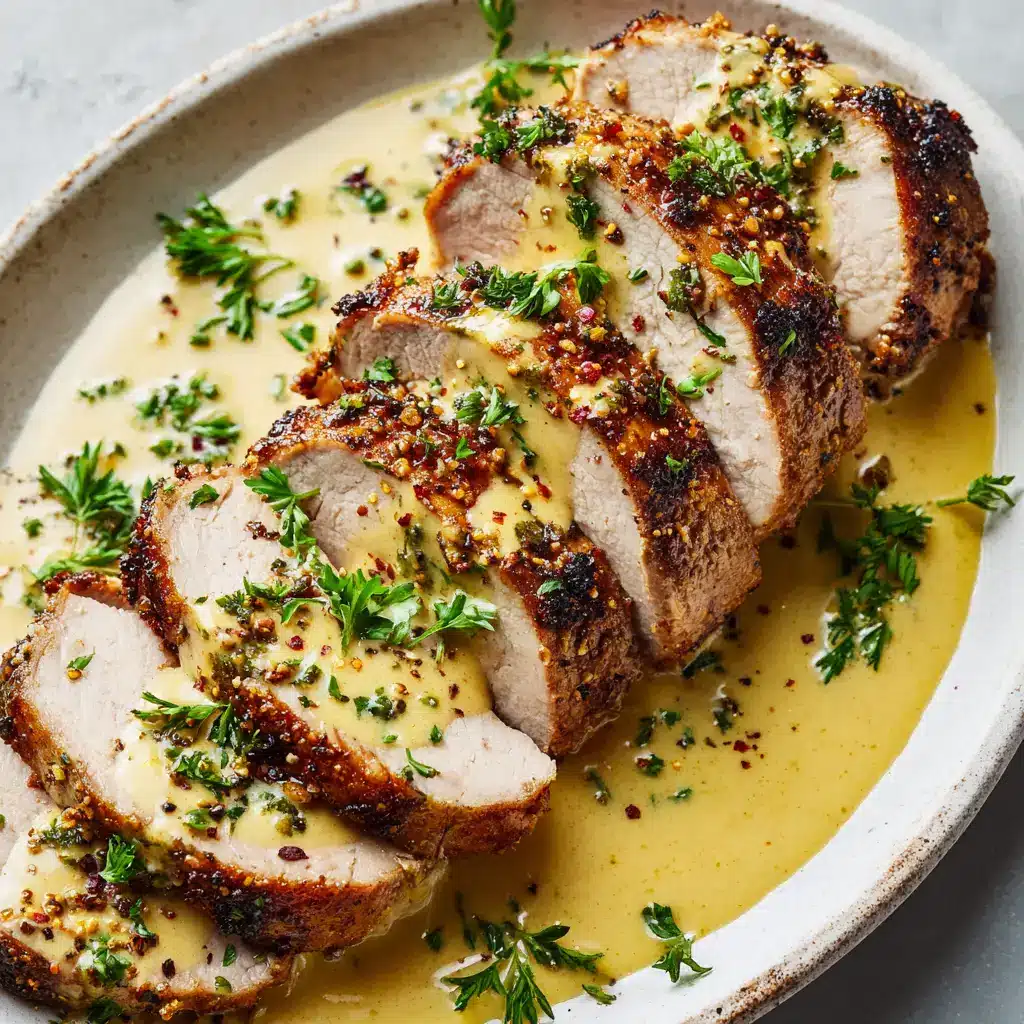
There are few dishes as stunningly simple and elegantly delicious as a perfectly cooked Pork Tenderloin with Dijon Mustard Sauce. Imagine thick, tender slices of pork, each boasting a deeply caramelized, golden-brown crust that crackles ever so slightly. The center is blushingly pink, unbelievably juicy, and practically melts in your mouth. Draped over this is a luxuriously velvety, pale-yellow Dijon mustard cream sauce, alive with the tiny, textural pops of whole grain mustard seeds.
This isn’t just a meal; it’s a sensory experience. It’s the kind of dinner that looks like it came from a high-end bistro but is secretly achievable in your own kitchen on a weeknight. With a generous garnish of finely chopped fresh parsley and a bold hit of coarse cracked black pepper, this dish delivers on every single level: flavor, texture, and visual appeal. It’s the recipe that will make you look like a culinary genius.
Why This Pan-Seared Pork Recipe Is an Absolute Keeper
You’ll find yourself returning to this recipe again and again. Here’s what makes this Pork Tenderloin with Dijon Mustard Sauce so special:
- The Perfect Sear: We focus on technique to create that irresistible, deeply golden-brown caramelized crust, locking in all the juices for a tender bite every time.
- A Luxuriously Velvety Sauce: Forget clumpy or broken sauces. This method builds a stable, creamy, and intensely flavorful pan sauce right in the same skillet, making cleanup a breeze.
- Elegant and Approachable: It’s a 30-minute meal that is special enough for a dinner party but fast enough for a Tuesday.
- Visually Stunning: Following the steps guarantees a result that looks just as good as it tastes, complete with those beautiful whole grain mustard flecks and fresh parsley garnish.
The Anatomy of a Perfect Dijon Cream Sauce: Key Ingredients
The magic of this dish lies in using quality ingredients that each play a specific, crucial role. There are no passengers here; every element works hard to create that final, flawless bite.
For the Pork Tenderloin
Pork Tenderloin: The star of the show. We use a whole 1.5 lb (680g) tenderloin, which is lean, incredibly tender, and cooks quickly. Trimming the silver skin is a non-negotiable step for a perfect texture.
Avocado or Olive Oil: To achieve a high-heat sear without burning, you need a good quality oil. This is the foundation of your golden-brown crust.
Kosher Salt & Coarse Black Pepper: These aren’t just seasonings; they are functional. A generous seasoning draws out initial moisture, allowing for a drier surface which is critical for caramelization.
For the Velvety Mustard Pan Sauce
Shallot and Garlic: These are your aromatic base. A finely minced shallot provides a mild, sweet onion flavor that is less assertive than a yellow onion, while garlic adds that pungent depth we all love.
Dry White Wine: A splash of something crisp like a Sauvignon Blanc or Pinot Grigio is used to deglaze the pan. It lifts all those caramelized pork drippings (the “fond”) from the bottom of the skillet, which is pure, concentrated flavor.
Dijon Mustard: This is the soul of the sauce. Its sharp, tangy flavor cuts through the richness of the cream, and its emulsifying properties help create that velvety texture.
Whole Grain Mustard: While Dijon brings the flavor punch, whole grain mustard brings the visual appeal and a pleasant, textural pop. Those little flecks are what make the sauce look so professional.
Heavy Cream: This is what transforms the sauce from a thin liquid to a thick, velvety, pale-yellow coating that clings beautifully to every slice of pork.
Fresh Parsley: More than just a garnish, finely chopped parsley adds a burst of fresh, green, peppery flavor that brightens up the entire dish.
Essential Tools for a Flawless Sear and Sauce
You don’t need a lot of fancy equipment for this recipe, but a few key tools will make the process much smoother and guarantee a restaurant-quality result.
- Large Skillet: A 12-inch (30 cm) cast iron or stainless steel skillet is perfect. These materials retain heat exceptionally well, which is crucial for getting a deep, even sear.
- Instant-Read Meat Thermometer: This is the single most important tool for juicy pork. It takes the guesswork out of cooking and is the only way to ensure your tenderloin is cooked to a perfect 145°F (63°C) and not a degree more.
- Tongs: For flipping the pork tenderloin without piercing the flesh and letting those precious juices escape.
- Sharp Chef’s Knife: Essential for trimming the silver skin, mincing the aromatics, and for carving those beautiful thick slices for serving.
Mastering the Art: From Searing to Sauce-Making
Follow these steps closely, paying attention to the sensory cues. The sights, sounds, and smells will tell you when you’re on the right track.
Step 1: Prepare the Pork for Searing
First, trim the silver skin from the pork tenderloin. This is a thin, silvery membrane that won’t render down during cooking and will be chewy if left on. Pat the entire tenderloin completely dry with paper towels; a dry surface is the secret to a great crust. Season it generously on all sides with kosher salt and freshly cracked black pepper. Don’t be shy!
Step 2: Achieve the Perfect Golden-Brown Crust
Heat your skillet over medium-high heat and add the oil. You’ll know the pan is ready when the oil shimmers slightly. Gently place the seasoned tenderloin in the hot pan. You should hear a confident sizzle. Sear the pork for 3-4 minutes per side, turning it with tongs, until a deep, golden-brown caramelized crust has formed on all surfaces. Once seared, transfer the pork to a plate.
Step 3: Build the Velvety Dijon Pan Sauce
Lower the heat to medium and add the minced shallot to the same skillet, scraping up any browned bits. Cook for 2 minutes until softened, then add the garlic and cook for another 30 seconds until fragrant. Pour in the white wine to deglaze, using a wooden spoon to scrape every last bit of flavor from the bottom of the pan. Let it bubble and reduce by half.
Whisk in both the Dijon and whole grain mustards, followed by the heavy cream. Bring the sauce to a gentle simmer and let it thicken for 3-4 minutes. You’ll know it’s ready when it’s thick enough to coat the back of a spoon. Season with salt and pepper to taste.
Step 4: Finish Cooking, Rest, and Serve
Return the seared pork tenderloin (and any accumulated juices from the plate) to the skillet with the sauce. Spoon some of the sauce over the top. Reduce the heat to low, cover, and let it gently cook for another 5-10 minutes, or until an instant-read thermometer inserted into the thickest part reads 145°F (63°C). Transfer the pork to a cutting board and let it rest for 5-7 minutes. This is critical for a juicy result. While the pork rests, stir the fresh parsley into the sauce. Slice the rested tenderloin into thick 1-inch (2.5 cm) medallions, arrange them on a plate in an overlapping fan, and spoon that glorious Dijon cream sauce all over the top. Garnish with more parsley and a final grind of black pepper.
Pro Tips for Restaurant-Quality Results
- Don’t Crowd the Pan: Ensure your skillet is large enough to hold the tenderloin without it touching the sides too much. A crowded pan steams the meat instead of searing it.
- Trust the Thermometer: Pork tenderloin is very lean. Even one or two extra minutes of cooking can take it from juicy to dry. A meat thermometer is your best friend.
- The Rest is Essential: Do not skip the resting period. Slicing into the meat too soon will cause all the juices to run out onto your cutting board instead of staying in the pork.
- Taste Your Sauce: Always taste and adjust the seasoning of your sauce before serving. It might need another pinch of salt or a crack of pepper to be perfect.
Storing and Reheating Your Masterpiece
This Pork Tenderloin with Dijon Mustard Sauce is best enjoyed fresh, but leftovers are still fantastic. Store any leftover sliced pork and sauce in an airtight container in the refrigerator for up to 3 days.
To reheat, gently warm the slices and sauce in a skillet over low heat until just warmed through. Avoid the microwave, as it can overcook the pork and make it tough.
Complete Your Meal: Perfect Pairings
This dish pairs beautifully with a variety of sides that can soak up the incredible sauce. For a truly comforting meal, serve it over a bed of the creamiest mashed potatoes (coming soon).
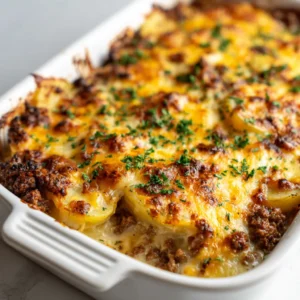
If you’re feeling a bit more ambitious, a side of rich and cheesy homemade scalloped potatoes is an absolute showstopper. For a lighter pairing, steamed asparagus or a simple green salad with a vinaigrette works wonderfully. Or, for another elegant dinner idea, consider this incredible recipe for Steak au Poivre.
Your Questions, Answered
Absolutely. You can substitute the dry white wine with an equal amount of chicken broth or vegetable broth. This will still allow you to deglaze the pan and capture all the flavorful browned bits.
The two most important steps are to not overcook it—use a meat thermometer to pull it from the heat at exactly 145°F (63°C)—and to let it rest for at least 5 minutes before slicing. This allows the juices to redistribute throughout the meat.
For a juicy and safe result, cook pork tenderloin to an internal temperature of 145°F (63°C) when measured with a meat thermometer. This should be followed by a 5-7 minute rest before slicing.
For a perfect golden-brown crust, make sure your pan is sufficiently hot before adding the meat, use an oil with a high smoke point, and most importantly, ensure the surface of the pork is patted completely dry with paper towels before seasoning.
Dijon mustard provides the sharp, tangy flavor base and helps to emulsify the cream sauce, making it smooth and velvety. Whole grain mustard adds a milder flavor, a pleasing textural ‘pop’, and the beautiful visual flecks seen in the finished sauce.
The Ultimate Pork Tenderloin with Dijon Mustard Sauce Recipe
Pork Tenderloin with Dijon Mustard Sauce (Juicy & Caramelized)
Ingredients
Equipment
Instructions
- Trim any silver skin off the pork tenderloin. Pat the pork completely dry with paper towels and season generously on all sides with kosher salt and coarse black pepper.
- Heat oil in a large skillet over medium-high heat until shimmering. Place the pork in the hot pan and sear for 3-4 minutes per side, until a deep golden-brown crust forms. Transfer the pork to a plate.
- Reduce heat to medium. Add the minced shallot to the skillet and cook for 2 minutes until soft. Add garlic and cook for 30 seconds more until fragrant. Pour in the white wine to deglaze, scraping all the browned bits from the bottom of the pan. Allow it to bubble and reduce by half.
- Whisk in the Dijon and whole grain mustards, then slowly whisk in the heavy cream. Bring to a simmer and cook for 3-4 minutes, until the sauce has thickened enough to coat a spoon. Season with salt and pepper to taste.
- Return the pork tenderloin and any juices to the skillet. Spoon sauce over the top. Reduce heat to low, cover, and cook for 5-10 minutes, or until an instant-read thermometer reaches 145°F (63°C). Transfer pork to a cutting board and let it rest for 5-7 minutes. Stir fresh parsley into the sauce. Slice the pork into thick medallions, arrange on a plate, and pour the sauce over top. Garnish with more parsley and black pepper.
Notes
Trust the Thermometer: For perfectly juicy pork, do not cook past 145°F (63°C).
The Rest is Essential: Let the pork rest for 5-7 minutes before slicing to allow the juices to redistribute, ensuring a tender result.
Share Your Culinary Triumph!
We are so excited for you to try this Pork Tenderloin with Dijon Mustard Sauce recipe! It’s a dish that proves elegant, delicious food can be simple and rewarding to make at home.
If you make this recipe, be sure to leave a comment and rating below. We love hearing from you! And don’t forget to share a photo of your masterpiece on Pinterest!