Ingredients
Equipment
Instructions
Sear the Chicken
- Pat the chicken thighs dry with a paper towel and season generously on both sides with salt and pepper.
- Heat avocado oil in a large skillet over medium-high heat. Place the chicken in the hot skillet and sear for 3-4 minutes per side, until a deep golden-brown crust forms.
- Transfer the seared chicken to the bottom of a 6-quart slow cooker.
Mix Sauce and Cook
- In a small bowl, whisk together the honey, soy sauce, minced garlic, and rice vinegar. Pour the sauce over the chicken.
- Arrange the halved potatoes and sliced carrots around the chicken. Cover and cook on LOW for 4-5 hours or on HIGH for 2-3 hours, until vegetables are tender.
Thicken Glaze and Serve
- Add the green beans to the slow cooker during the last 20-30 minutes of cooking.
- In the final 5 minutes, remove 1/2 cup of hot liquid from the slow cooker and whisk it with the cornstarch in a small bowl to create a slurry. Pour the slurry back into the slow cooker, add the toasted sesame oil, and stir gently. The sauce will thicken into a glossy glaze.
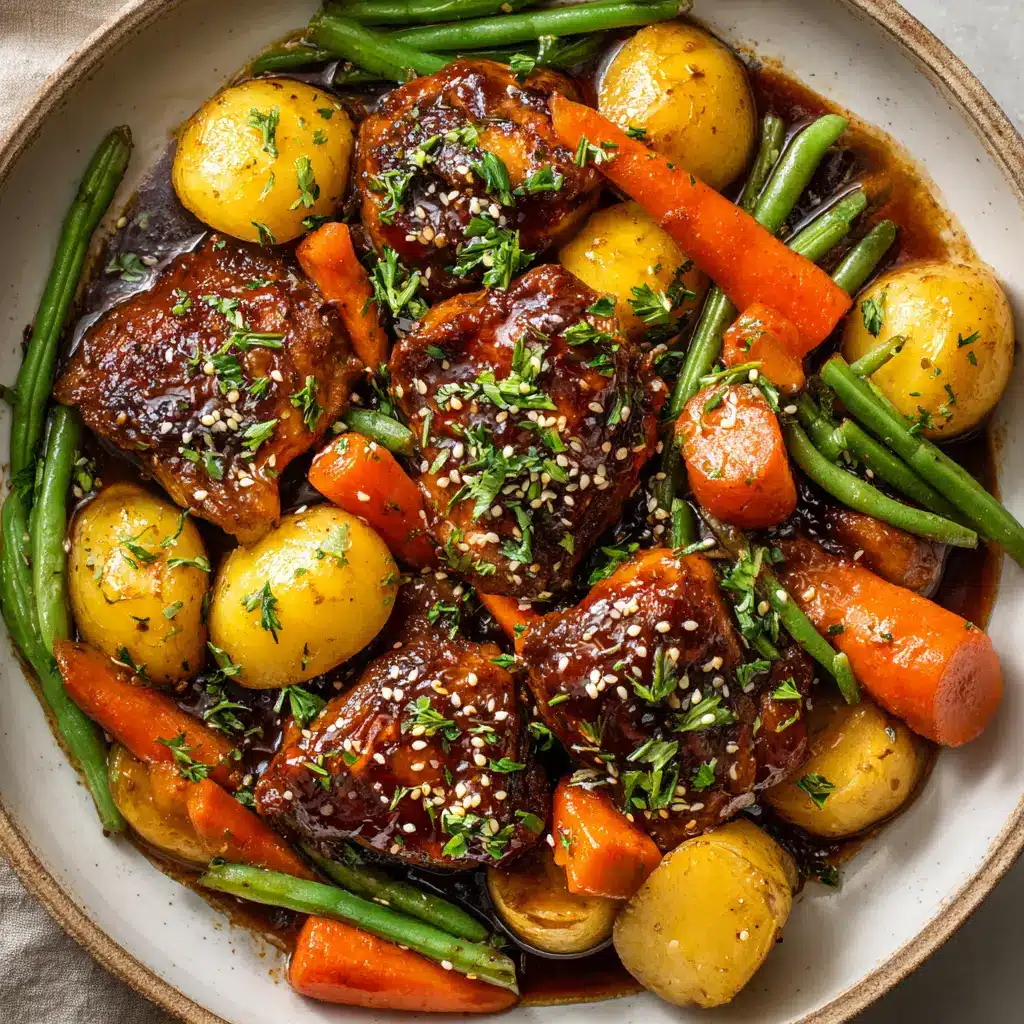
- Serve the chicken and vegetables drizzled with extra sauce, and garnish with white sesame seeds and fresh parsley.
Notes
Don't Skip the Sear: Searing the chicken is non-negotiable. It creates the Maillard reaction, which develops deep, savory flavors.
Dry Your Chicken: For the best sear, make sure your chicken thighs are patted completely dry. A dry surface browns, a wet surface steams.
Fresh is Best: While garlic powder can work in a pinch, fresh minced garlic provides a much more potent and authentic flavor.
Lid On: Avoid the temptation to lift the lid while cooking. Each time you do, heat escapes and significantly increases the cooking time.
Dry Your Chicken: For the best sear, make sure your chicken thighs are patted completely dry. A dry surface browns, a wet surface steams.
Fresh is Best: While garlic powder can work in a pinch, fresh minced garlic provides a much more potent and authentic flavor.
Lid On: Avoid the temptation to lift the lid while cooking. Each time you do, heat escapes and significantly increases the cooking time.
