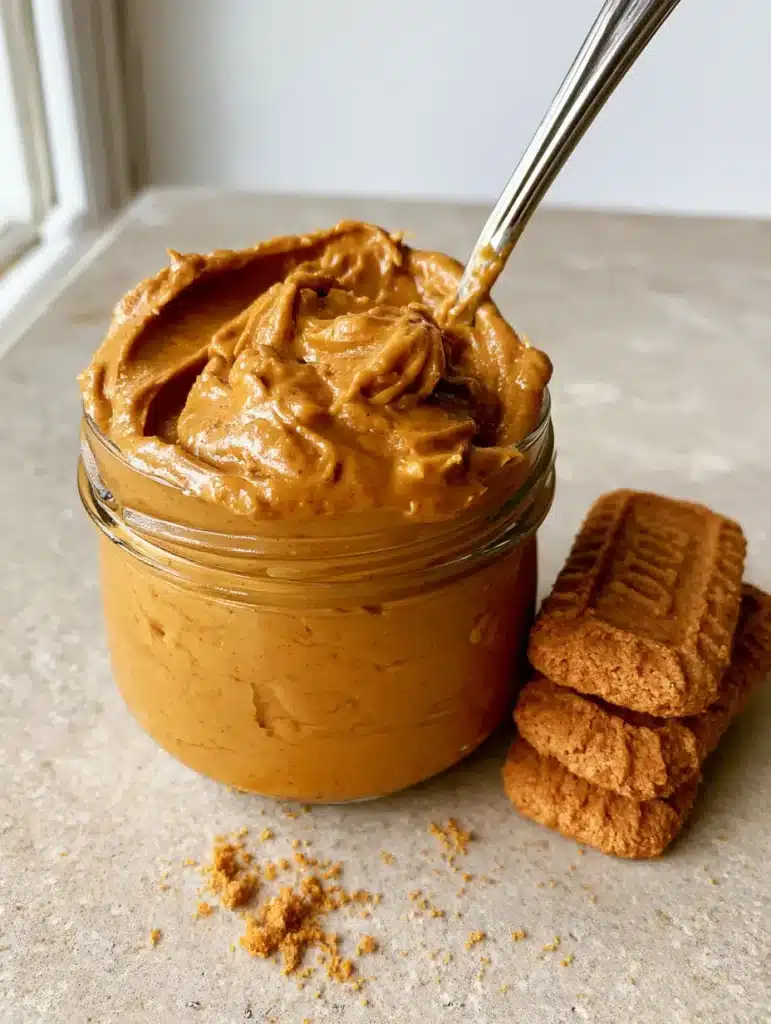
There is something undeniably hypnotic about a fresh jar of speculoos spread. The way the light catches the glossy, golden-brown surface, and that first pull of a silver spoon through a thick, velvety swirl—it is pure culinary art. This Biscoff Cookie Butter Recipe allows you to recreate that exact experience in your own kitchen with professional-grade results.
Whether you are a fan of the iconic Belgian airline treat or a dedicated baker, making your own cookie butter is a revelation. By controlling the emulsification process, you can achieve a spread that is even smoother and more flavorful than the store-bought alternative. This guide will walk you through the science of creating a shelf-stable, perfectly homogeneous spread that looks as good as it tastes.
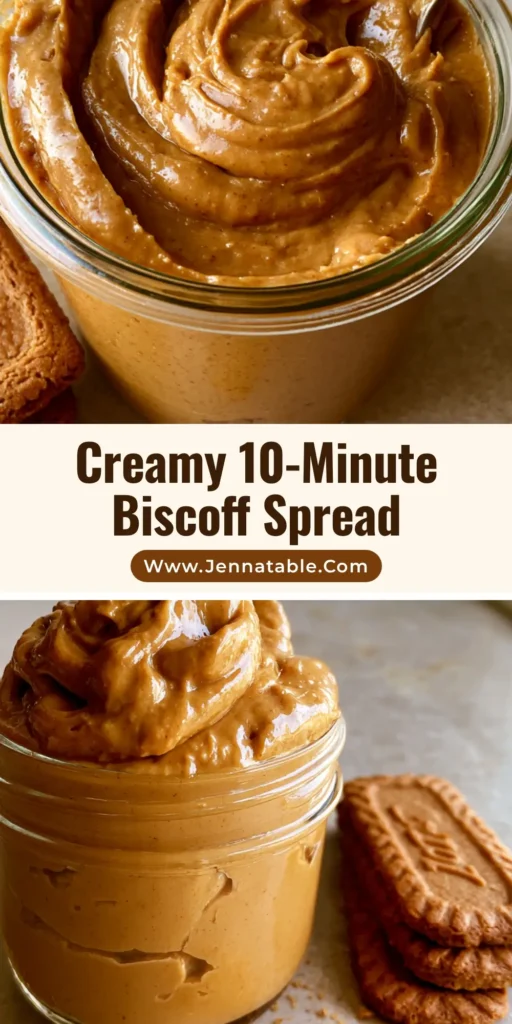
Imagine a clear glass jar, filled to the brim with a golden emulsion, sitting on your countertop next to a stack of crisp Lotus Biscoff cookies. The aroma of cinnamon, nutmeg, and caramelized sugar fills the air. This recipe isn’t just about mixing crumbs; it’s about achieving a specific structural integrity that ensures your spread stays spreadable even after refrigeration.
Why You Will Crave This Homemade Speculoos Masterpiece
- Perfectly Homogeneous Texture: We use specific emulsification techniques to ensure the fine cookie crumbs and fats never separate, resulting in a glossy finish.
- Customizable Sweetness: While the visual blueprint calls for that classic golden-brown hue, you can tweak the flavor profile to be more spice-forward or extra creamy.
- Visual Forensics: This recipe is designed to match the professional aesthetic of a velvety swirl and a thick, spreadable consistency.
- Versatility: Once you master this base, you can use it in everything from mini Biscoff cheesecakes to decadent cake fillings.
The Essential Elements for Smooth Speculoos Spread
To achieve the visual result of a smooth, glossy spread, we must look beyond just the cookies. The ingredients below are selected for their specific molecular contributions to the final texture.
Lotus Biscoff Cookies: 8.8 oz (250g) or one standard package. These are the foundation, providing the distinct caramelized spice flavor and the sandy brown color visible in the crumbs.
Neutral Oil (Vegetable or Canola): 1/4 cup (60ml). This is the secret to the “glossy” finish described in the visual prompt; it stays liquid at room temperature to ensure spreadability.
Unsalted Butter: 2 tbsp (28g), melted. Butter provides the “velvety” mouthfeel and helps the spread set slightly, giving it the structure needed for those beautiful spoon swirls.
Evaporated Milk: 1/3 cup (80ml). Unlike regular milk, evaporated milk has a lower water content, which prevents the cookies from becoming a soggy mess and helps create a stable emulsion.
Brown Sugar or Honey: 1 tbsp (15g). This enhances the golden-brown depth of the spread and adds a subtle sheen to the surface.
Lemon Juice: 1/2 tsp (2.5ml). A tiny amount of acid cuts through the heavy fats, brightening the spice notes of the Biscoff cookies.
Fine Sea Salt: 1/8 tsp (0.75g). Salt is a flavor transitioner that bridges the gap between the fat of the oil and the sugar of the cookies.
Precision Equipment for a Professional Finish
Achieving a “perfectly homogeneous” spread requires high-shear force. A standard bowl and whisk will not suffice for the results seen in our visual blueprint.
You will need a high-powered food processor or a high-speed blender. The goal is to transform the solid cookies into “fine, sandy cookie crumbs” before any liquid is introduced. A silicone spatula is also essential for scraping down the sides to ensure no grit remains. Finally, a sterilized clear glass jar is required for storage to showcase the beautiful golden-brown color.
Mastering the Emulsion: A Step-by-Step Guide
The Micronization of Crumbs
Place the whole Lotus Biscoff cookies into the bowl of your food processor. Pulse on high for 60-90 seconds until the cookies are transformed into a fine, sandy dust. There should be no visible pieces remaining; the texture should resemble fine flour.
Integrating the Fats
With the processor running on low, slowly drizzle in the 1/4 cup (60ml) of neutral oil and the 2 tbsp (28g) of melted butter. You will notice the crumbs begin to clump together and then suddenly turn into a thick, dark paste. This is the beginning of your Biscoff Cookie Butter Recipe transformation.
Developing the Glossy Finish
Add the evaporated milk, brown sugar, lemon juice, and salt. Switch the processor to high speed and blend for a full 2 minutes. The friction from the blades will slightly warm the fats, allowing them to encapsulate the cookie particles. Look for the texture to shift from matte to glossy and smooth.
Visual Cues for the Perfect Glossy Swirl
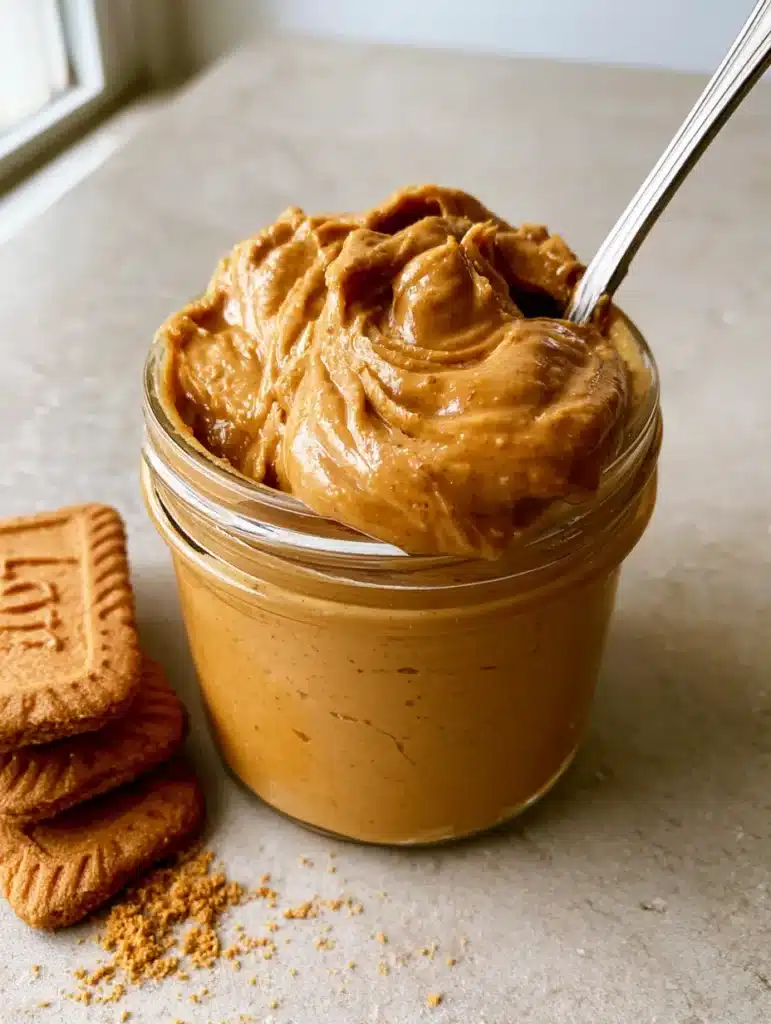
How do you know when your Biscoff Cookie Butter Recipe is ready? Look for these specific sensory indicators that match our visual prompt. First, the color should be a consistent, warm golden-brown, similar to toasted oak. When you stop the processor and dip a silver spoon into the mixture, it should lift a thick ribbon that holds its shape for a few seconds before settling—this is the “velvety swirl.”
The texture must be completely homogeneous. If you see tiny speckles, continue blending. The final result should look like liquid silk under soft, natural morning light, with gentle highlights reflecting off the surface.
Expert Tips for Success
- Temperature Control: Ensure your evaporated milk is at room temperature before adding it. Cold liquid can cause the melted butter to seize, creating a grainy texture.
- The Sieve Trick: If your blender isn’t quite powerful enough, press the finished spread through a fine-mesh sieve to remove any lingering cookie fragments.
- Resting Period: The spread will be slightly thin when warm. Allow it to sit in the glass jar at room temperature for 2 hours to reach its final “spreadable” consistency.
- Crumb Garnish: Reserve one cookie to crush by hand for those “fine, sandy cookie crumbs” to scatter around the jar for a professional presentation.
Storing Your Liquid Gold
Store your homemade Biscoff spread in a clear glass jar with a tight-fitting lid. At room temperature, the spread will remain soft and perfectly spreadable for up to 2 weeks. If you prefer a firmer texture, you can refrigerate it for up to 1 month.
If the spread firms up too much in the fridge, simply microwave it for 10 seconds or let it sit on the counter for 20 minutes to restore that glossy, velvety swirl. Avoid freezing, as this can break the emulsion and cause the oil to separate.
What to Serve With This Biscoff Cookie Butter Recipe
While delicious on a spoon, this spread is a versatile powerhouse. Swirl it into a peanut butter cake batter for a marbled effect, or use it as a dip for fresh fruit. It also makes an incredible base for a crumble topping recipe if you want to add a spiced, caramelized note to your fruit bakes.
For a savory-sweet contrast, try a small dollop alongside honey butter chicken, or use it as a filling for cookies finished with a sugar cookie icing that hardens for a professional, bakery-style look.
Frequently Asked Questions
Yes! Lotus Biscoff cookies are accidentally vegan. Simply swap the butter for a vegan butter alternative and the evaporated milk for full-fat coconut milk or a creamy oat milk.
While it is shelf-stable for about 5-7 days due to the low water content of evaporated milk, we recommend refrigerating it for up to a month to maintain peak freshness.
The gloss comes from the combination of neutral oil and proper emulsification. Blending on high speed for at least 2 minutes creates the friction necessary to bond the fats and sugars into a shiny surface.
The butter in the recipe solidifies when cold. To make it spreadable again, let it sit at room temperature for 20 minutes or microwave it in short 5-second bursts.
Grittiness occurs if the cookies aren’t processed into a fine enough powder before adding liquids. Use a high-speed blender and ensure the crumbs are ‘sandy’ and flour-like for a homogeneous result.
The Ultimate Biscoff Cookie Butter Recipe
Biscoff Cookie Butter Recipe: How to Make Smooth Lotus Spread
Ingredients
Equipment
Instructions
- Place the whole Lotus Biscoff cookies into a food processor. Pulse until they become fine, sandy cookie crumbs with no large pieces.
- With the motor running, slowly drizzle in the neutral oil and melted butter until a thick paste forms.
- Add evaporated milk, brown sugar, lemon juice, and salt. Blend on high for 2 minutes until the mixture is glossy, golden-brown, and perfectly homogeneous.
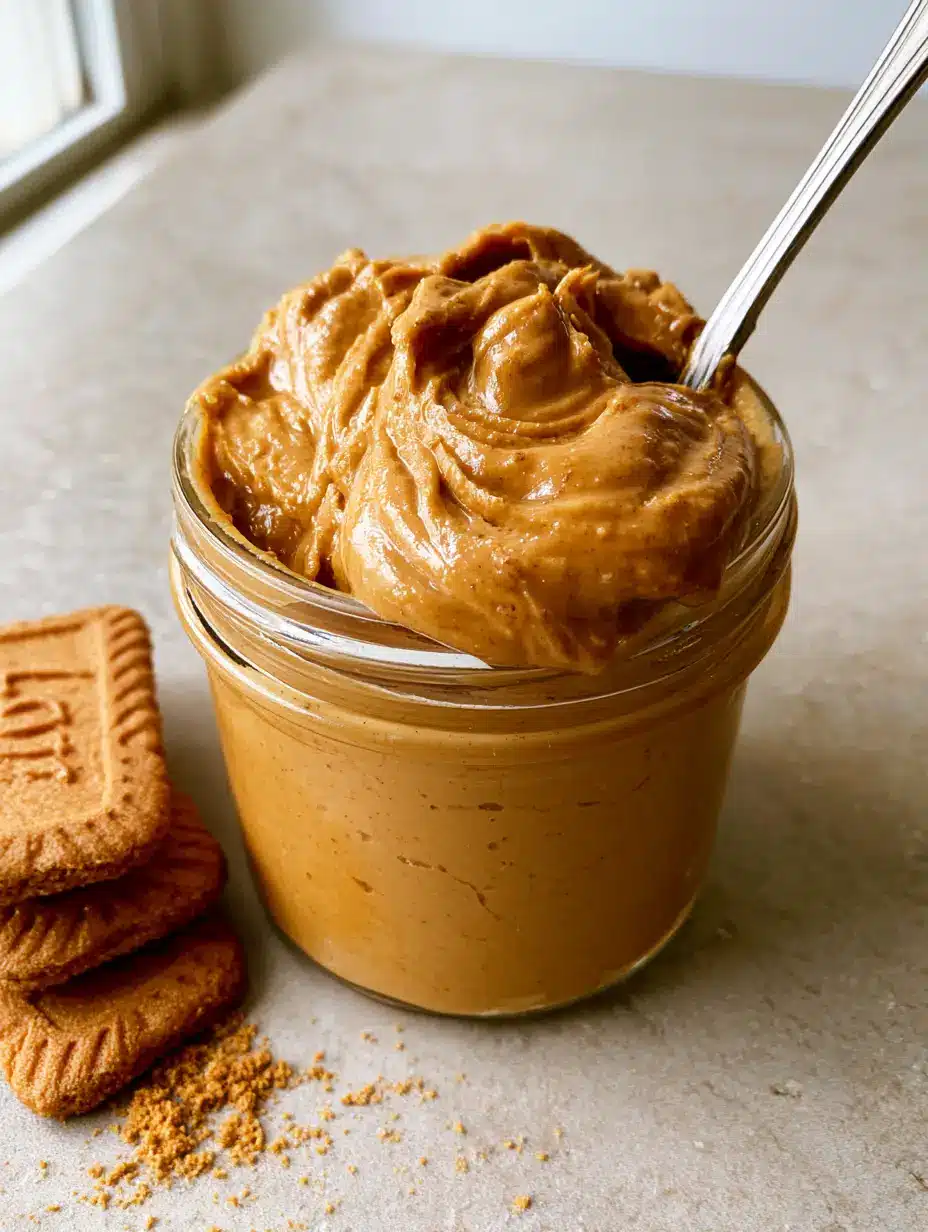
- Transfer the velvety spread into a glass jar. Top with a few extra cookie crumbs and serve with a silver spoon to create decorative swirls.
Notes
If the spread is too thick, add one teaspoon of evaporated milk at a time until the desired swirl consistency is reached.
Closing & Call to Action
Creating your own Biscoff Cookie Butter Recipe at home is a rewarding experience that elevates your breakfast and dessert game. The combination of caramelized spices and a velvety, glossy texture makes this spread a pantry staple you’ll return to again and again. If you enjoyed this recipe, please leave a comment below and share your photos on Pinterest. Don’t forget to sign up for our newsletter for more culinary forensics and professional baking tips!