French Almond Cookies are the epitome of sophisticated Parisian patisserie, offering a delicate balance of textures that range from a crisp, cracked exterior to a soft, chewy heart. Often referred to as dacquoise, these cookies are far more substantial than a macaron, featuring a rustic elegance that highlights the deep, nutty flavor of toasted ground almonds.
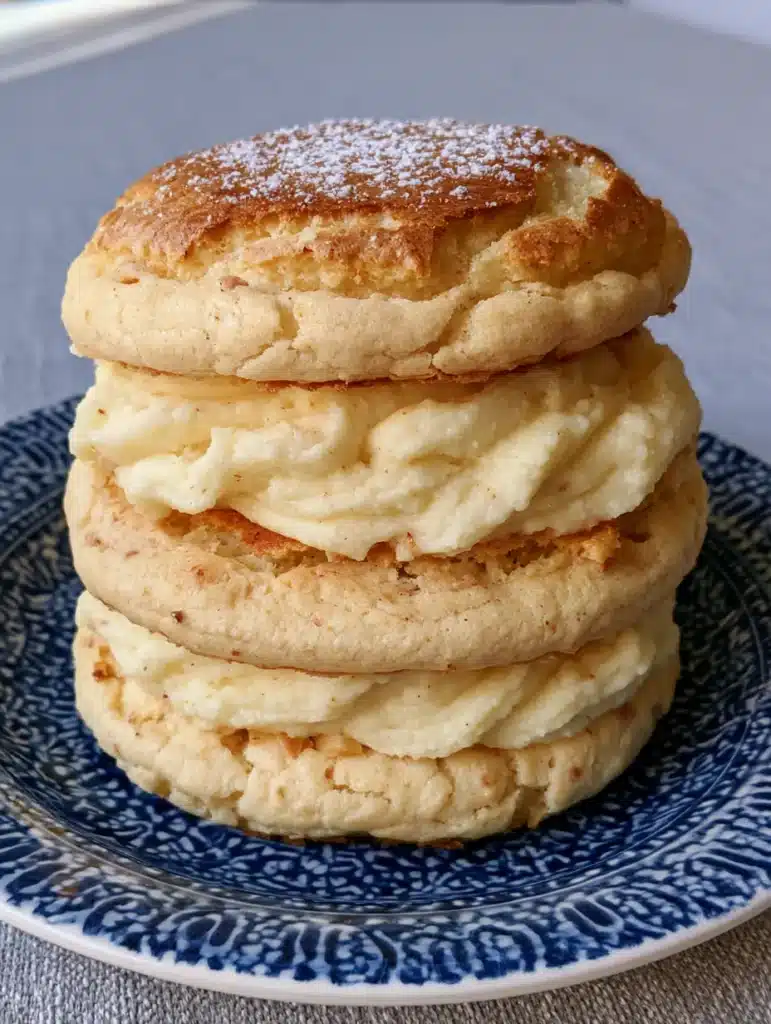
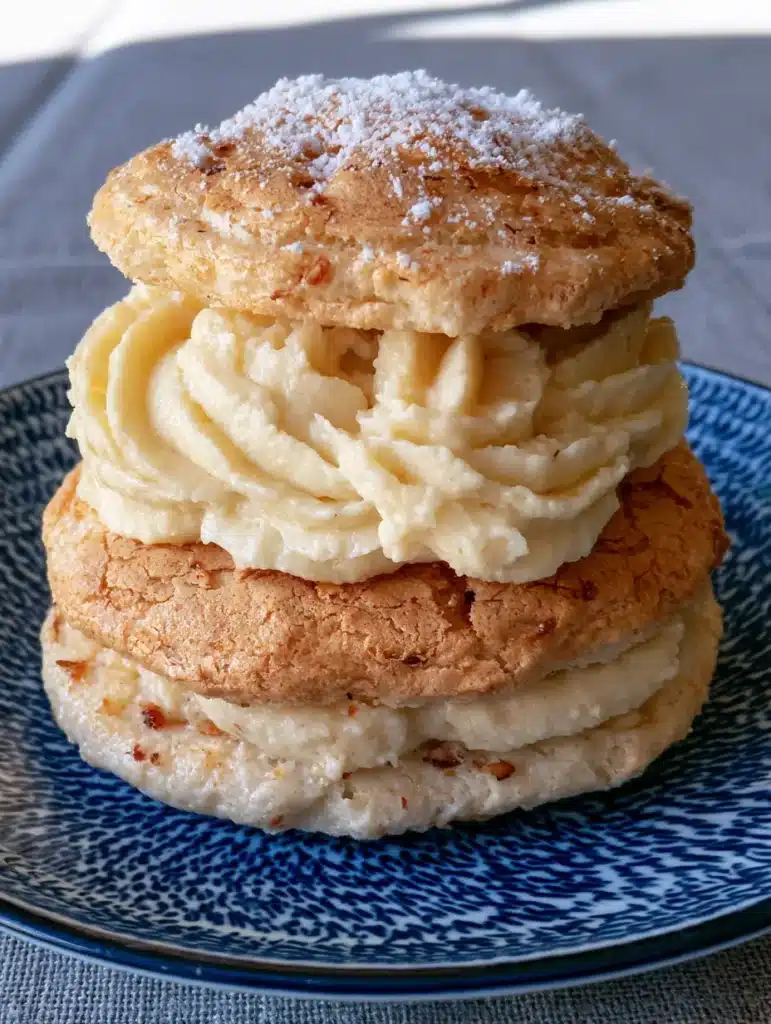
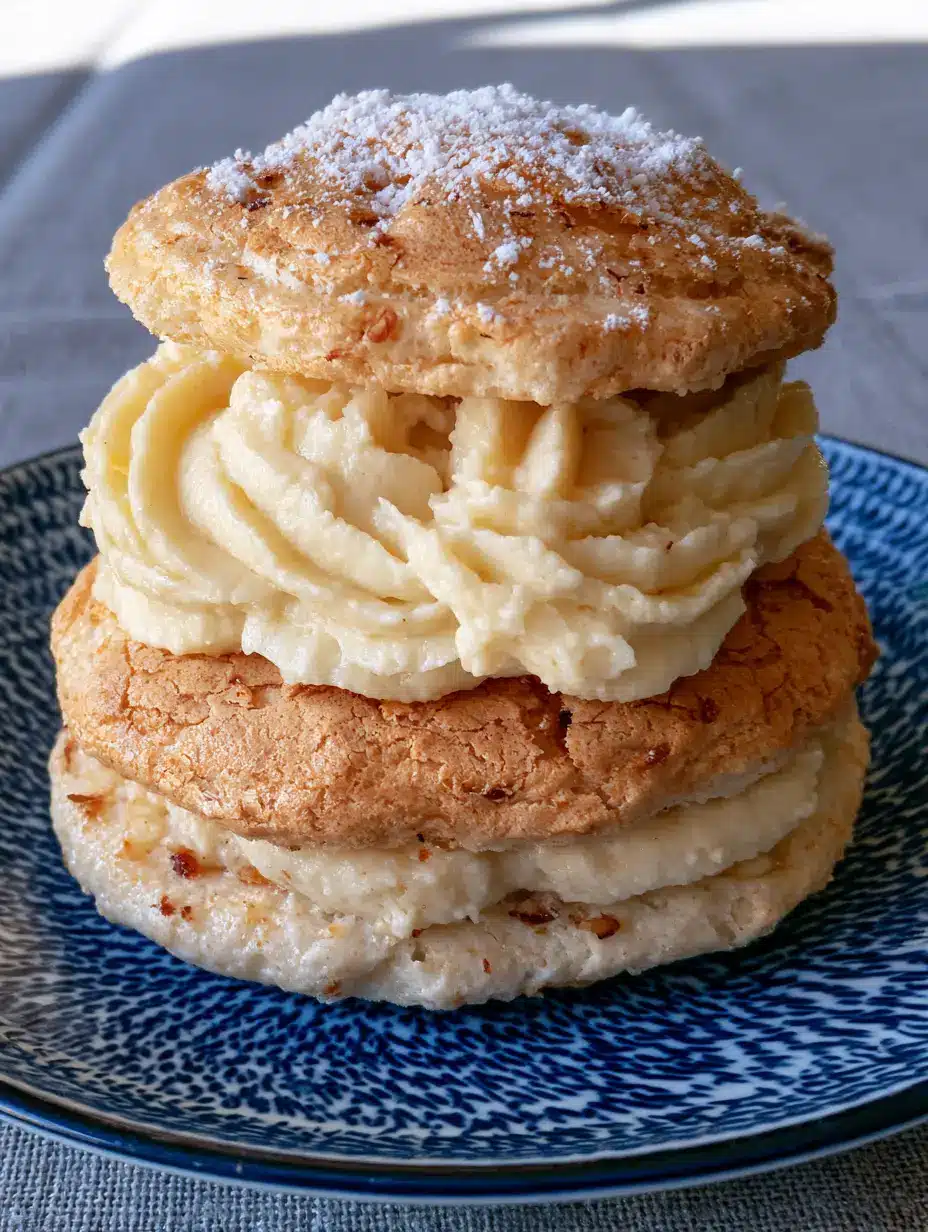
When you hold one of these handcrafted treats, you immediately notice the golden-brown toasted surface and the visible bits of almond meal that give the meringue its structural integrity. The thick, pale ivory toasted almond cream is piped with precision, creating a generous swirl that holds its shape perfectly between two thick, oval-shaped meringue layers.
Finished with a ethereal dusting of powdered sugar and served on a classic blue and white ceramic plate, these French Almond Cookies are a masterclass in culinary aesthetics and flavor depth. Whether you are an experienced baker or an enthusiastic home cook, this recipe will guide you through the forensic details required to achieve professional-grade results in your own kitchen.
Why These Handcrafted Almond Dacquoise Cookies Stand Out
- Structural Perfection: The thick, oval-shaped meringue layers are engineered to be sturdy enough to hold a generous filling while remaining melt-in-your-mouth tender.
- Visual Texture: A signature cracked, golden-brown surface provides a rustic “smartphone-photo-ready” appeal that contrasts beautifully with the smooth cream.
- Deep Nutty Profile: By using toasted ground almonds in both the cookie base and the ivory cream filling, we double down on the aromatic almond essence.
- Naturally Gluten-Free: Relying on nut flour rather than wheat makes these an inclusive yet indulgent dessert option for all guests.
- Piping Precision: The thick almond cream is formulated to be “non-slump,” ensuring your sandwich cookies look as good as they taste even after hours on a serving platter.
The Essential Components for French Almond Meringue Success
Achieving the specific visual and textural results of these French Almond Cookies requires high-quality ingredients and a few “invisible” scientific stabilizers. Here is what you will need for the perfect dacquoise stack.
Egg Whites (Room Temperature): 5 large (150g) egg whites are the foundation of our meringue. Using room temperature whites allows the proteins to stretch further, creating a more voluminous and stable foam.
Toasted Ground Almonds: 1.5 cups (150g) of finely ground almonds provide the primary flavor and the “visible bits” mentioned in our visual blueprint. Toasting them beforehand is non-negotiable; it releases essential oils and creates that golden-brown hue.
Powdered Sugar (Icing Sugar): 1.25 cups (150g) for the cookie base and extra for the final dusting. The fine particles dissolve instantly into the egg whites, providing sweetness without the grit of granulated sugar.
Granulated Sugar: 0.5 cup (100g) is used during the whipping process to stabilize the meringue. It acts as a “glue” for the egg white proteins, preventing the oval layers from collapsing in the oven.
Cream of Tartar: 0.25 tsp (1g) is our secret acidic stabilizer. It lowers the pH of the egg whites, which helps them reach stiff peaks faster and prevents over-beating.
Toasted Almond Cream Filling: This requires 1 cup (225g) of unsalted butter, 2 cups (240g) of powdered sugar, and 2 tbsp (30ml) of heavy cream. We also incorporate 0.25 cup (25g) of finely ground toasted almonds to achieve that pale ivory color and thick, pipeable consistency.
If you enjoy the rich, creamy centers of these cookies, you might also find yourself craving the decadence of caramel cheesecake cookies (coming soon) or the fruity brightness of my strawberry cheesecake cookies.
Professional Tools for the Perfect Oval Shape
To replicate the exact look of our Midjourney prompt, you will need a few specific pieces of equipment. Precision in French pastry starts with the right gear.
First, a Large Piping Bag with a Plain Round Tip is essential for creating the thick, oval meringue layers. This allows you to control the volume of the batter, ensuring each cookie is uniform in thickness.
Second, Parchment Paper or a Silicone Baking Mat is required to prevent sticking. I recommend drawing oval templates on the back of your parchment paper to act as a guide for your piping.
Third, a Stand Mixer is highly recommended. Whipping egg whites to the necessary stiff-peak stage takes significant mechanical energy that is difficult to achieve by hand.
Finally, a Fine-Mesh Sieve is crucial for that final “light dusting of powdered sugar” that sits atop the golden-brown crust. This ensures no large clumps ruin the delicate aesthetic.
Step-By-Step: Crafting the French Almond Cookie Layers
Preparing the Toasted Almond Base
Start by preheating your oven to 325°F (165°C). Spread your ground almonds on a baking sheet and toast for 7-10 minutes. You are looking for a fragrant aroma and a light tan color; this is what creates the “visible bits of ground almonds” seen in the final product.
Once toasted, let the almonds cool completely. Sift the ground almonds together with the powdered sugar. This ensures no clumps remain, which would otherwise deflate our delicate meringue batter.
Mastering the Stiff-Peak Meringue
In the bowl of your stand mixer, begin whipping the egg whites and cream of tartar on medium-low speed. Once the whites become frothy and resemble bubbly sea foam, slowly rain in the granulated sugar one tablespoon at a time.
Increase the speed to medium-high and whip until the mixture forms stiff, glossy peaks. When you lift the whisk, the meringue should stand straight up without drooping. This structural integrity is what allows the cookies to be “thick” rather than flat.
The Gentle Fold Technique
Carefully fold the almond and powdered sugar mixture into the meringue using a large rubber spatula. Do this in three stages. Use a “cut and fold” motion: cut through the center, scrape the bottom, and fold over.
Stop immediately when no dry streaks remain. If you over-mix, the batter will become runny, and you will lose that characteristic “slightly cracked” surface texture during the bake.
Piping and Baking the Ovals
Transfer the batter to your piping bag. On your prepared baking sheets, pipe 3-inch (7.5cm) ovals. Start in the center and spiral outward to ensure a thick, even layer.
Bake for 18-22 minutes. You are looking for a specific sensory cue: the tops should feel dry to the touch and exhibit a beautiful golden-brown toasted surface. The slight cracking is a sign of a perfectly aerated dacquoise.
If you love the process of piping and filling, you should also try making these oat flour peanut butter cookies for a simpler daily treat.
Creating the Thick Ivory Toasted Almond Cream
While the meringue layers cool, we must prepare the pale ivory filling. This cream must be smooth yet capable of holding its shape when stacked.
Cream the softened butter until it is extremely pale and fluffy, which usually takes about 5 minutes of high-speed mixing. Gradually add the powdered sugar and heavy cream, continuing to whip until the volume has doubled.
Fold in the finely ground toasted almonds. This provides the “ivory” color and ensures the filling tastes like a concentrated version of the cookie. If the cream feels too soft, chill it for 10 minutes before piping to ensure it can support the weight of the top meringue layer.
Expert Tips for Bakery-Quality French Almond Cookies
- Wipe Your Bowl with Vinegar: Before starting your meringue, wipe the bowl and whisk with white vinegar or lemon juice. This removes any trace of fat, which is the enemy of stiff egg whites.
- Age Your Egg Whites: For the most stable dacquoise, separate your eggs 24 hours in advance and keep the whites in a sealed container in the fridge. This reduces moisture content slightly.
- The “Tap” Method: After piping your ovals, tap the baking sheet firmly on the counter once. This pops any large air bubbles that might cause the cookies to collapse, while still allowing for the fine surface cracks.
- Complete Cooling: Never attempt to fill the cookies while they are warm. The toasted almond cream contains butter and will melt instantly, ruining the “generous piped swirl” aesthetic.
Storage and Preservation
French Almond Cookies are best enjoyed within 24 hours of assembly, as the moisture from the cream will eventually soften the crisp meringue. However, they can be stored in an airtight container at room temperature for up to 2 days.
For longer storage, the unfilled meringue layers can be kept in an airtight container for up to a week. You can also freeze the assembled sandwiches for up to a month. When ready to serve, thaw them in the refrigerator to prevent the powdered sugar dusting from dissolving into the crust.
What to Serve with These Almond Delights
These cookies are the perfect conclusion to a sophisticated meal. They pair beautifully with a sharp espresso or a delicate Earl Grey tea. If you are hosting a larger brunch, consider serving them alongside creme brulee french toast (coming soon) for a truly indulgent French-inspired spread.
For those who prefer a mix of textures on their dessert table, add some salted honey cookies or even lemon sugar cookies to provide a zesty contrast to the deep almond notes of the dacquoise.
Common Questions About French Almond Cookies
Yes, as long as your ground almonds and powdered sugar are certified gluten-free, this recipe is naturally wheat-free as it relies on nut flour for structure.
Yes, you can make the ivory almond cream up to 3 days in advance. Store it in the refrigerator and let it come to room temperature before whipping it briefly to restore its pipeable consistency.
While both use almond meringue, Dacquoise cookies are thicker, more rustic, and contain toasted ground almonds which give them a golden-brown cracked surface and a chewier texture compared to the smooth, dainty shells of a macaron.
Flattening usually occurs if the egg whites weren’t whipped to stiff enough peaks or if the almond mixture was folded in too aggressively, causing the air bubbles to deflate.
This happens if the cookies weren’t completely cool before filling, or if the butter in the cream was too soft. Ensure cookies are room temperature and chill the cream for 10 minutes before piping.
The Ultimate French Almond Cookie Recipe
French Almond Cookies: Authentic Dacquoise Sandwiches with Toasted Almond Cream
Ingredients
Equipment
Instructions
- Preheat oven to 325°F (165°C). Toast ground almonds for 7-10 minutes until fragrant. Once cool, sift with 150g powdered sugar.
- Whip egg whites and cream of tartar to soft peaks. Gradually add granulated sugar while whipping until stiff, glossy peaks form.
- Gently fold dry ingredients into meringue. Pipe into 3-inch ovals on parchment paper. Bake for 18-22 minutes until golden-brown and slightly cracked.
- Beat butter and powdered sugar until ivory and fluffy. Add cream and toasted almonds; whip until thick and pipeable.
- Pipe a generous swirl of cream onto the flat side of one cooled cookie. Top with a second cookie. Dust with powdered sugar and serve on a blue and white ceramic plate.
Notes
If your kitchen is warm, chill the almond cream for 10 minutes before piping to ensure it holds its shape.
Closing and Call to Action
Mastering the French Almond Cookie is a milestone for any home baker. The combination of the toasted, cracked meringue and the velvety ivory cream creates a sensory experience that is truly unmatched. By following these forensic culinary steps, you have created a dessert that is as visually stunning as it is delicious.
Did your cookies achieve that perfect golden-brown crust? We would love to hear about your baking journey! Leave a comment below, and don’t forget to share your beautiful creations on Pinterest so others can enjoy this authentic dacquoise recipe.