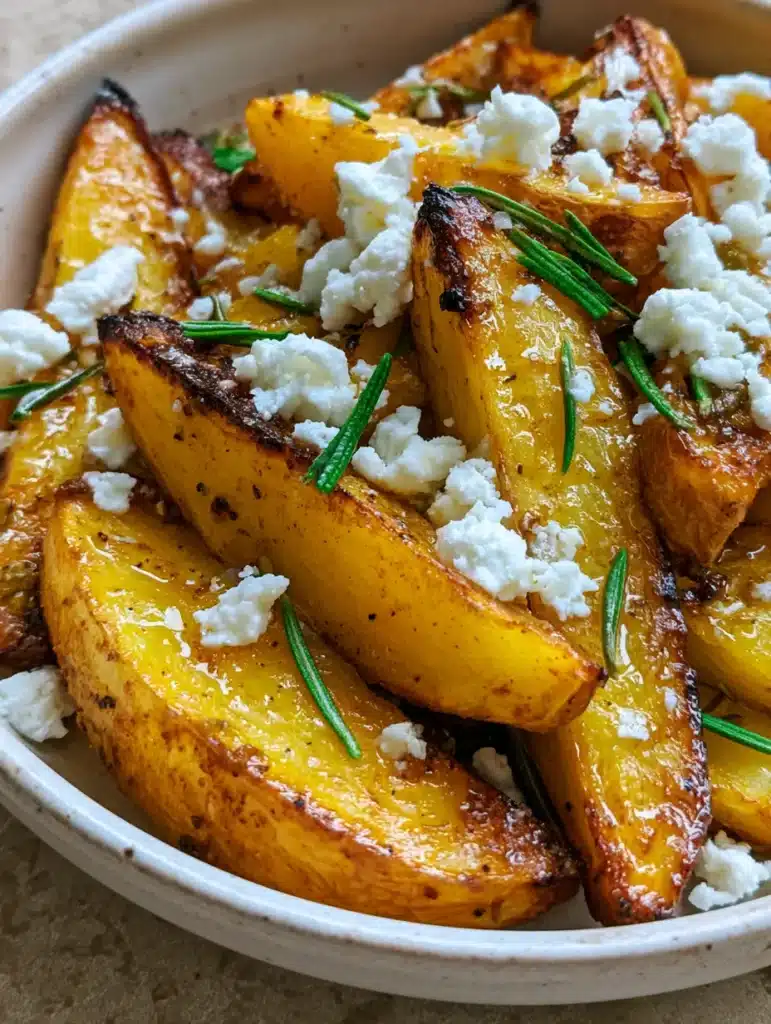
Greek Lemon Potatoes are the ultimate Mediterranean side dish, defined by their deep golden yellow hue and signature dark brown charred edges. These aren’t your average roasted spuds; they are braised in a luxurious lemon juice reduction and olive oil glaze until the interiors are creamy and the exteriors are intensely caramelized.
If you have been searching for that authentic taverna-style texture—where the potato is soft enough to melt but crispy enough to crunch—this recipe is your roadmap. We are focusing on the specific sensory details: the glistening sheen of premium oil and the aromatic pop of fresh rosemary needles.
Whether you are serving these alongside a Mediterranean feast or enjoying them as a standalone comfort bowl, the addition of creamy white crumbled feta cheese provides the perfect salty contrast to the bright citrus notes. Get ready to master the art of the lemon-braised roast.
Why This Authentic Greek Potato Recipe Works
- Dual Texture Harmony: By roasting the wedges in a shallow bath of lemon juice and broth, we achieve a “confat” effect—part boil, part roast—leading to a velvety interior and a crisp, charred crust.
- The Lemon Juice Reduction: As the liquid evaporates in the high-heat oven, it intensifies into a thick, zesty glaze that clings to every potato wedge.
- Forensic Visual Appeal: These potatoes are roasted to a specific deep golden yellow, punctuated by scattered vibrant green rosemary and white feta chunks for a stunning table presentation.
- High-Heat Caramelization: We utilize specific temperature intervals to ensure the natural sugars in the potatoes and lemon juice create those coveted dark brown charred edges.
The Science of Selecting Your Mediterranean Ingredients
To achieve the visual result seen in our professional photography, every ingredient must serve a structural and flavor-based purpose. Here is what you will need for these Greek Lemon Potatoes.
3 lbs (1.4kg) Yukon Gold Potatoes: These are essential for the “deep golden yellow” color described in our visual blueprint. Their waxy-yet-starchy balance allows them to hold their wedge shape while developing a creamy center.
1/2 cup (120ml) Extra Virgin Olive Oil: This creates the glistening olive oil sheen and conducts heat to the surface of the potato for maximum crisping. Use a high-quality Greek oil for the most authentic flavor profile.
1/2 cup (120ml) Freshly Squeezed Lemon Juice: This provides the acidity needed for the lemon juice reduction. Do not use bottled juice; the fresh enzymes are required for the proper caramelization of the edges.
1 cup (240ml) Chicken or Vegetable Broth: This acts as the braising liquid. As it reduces, it infuses the potatoes with savory depth, preventing them from drying out before they char.
4 cloves Garlic, minced: Garlic provides the aromatic foundation. It mellows significantly during the long roast, becoming sweet and sticky.
2 tbsp (4g) Fresh Rosemary Needles: Unlike dried herbs, fresh rosemary needles maintain their vibrant green color even after roasting. They provide an earthy, piney contrast to the sharp citrus.
4 oz (115g) High-Quality Feta Cheese: Look for sheep’s milk feta stored in brine. Crumbling it over the hot potatoes allows it to soften slightly without losing its distinct white chunks.
1 tsp (2g) Dried Oregano: This is a foundational “invisible” ingredient. It adds a subtle floral note that builds the classic Greek flavor profile behind the scenes.
Fine Sea Salt and Cracked Black Pepper: Essential for drawing out moisture and seasoning the dense interior of the wedges.
Essential Tools for the Perfect Roast
To achieve the rustic, handheld photo look, you need the right equipment to manage heat distribution. A large, heavy-duty rimmed baking sheet or a ceramic roasting dish is vital.
Avoid crowding the potatoes; if they are too close together, they will steam rather than roast, and you will miss out on those dark brown charred edges. A sharp chef’s knife is also required to ensure uniform wedges, which guarantees even cooking times.
Step-by-Step Instructions for Golden Greek Potatoes
Preparing the Potato Wedges
Preheat your oven to 400°F (200°C). Scrub the Yukon Gold potatoes thoroughly but leave the skins on to help maintain the structural integrity of the wedges and to catch the charred bits.
Slice each potato into even wedges, roughly 1 inch (2.5cm) thick at the widest part. Place the wedges into a large roasting pan in a single layer. Overcrowding is the enemy of the glistening olive oil sheen we are aiming for.
The Lemon Braising Liquid
In a medium bowl, whisk together the olive oil, fresh lemon juice, broth, minced garlic, and dried oregano. Pour this mixture directly over the potatoes. Use your hands to toss the wedges, ensuring every surface is coated in the oil glaze.
Season generously with sea salt and black pepper. The salt will help break down the potato starch, allowing the lemon juice reduction to penetrate deep into the center.
Achieving the Deep Golden Char
Place the pan in the center of the oven and roast for 45-50 minutes. At the 30-minute mark, use a metal spatula to carefully flip the wedges. You should see the bottoms starting to take on a golden hue.
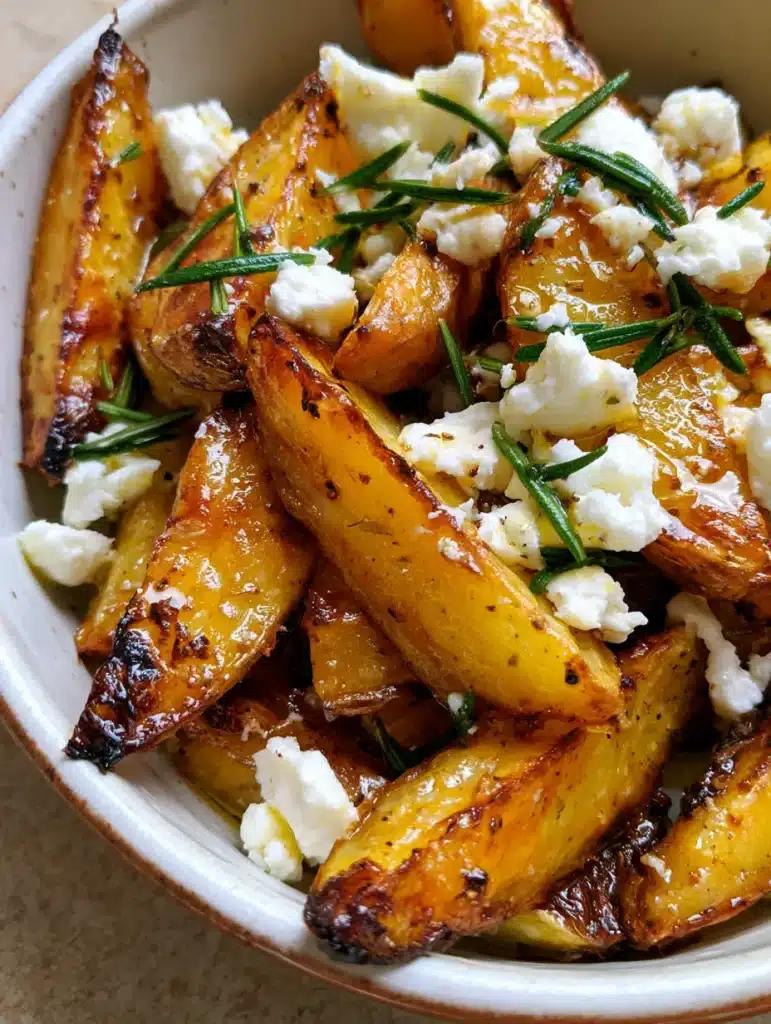
Continue roasting until the liquid has evaporated, leaving only the oil and a thick lemon reduction. Look for the “Visual Cue”: the edges of the potatoes should be dark brown and slightly curled, while the surfaces are a deep golden yellow.
The Finishing Touches
Remove the pan from the oven. While the potatoes are still piping hot and glistening, scatter the fresh rosemary needles over the top. The residual heat will wake up the oils in the rosemary without burning the needles.
Transfer the potatoes to a rustic white ceramic bowl. Generously top with large chunks of crumbled white feta cheese. The contrast of the creamy white cheese against the roasted yellow potatoes is the hallmark of this dish.
Expert Tips for Culinary Success
- The Liquid Balance: If your potatoes are soft but not yet charred, crank the heat to 425°F (220°C) for the last 10 minutes. This forces the remaining sugars to caramelize rapidly.
- Don’t Skimp on Oil: The olive oil glaze is what creates the “handheld photo” quality. It prevents the potatoes from looking dull or dry.
- Rosemary Timing: Always add the fresh rosemary at the very end or in the last 5 minutes. This ensures the needles stay vibrant green and don’t turn black and bitter.
- Feta Selection: Avoid “pre-crumbled” feta in tubs. It is often coated in cornstarch to prevent clumping, which prevents it from having that creamy, authentic mouthfeel.
Storage, Reheating, and Make-Ahead Advice
Greek Lemon Potatoes are best served immediately while the edges are at their crispest. However, you can store leftovers in an airtight container in the refrigerator for up to 4 days.
To reheat and reclaim that charred texture, avoid the microwave. Instead, place the wedges in a toaster oven or air fryer at 350°F (175°C) for 5-7 minutes. This will re-activate the olive oil glaze and crisp the skin.
What to Serve with Greek Lemon Potatoes
These potatoes are a versatile side dish that pairs beautifully with a variety of Mediterranean proteins. For a complete feast, serve them alongside Lemon Feta Chicken and Orzo to lean into the citrus theme.
If you prefer seafood, the zesty profile of these spuds complements Poached Salmon with Lemon Sauce or a quick Lemon Garlic Butter Shrimp Pasta. For a lighter lunch, follow up with Lemon Sugar Cookies for a sweet, thematic finish.
Frequently Asked Questions
You can, but Russets are starchier and may fall apart during the braising process. Yukon Golds are preferred because they maintain their wedge shape and provide that naturally deep golden yellow color.
No, leaving the skins on helps the wedges hold their shape and provides more surface area for the olive oil glaze to create crispy, charred bits.
Add the fresh rosemary needles in the last 5 minutes of roasting or immediately after the potatoes come out of the oven. The residual heat is enough to release the aroma without turning the needles black.
While optional, the crumbled feta provides a creamy, salty contrast to the acidic lemon reduction that is central to the visual and flavor profile of this specific recipe.
This usually happens if there is too much liquid left in the pan or the oven temperature is too low. Ensure the liquid has reduced to a thick glaze and increase the heat to 425°F (220°C) for the final 10 minutes to develop the charred edges.
The Ultimate Greek Lemon Potato Recipe

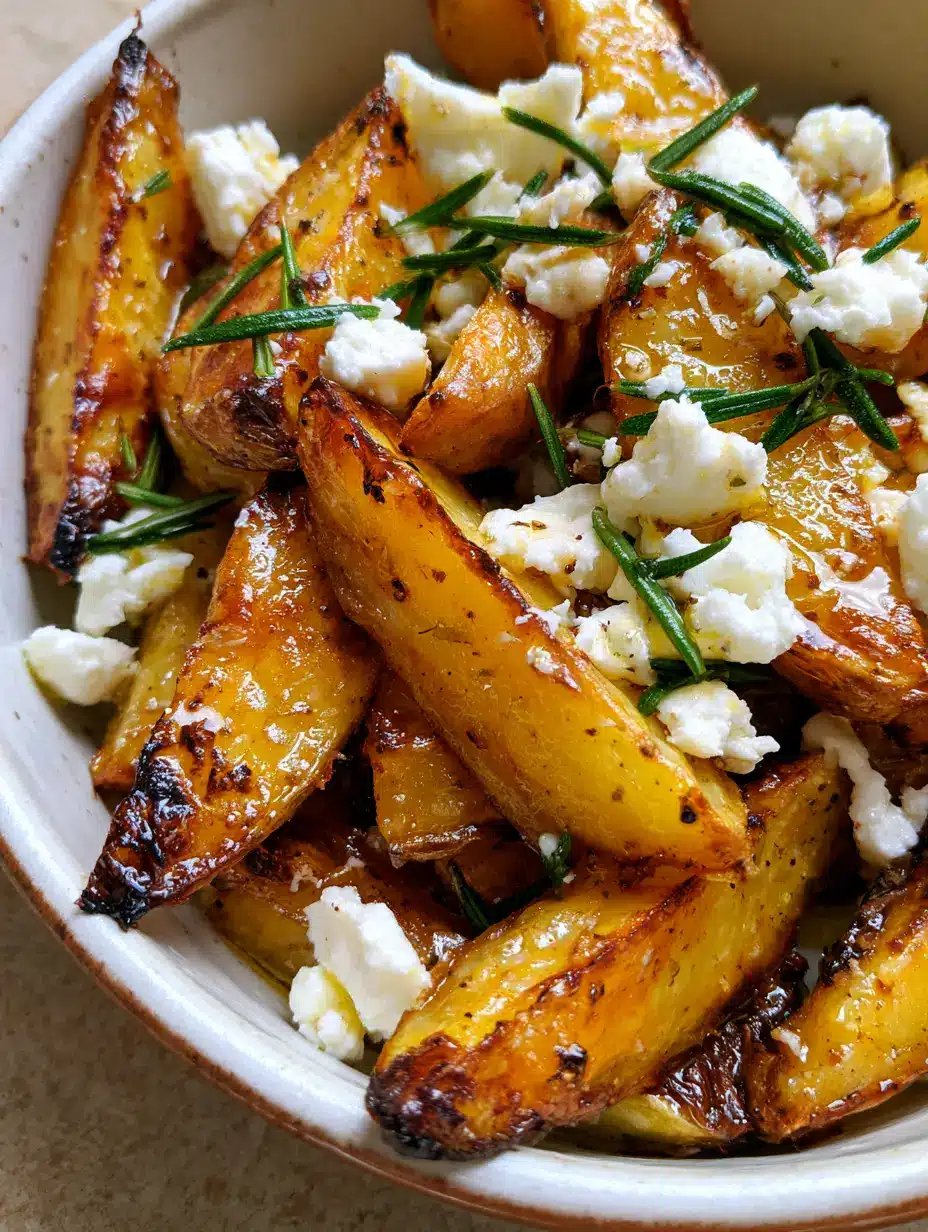
Greek Lemon Potatoes with Crispy Charred Edges and Crumbled Feta
Ingredients
Equipment
Instructions
- Preheat oven to 400°F (200°C). Slice potatoes into uniform wedges and place in a single layer in a roasting pan.
- Whisk olive oil, lemon juice, broth, garlic, and oregano. Pour over potatoes and toss to create an olive oil glaze.
- Roast for 30 minutes. Flip potatoes to ensure even browning and absorption of the lemon juice reduction.
- Roast for another 15-20 minutes until edges are dark brown and charred and liquid has reduced to a thick glaze.
- Scatter fresh rosemary needles over hot potatoes. Transfer to a bowl and top with crumbled white feta cheese.
Notes
Add rosemary at the very end to keep it green and fragrant.
Conclusion: Bring the Mediterranean Home
Mastering Greek Lemon Potatoes is about more than just roasting vegetables; it is about managing the reduction of acid and fat to create a concentrated flavor bomb. The deep golden yellow color and the salty pop of feta make this a visual and culinary masterpiece.
We invite you to share your results! Did you get those perfect charred edges? Leave a comment below and let us know. Don’t forget to save this recipe to your “Mediterranean Sides” board on Pinterest so you can find it for your next dinner party.