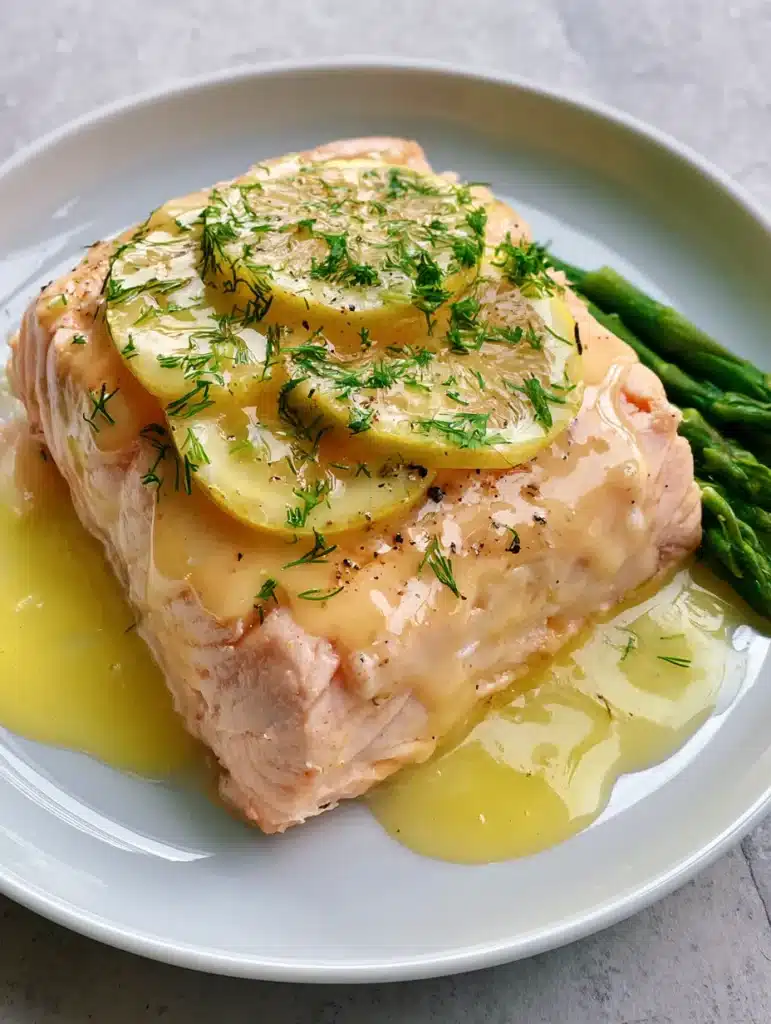
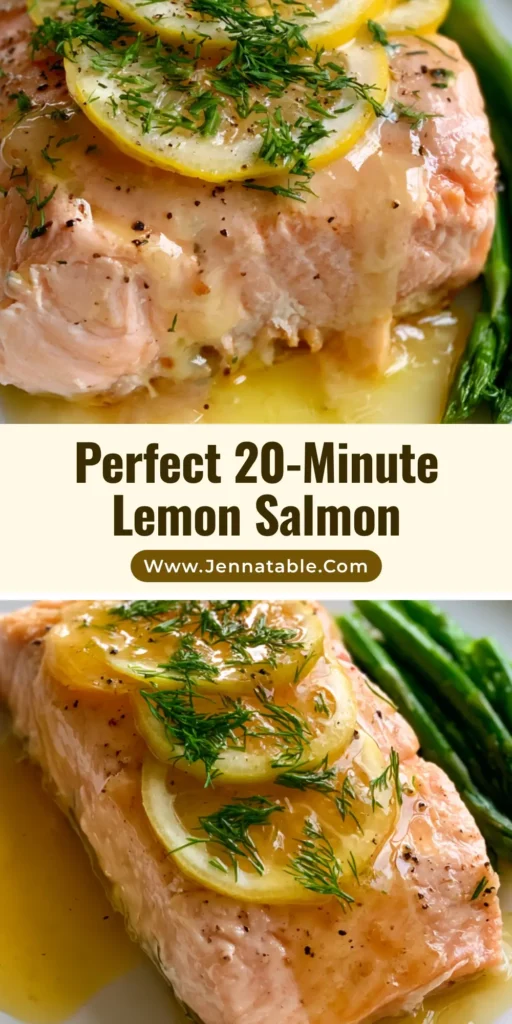
Poached Salmon with Lemon Sauce is the gold standard for home cooks seeking a restaurant-quality meal that feels light yet indulgent. Imagine a thick, center-cut fillet that is so tender it practically melts at the touch of a fork. The secret lies in the gentle poaching method, which preserves the salmon’s delicate pale pink color and moist, flaky texture without the harshness of high-heat searing.
This dish isn’t just about the fish; it’s a visual and sensory masterpiece. A generous drizzle of translucent, glossy lemon-yellow sauce pools slightly on the plate, catching the light and promising a burst of bright, citrusy flavor. Accompanied by vibrant green steamed asparagus tips and garnished with fresh dill fronds and cracked black pepper, this recipe is as beautiful as it is delicious.
Whether you are hosting a formal dinner or simply want a healthy weeknight upgrade, this Poached Salmon with Lemon Sauce delivers high-impact flavor with minimal effort. The clean, minimalist presentation on a white ceramic plate makes every ingredient pop, proving that simple cooking techniques often yield the most sophisticated results.
Why This Silky Poached Salmon Recipe Works
- Unmatched Texture: The poaching liquid gently surrounds the fish, ensuring the interior remains succulent and moist rather than dry or rubbery.
- Glossy Citrus Finish: Our lemon butter sauce is whisked into a translucent, velvety emulsion that perfectly complements the rich fats of the salmon.
- Vibrant Visual Appeal: The contrast between the pale pink fish, bright green asparagus, and yellow lemon slices creates a professional-grade presentation.
- Nutrient-Dense & Lean: By poaching instead of frying, you retain the heart-healthy Omega-3s without adding unnecessary heavy oils.
Essential Ingredients for the Perfect Poached Fillet
Center-Cut Salmon Fillet: Look for a thick, 6-ounce (170g) fillet with consistent thickness to ensure even cooking throughout the poaching process. The pale pink hue described in our visual guide is best achieved with high-quality Atlantic or King salmon.
Fresh Lemon Half-Slices: You will need thin half-moon slices for both the poaching liquid and the final garnish to provide an aromatic citrus base and visual flair. If you have extra lemons, they also pair beautifully with Lemon Ricotta Spaghetti.
Fresh Dill Fronds: Chopped fresh dill adds a feathery, vibrant green touch and a grassy sweetness that is the classic herbaceous partner for salmon. Do not substitute with dried dill, as it lacks the bright color required for the visual blueprint.
Fresh Green Asparagus Tips: Select young, slender stalks and trim them so only the tender tips remain, providing a crisp-tender crunch to the side of the plate.
Unsalted Butter: This is the foundation of our glossy sauce; we use cold cubes to whisk into the reduction for a translucent, shimmering finish. This technique is similar to how you would finish a White Garlic Sauce for a silky mouthfeel.
Dry White Wine or Vegetable Broth: 1/2 cup (120ml) provides the acidic and savory backbone for the poaching liquid, infusing the fish with depth from the inside out.
Whole Black Peppercorns & Cracked Black Pepper: Use whole peppercorns in the poaching liquid and freshly cracked pepper as a final garnish to add tiny dark specks of heat and visual texture.
Must-Have Kitchen Tools for Culinary Precision
To achieve the delicate flake and translucent sauce seen in the photography, you will need a wide, shallow skillet or sauté pan. This allows the salmon to lay flat without being overcrowded. A fine-mesh strainer is also essential for ensuring your lemon sauce remains perfectly smooth and glossy.
A digital meat thermometer is your best friend here; for that moist, tender result, we are aiming for an internal temperature of 125°F (52°C). Finally, a steamer basket will ensure your asparagus tips stay bright green and structurally sound, resting neatly against the fish.
Step-by-Step Instructions for Poached Salmon with Lemon Sauce
1. Preparing the Aromatic Poaching Liquid
In your wide skillet, combine 2 cups (480ml) of water, 1/2 cup (120ml) of dry white wine, a few lemon slices, and a teaspoon (5g) of whole peppercorns. Bring the liquid to a very gentle simmer over medium heat; you are looking for small bubbles just breaking the surface, not a rolling boil.
2. The Gentle Poaching Process
Carefully lower the salmon fillet into the liquid, skin-side down. The liquid should halfway submerge the fish. Cover the pan with a tight-fitting lid and reduce the heat to low. Cook for 8-10 minutes. Use your sensory cues: the salmon should transform from translucent raw red to a delicate, opaque pale pink that flakes easily with a fork.
3. Steaming the Asparagus Tips
While the salmon poaches, place your trimmed asparagus tips in a steamer basket over boiling water. Steam for 3-5 minutes until they reach a vibrant, bright green color. Immediately remove them from the heat to prevent overcooking, ensuring they maintain their upright posture when plated against the salmon.
4. Emulsifying the Glossy Lemon Butter Sauce
In a small saucepan, reduce 1/4 cup (60ml) of fresh lemon juice and a splash of the poaching liquid by half over medium-high heat. Reduce heat to low and whisk in 4 tbsp (60g) of cold, cubed unsalted butter one piece at a time. Whisk constantly until the sauce is translucent, glossy, and thick enough to pool slightly on a plate.
5. The Art of Plating
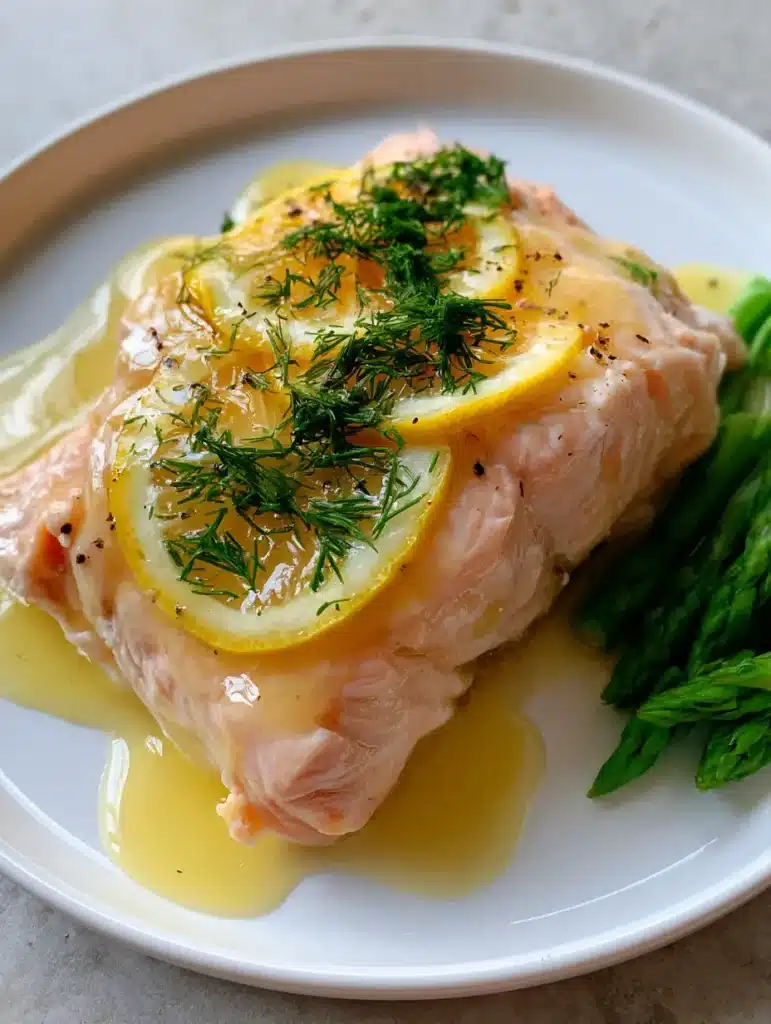
Place the poached salmon fillet in the center of a minimalist white ceramic plate. Arrange the three thin half-moon lemon slices overlapping across the top. Cluster the steamed asparagus tips along the side, leaning them gently against the fish. Drizzle the glossy sauce generously over the fillet, allowing it to pool at the base. Finish with a shower of chopped dill and a final dusting of cracked black pepper.
Expert Tips for a Flawless Presentation
- Control the Heat: If the poaching liquid boils, the salmon will become tough and develop unsightly white albumin (protein) on the surface. Keep it at a “lazy simmer.”
- Cold Butter is Key: For the glossiest lemon sauce, the butter must be refrigerator-cold. This creates a stable emulsion that won’t break into an oily mess.
- Pat Dry: Before plating, gently pat the bottom of the salmon fillet with a paper towel so excess poaching liquid doesn’t dilute your beautiful yellow sauce.
- Visual Garnish: Always chop your dill at the very last second to ensure it stays vibrant green and doesn’t wilt before serving.
Optimal Storage and Reheating Guidelines
Poached Salmon with Lemon Sauce is best enjoyed immediately to appreciate the moist texture. However, leftovers can be stored in an airtight container in the refrigerator for up to 2 days. To reheat, do not use the microwave, as it will toughen the fish. Instead, place the salmon in a covered dish with a tablespoon of water and warm in a 300°F (150°C) oven until just heated through.
The lemon butter sauce may solidify when cold. Re-whisk it gently in a small pan over very low heat with a teaspoon of warm water to restore its glossy, translucent sheen.
What to Pair With Your Poached Salmon
To turn this into a full feast, consider adding a side of Greek Lemon Potatoes to carry the citrus theme throughout the meal. If you prefer a lighter pairing, a simple bed of Boursin Orzo (omit the chicken) provides a creamy contrast to the bright lemon sauce.
For those who love a bit of heat, a side of Hot Honey Roasted Carrots offers a spicy-sweet balance to the delicate poached fish. And of course, a glass of the same dry white wine used in the poaching liquid is the perfect beverage choice.
Frequently Asked Questions
Yes, you can substitute white wine with vegetable broth, chicken broth, or simply extra water with a squeeze of fresh lemon juice. The goal is to provide a flavorful, acidic liquid for the fish to simmer in.
The salmon is done when it reaches an internal temperature of 125°F (52°C) for medium-rare or 135°F (57°C) for medium. Visually, the fish should be a delicate pale pink and flake easily when pressed with a fork.
You can poach with the skin on or off. Leaving the skin on helps the fillet hold its shape during poaching, and it can be easily removed before plating if you prefer the clean look of the pale pink flesh.
That white substance is called albumin, a protein that pushes to the surface when salmon is cooked too quickly or at too high a temperature. To avoid it, keep your poaching liquid at a very low simmer.
Sauce separation usually happens if the heat is too high or if the butter is added too quickly. Ensure the heat is on low and whisk in very cold butter one cube at a time to create a stable, glossy emulsion.
The Ultimate Poached Salmon with Lemon Sauce Recipe
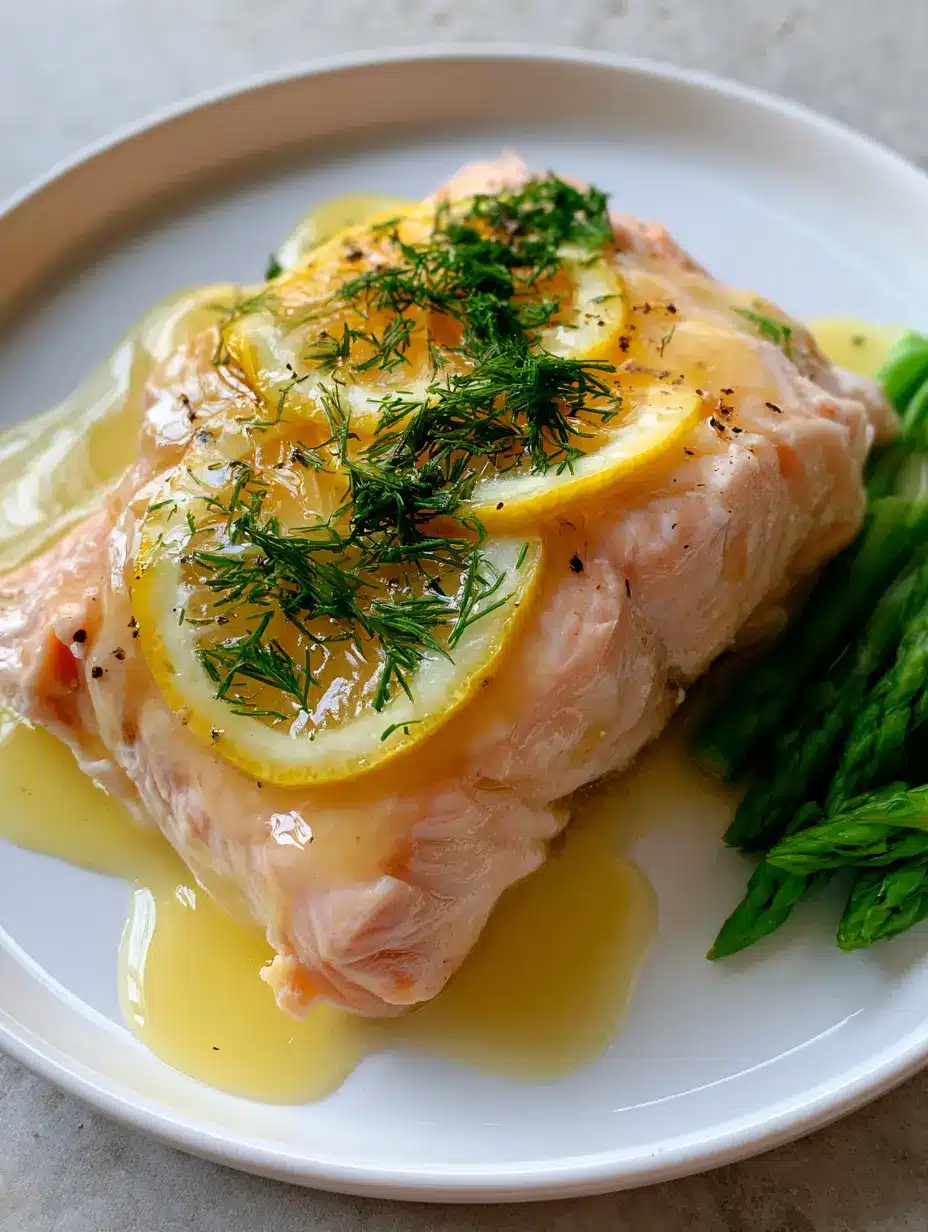
Poached Salmon with Lemon Sauce: The Ultimate Tender and Flaky Fillet
Ingredients
Equipment
Instructions
- Combine water, wine, and peppercorns in a skillet. Bring to a gentle simmer (160-170°F).
- Place salmon in the liquid. Cover and cook for 8-10 minutes until pale pink and opaque.
- Steam asparagus tips for 3-5 minutes until bright green and tender-crisp.
- Reduce lemon juice in a saucepan, then whisk in cold butter cubes one by one until glossy and translucent.
- Plate the salmon, drizzle with sauce, top with lemon slices, dill, and cracked pepper. Serve with asparagus.
Notes
Always use cold butter for the sauce to ensure a glossy, emulsified texture that won't separate.
Experience the Elegance of Poached Salmon
Mastering the Poached Salmon with Lemon Sauce is a milestone for any home cook. It combines the scientific precision of temperature control with the artistic flair of fresh garnishes. The result is a dish that looks like it belongs on a professional food blog but feels like a comforting, home-cooked hug.
If you enjoyed this recipe, please leave a comment below and let us know how your sauce turned out! Don’t forget to follow Jenna_Table on Pinterest for more visual recipe blueprints and culinary inspiration. Pin this recipe to your “Healthy Dinners” board to save it for later!