Italian Meatballs are the quintessential comfort food, representing the heart and soul of home-cooked Mediterranean cuisine. There is something undeniably nostalgic about a shallow white ceramic bowl piled high with al dente spaghetti and topped with savory, hand-rolled beef.
This specific recipe focuses on achieving that elusive, deep-browned meat crust while maintaining a tender, juicy interior. By following professional searing techniques, you will create a flavor profile that mimics the best Sunday dinners in nonna’s kitchen.
We are diving deep into the science of the Maillard reaction and the importance of a thick, chunky marinara sauce. Every element, from the snow-white dusting of Parmesan to the bright sprigs of flat-leaf parsley, is designed for maximum visual and flavorful impact.
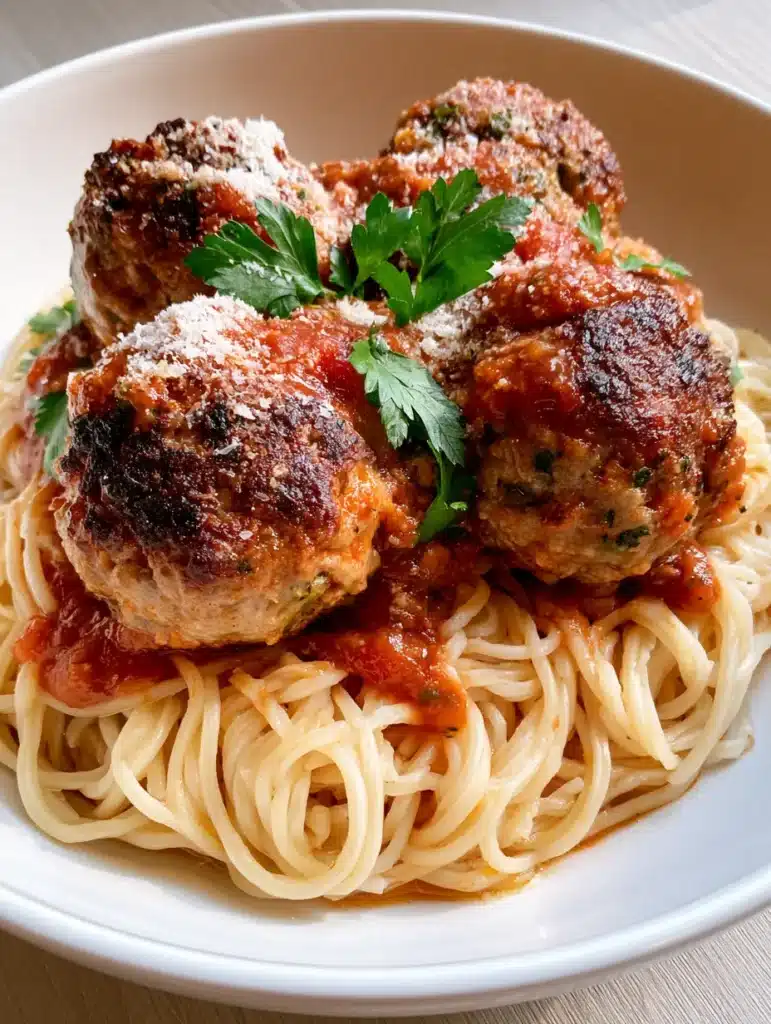
What Makes These the Perfect Italian Meatballs?
- The Perfect Sear: A distinct, browned outer crust that provides a textural contrast to the melt-in-your-mouth interior.
- Al Dente Precision: Spaghetti noodles cooked to firm perfection and lightly coated in oil to prevent sticking and enhance mouthfeel.
- Thick, Chunky Sauce: A vibrant red marinara featuring visible bits of tomato that cling to the meatballs rather than running off.
- Authentic Garnishes: A generous snowfall of finely grated Parmesan cheese and fresh, vibrant flat-leaf parsley for a herbal finish.
The Essential Components for Authentic Meatballs
Ground Beef (80/20 Blend): Use 1.5 lbs (680g) of ground beef with a higher fat content to ensure the meatballs remain moist during the high-heat searing process. The fat renders out, basting the meat from within.
Plain Breadcrumbs and Whole Milk: Combining 1/2 cup (60g) breadcrumbs with 1/4 cup (60ml) milk creates a “panade.” This paste prevents the meat proteins from over-tightening, resulting in a tender texture.
Large Egg: One large egg acts as the primary binder, holding the spherical shape together as the meatballs sizzle in the pan. It provides the structural integrity needed for that perfect round look.
Grated Parmesan Cheese: Adding 1/2 cup (45g) of finely grated cheese directly into the mix provides a salty, umami kick. This is distinct from the snow-white dusting used for the final garnish.
Fresh Flat-Leaf Parsley: You will need 1/4 cup (10g) finely chopped parsley for the meat mixture and additional whole sprigs for the final plating. The green flecks are visible through the seared crust, indicating freshness.
Garlic and Onion Powder: These foundational aromatics provide a consistent flavor profile without the moisture risk of raw aromatics. Use 1 tsp (5g) of each for a balanced savory base.
Extra Virgin Olive Oil: You will need 2 tbsp (30ml) for searing the meatballs and 1 tbsp (15ml) to coat the spaghetti. The oil adds a silky sheen to the pasta, just like in professional food photography.
Spaghetti Noodles: 1 lb (450g) of high-quality durum wheat spaghetti is essential for that classic base. If you enjoy hearty pasta dishes, you might also love our million dollar lasagna.
Crushed and Diced Tomatoes: A combination of 28 oz (800g) crushed tomatoes and 1 cup (240g) canned diced tomatoes creates the “chunky bits” required for the thick marinara sauce. This texture ensures the sauce stays atop the meatballs.
Tools for Culinary Success
To achieve the visual result of a handheld smartphone photo, you need a heavy-bottomed skillet, preferably cast iron or stainless steel. These materials retain heat efficiently, which is vital for developing the browned meat crust described in our visual blueprint.
A large pasta pot is necessary to cook the spaghetti in plenty of salted water, allowing the starch to move freely. You will also need a microplane or fine grater to achieve that “snow-white” texture for the Parmesan cheese garnish.
The Step-by-Step Path to Meatball Perfection
Crafting the Meatball Mixture
In a large mixing bowl, combine the breadcrumbs and milk, letting them sit for 5 minutes to form a paste. Add the ground beef, egg, grated parmesan, chopped parsley, garlic powder, onion powder, 1 tsp (6g) salt, and 1/2 tsp (1g) black pepper.
Gently mix the ingredients by hand until just combined; overworking the meat will result in tough, dense spheres. Shape the mixture into four large, spherical meatballs, roughly the size of a billiard ball, ensuring the surface is smooth.
Achieving the Signature Browned Crust
Heat 2 tbsp (30ml) of olive oil in your skillet over medium-high heat until the oil shimmers. Carefully place the meatballs in the pan, leaving space between each to ensure they sear rather than steam.
Cook for 3-4 minutes per side, turning carefully with tongs, until a distinct, deep-browned crust forms on all sides. You should see visible flecks of green herbs peering through the dark, savory exterior of the meat.
Simmering the Chunky Marinara
Remove the meatballs from the pan and set them aside; lower the heat to medium. Add the crushed tomatoes and diced tomatoes to the same skillet, scraping up the browned bits (fond) from the bottom of the pan.
Simmer the sauce for 15-20 minutes until it thickens significantly. The goal is a vibrant red, thick sauce that shows small chunks of tomato, providing a rustic and handheld-photo-ready appearance.
Preparing the Al Dente Spaghetti
Boil the spaghetti in a large pot of salted water according to package directions, but subtract 2 minutes from the recommended time. Taste a strand; it should be firm to the bite, which is the definition of “al dente.”
Drain the pasta and immediately toss it with 1 tbsp (15ml) of olive oil. This prevents the noodles from clumping and gives them a beautiful, light sheen that reflects natural daylight.
Professional Tips for Visual and Flavor Excellence
- Temperature Control: Ensure the meat is cold when you form the spheres, but the pan is hot when they hit the oil. This disparity is what creates the instant sear.
- The Oil Toss: Never skip coating the spaghetti in oil; it creates the “separated” noodle look seen in high-end food photography. For a different flavor profile, consider our garlic herb chicken breast.
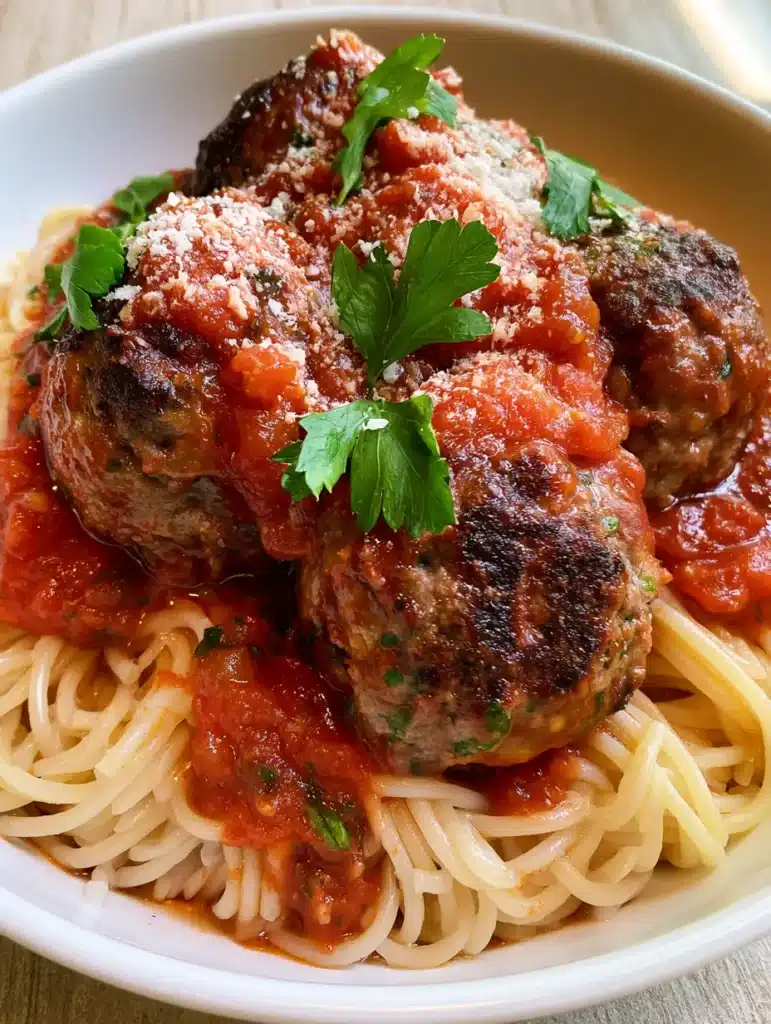
- Sauce Placement: Ladle the sauce generously over the top of the meatballs so it drips partially onto the pasta. This creates the “handheld smartphone photo” aesthetic that looks authentic and appetizing.
- Garnish Height: Grate the Parmesan from a height to allow it to settle naturally like fallen snow, rather than clumping in one spot.
Safe Storage and Reheating Instructions
Leftover Italian Meatballs can be stored in an airtight container in the refrigerator for up to 4 days. The flavors often deepen overnight, making the next day’s lunch even more delicious.
To reheat, place the meatballs and sauce in a small saucepan over low heat, adding a splash of water if the marinara has thickened too much. Avoid microwaving at high power, as this can rubberize the proteins and ruin the delicate browned crust.
You can also freeze the seared meatballs (without sauce) for up to 3 months. When ready to eat, thaw them in the fridge overnight and simmer them directly in a fresh batch of chunky marinara.
What to Serve with Your Italian Feast
A classic pasta dish deserves equally classic sides that balance the richness of the beef and tomato sauce. A crisp green salad or a side of hot honey roasted carrots provides a sweet and earthy contrast to the savory meal.
If you are hosting a larger gathering, consider serving these meatballs alongside a plate of shrimp and crab melts for a surf-and-turf appetizer spread. The acidity of the tomato sauce also pairs beautifully with a glass of Chianti or a crisp sparkling water.
Frequently Asked Questions
Use a high-smoke-point oil and a preheated heavy-bottomed skillet. Sear the meatballs on medium-high heat for 3-4 minutes per side without moving them prematurely, which allows the crust to develop via the Maillard reaction.
Combine crushed tomatoes for the base and canned diced tomatoes for the texture. Simmering the sauce uncovered for at least 20 minutes allows excess moisture to evaporate, concentrating the flavor and thickening the consistency.
For the authentic browned crust and flavor described in this recipe, pan-frying (searing) is superior. It creates a complex flavor profile that baking cannot replicate, though you can finish them in the sauce to ensure even cooking.
Al dente translates to ‘to the tooth.’ The pasta should be cooked through but still offer a slight resistance or ‘snap’ when bitten, which prevents it from becoming mushy when topped with heavy sauce.
A panade keeps the meat fibers from bonding too tightly when they heat up. This results in a tender, moist meatball that practically melts in your mouth despite the firm seared exterior.
The Authentic Italian Meatball Recipe Card
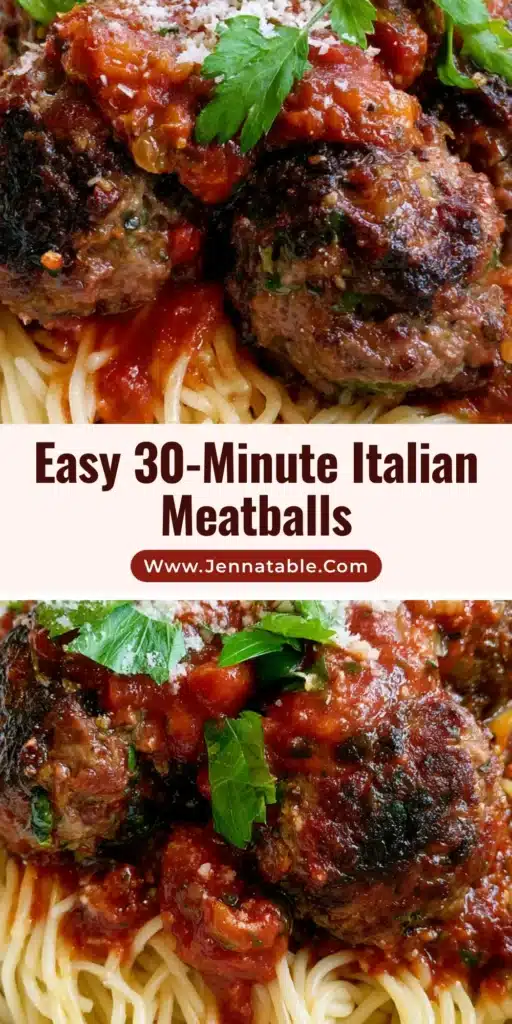
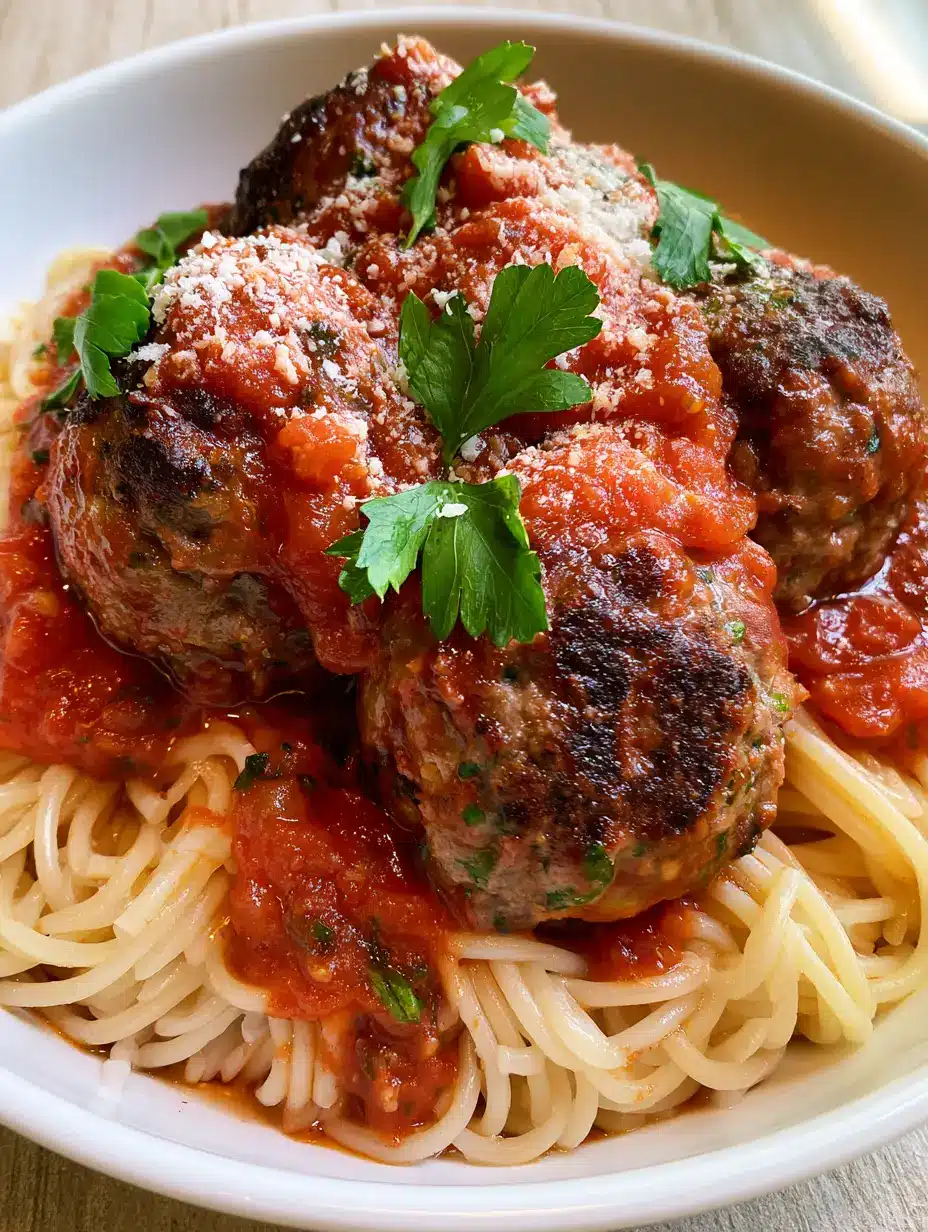
Italian Meatballs: The Ultimate Classic Recipe with Seared Crust and Thick Marinara
Ingredients
Equipment
Instructions
- Combine breadcrumbs and milk for 5 minutes. Mix in beef, egg, cheese, parsley, and spices. Shape into four large spheres.
- Heat oil in a skillet over medium-high heat. Sear meatballs for 3-4 minutes per side until a deep-browned crust forms.
- Add crushed and diced tomatoes to the skillet. Simmer for 20 minutes until the sauce is thick and chunky.
- Cook spaghetti in salted water until al dente. Drain and toss with 1 tbsp olive oil for a light sheen.
- Place pasta in a bowl, top with meatballs and sauce. Garnish with a fine dusting of parmesan and parsley sprigs.
Notes
Always toss pasta in oil immediately after draining to prevent sticking.
Bring the Taste of Italy to Your Table
These Italian Meatballs are more than just a meal; they are a sensory experience. From the sound of the sear to the visual beauty of the vibrant red sauce against the snow-white cheese, this dish is designed to impress.
We invite you to try this recipe and share your results! If you enjoyed the thick texture of this marinara, you might also like our guide on making a classic crumble topping for dessert. Don’t forget to follow Jenna_Table on Pinterest for more visual recipe inspiration.